





 Portuguese
  English
  Spanish
  4 min of reading
  18 comments


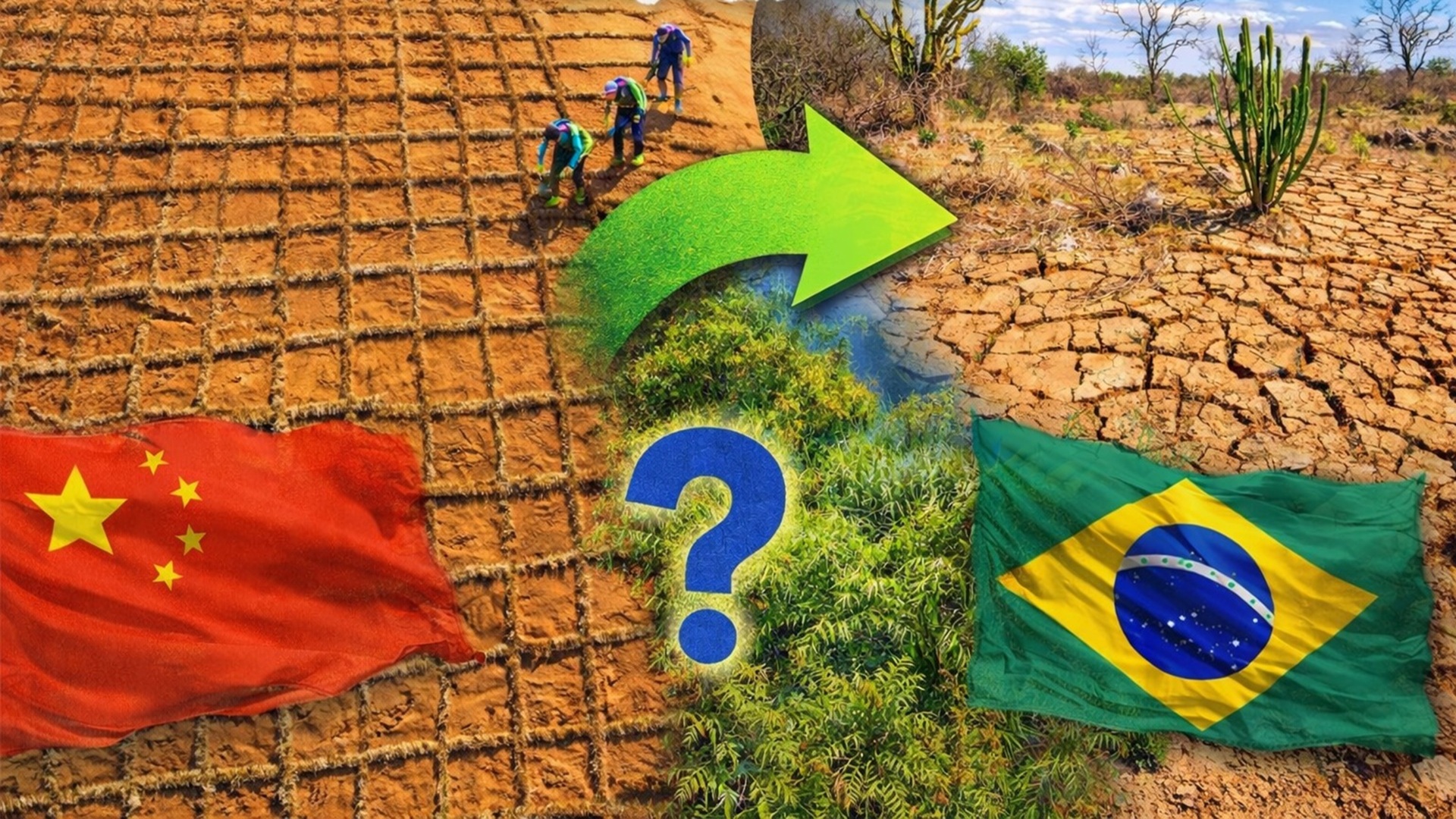


Technology Developed in China Transforms Desert Sand into Fertile Soil in 10 to 16 Months, Uses Laboratory-Cultivated Cyanobacteria, Reduces Soil Loss by Over 90% from Wind in Controlled Tests, and May Influence Environmental Recovery Strategies in Arid Regions
Researchers from the Chinese Academy of Sciences documented that lab-cultivated microbes converted desert sand into stable fertile soil in 10 to 16 months, forming crusts that reduced soil loss from wind by more than 90% in controlled tests.
Formation of Fertile Soil in 10 to 16 Months Stabilizes Sand and Creates a Base for Planting
Scientists used lab-cultivated microbes to agglomerate loose desert sand into a thin and stable layer that wind cannot easily disperse. This more resilient surface provided time to plant shrubs and grasses before strong winds and heat destroyed young plants.
On straw chessboards spread across northwestern China, a dark film covered the treated sand and remained after seasonal dust storms.
-
Motorola launched the Signature with a gold seal from DxOMark, tying with the iPhone 17 Pro in camera performance, Snapdragon 8 Gen 5 that surpassed 3 million in benchmarks, and a zoom that impresses even at night.

-
Satellites reveal beneath the Sahara a giant river buried for thousands of kilometers: study shows that the largest hot desert on the planet was once traversed by a river system comparable to the largest on Earth.

-
Scientists have captured something never seen in space: newly born stars are creating gigantic rings of light a thousand times larger than the distance between the Earth and the Sun, and this changes everything we knew about stellar birth.

-
Geologists find traces of a continent that disappeared 155 million years ago after separating from Australia and reveal that it did not sink, but broke into fragments scattered across Southeast Asia.

The Chinese Academy of Sciences monitored the plots under heat and frost and recorded the speed of hardening.
In tests near the Taklamakan Desert in Xinjiang, teams observed that the crusts stabilized the sand within 10 to 16 months. Even with this speed, planners prioritized building the soil base to ensure that later plants survived without constant replanting.
Ancestral Cyanobacteria Fix Nitrogen and Initiate the Construction of Fertile Soil
Long before forests, cyanobacteria emerged about 3.5 billion years ago. They feed on sunlight and thrive in inhospitable locations. Using light and air, they absorb carbon dioxide and release waste in the form of simple organic matter.
In desert soils with few fertilizers, some species engage in nitrogen fixation, transforming gaseous nitrogen into nutrients available to plants. This process nourishes the crust community and contributes to the consolidation of fertile soil.
Once established, they form a living layer that ties loose grains together and offers the first plants a more favorable environment for rooting. This union creates an initial base for ecological succession.
Sticky Sugars Form Crust That Retains Moisture and Nutrients
Under the microscope, biological crusts reveal a mesh of bacterial filaments surrounding sand grains. The cells release sticky sugars between the grains, which harden and form a thin and cohesive layer.
The crust acts as glue, keeping grains together and making it difficult for invasive plants to establish. Steps, tires, and intense raking can rupture the surface, requiring long-term protection to maintain fertile soil.
During the first year, the treated surface began to retain nutrients close to the top layer, reducing loss from dust carried by the wind. The mixture of mineral dust, dead cells, and released sugars formed organic matter.
This material helped retain nitrogen and phosphorus. With a higher concentration of nutrients, more microbes fed, making the crust community harder to disturb. For seedlings, a better starting point was created, although it depended on rain at the right time.
After brief rains, the hardened layer maintained moisture near the surface, while bare sand dried quickly. Rough pores and dark pigments reduced evaporation, allowing water to remain trapped for longer.
The retention of moisture for a few additional days benefited grasses and shrubs in forming roots before the return of heat. In long dry periods, the crust may enter a dormant state, and the outcomes depend on the climate.
Record of 59 Years and Reduction from Decades to Just a Few Years
In addition to recent tests, China has maintained a 59-year record tracking crust growth during desert recovery. Using samples of known ages, the team compared untouched areas with those treated with lab-cultivated cyanobacteria.
The nutrient gain corresponded to the dominant microbes, and the addition of cyanobacteria reduced a process that used to take decades to just a few years. Even in the best cases, it took two to three years for a mature crust to resist disturbances.
Wind poses a rigorous test. After spraying with cyanobacteria, agglomerated grains remained in place, reducing particles thrown into the air. Laboratory tests with artificial crusts reduced soil loss caused by wind by over 90% under controlled conditions.
Less suspended sand may mean fewer storms and more durable roads. However, the crust needs to withstand traffic and grazing pressure to maintain fertile soil over time.
Limits, Expansion, and Potential Application in Arid Regions of Brazil
Expanding the method beyond plots requires decisions on where to spray microbes, as not all dunes need a crust. Local strains handle heat, salt, and drought better than imported ones, leading teams to cultivate microbes from nearby deserts.
As desertification has multiple causes, crusts do not solve overgrazing or misuse of water. Without protection against vehicles and heavy traffic, restored surfaces can collapse, and recovery may take years.
The rapid formation of crusts transforms microbial growth into a practical tool, connecting sand control with plant-based restoration. Long-term monitoring will show whether durability, benefits, and side effects persist across different deserts and climates.
The possibility of applying this technology in arid regions of Brazil, such as the Northeast, would depend on cultivating local strains adapted to heat and drought. Just like in China, it would be necessary to define priority areas, protect treated surfaces, and monitor results for years.
The study was published in the journal Soil Biology and Biochemistry, consolidating evidence on the accelerated formation of fertile soil in desert environments and its effects on reducing erosion and retaining nutrients and moisture.








No se yo estos chinos son muy buenos y expertos en esta materia, los resultados ya saben más o menos los que serán, llevan haciendo esto en su país desde hace décadas, muy estudiado lo tienen todo.
Linda nota, pero no tienen una sola imagen real, del emprendimiento en cuestión. No es creíble.
So liberar a agua do São Francisco que o nordeste vira uma potência, mas a política atual gosta de pobreza