





 Portuguese
  English
  Spanish
  5 min of reading
  0 comments



Italian Startups Transform Coffee Grounds Into Bioplastics and Sustainable Materials, Driving the Circular Economy.
Every morning, millions of cups of coffee are served in Italy. The country consumes one of the highest per capita amounts in Europe, and each espresso leaves behind an invisible residue in cafes: coffee grounds. For decades, this organic material has been treated simply as waste or, at best, destined for composting. However, today, part of this coffee grounds is being incorporated into production chains that merge industrial design, sustainable polymers, and the circular economy.
The transformation does not occur in megafactories capable of millions of tons, but in industrial initiatives and startups that are shaping a new technological niche. Companies like the Italian Coffeefrom have developed processes to integrate coffee grounds into polymer matrices, creating thermoplastic composites that can be used to manufacture objects, components, and design pieces. The concept appears simple, but it involves materials engineering and precise control of chemical composition.
How Coffee Grounds Stop Being Waste and Enter the Industrial Chain
Coffee grounds are primarily composed of organic matter, lignocellulosic fibers, lipids, and small fractions of nitrogenous compounds. After coffee extraction, the residue maintains a carbon-rich structure and features physical characteristics that allow its use as a filler in composites.
-
Motorola launched the Signature with a gold seal from DxOMark, tying with the iPhone 17 Pro in camera performance, Snapdragon 8 Gen 5 that surpassed 3 million in benchmarks, and a zoom that impresses even at night.

-
Satellites reveal beneath the Sahara a giant river buried for thousands of kilometers: study shows that the largest hot desert on the planet was once traversed by a river system comparable to the largest on Earth.

-
Scientists have captured something never seen in space: newly born stars are creating gigantic rings of light a thousand times larger than the distance between the Earth and the Sun, and this changes everything we knew about stellar birth.

-
Geologists find traces of a continent that disappeared 155 million years ago after separating from Australia and reveal that it did not sink, but broke into fragments scattered across Southeast Asia.

The first step of the industrial process involves collecting and drying the coffee grounds, as the freshly discarded material has high moisture content.
Excess moisture compromises thermal stability and compatibility with thermoplastic polymers. After controlled drying, the coffee grounds are crushed and graded granometrically.
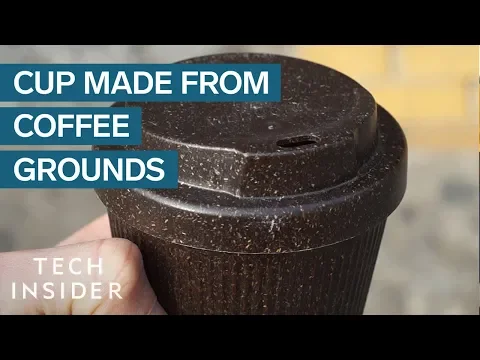

Next, the material is incorporated into recycled polymers or biopolymers through extrusion. During extrusion, the compound is heated and homogenized under controlled temperature and pressure, forming pellets that can be used in injection molding or 3D printing.
The result is a biocomposite that maintains part of the texture and natural color of the coffee grounds, giving aesthetic identity to the final product.
This process does not transform the waste into pure plastic derived from coffee, but rather into a hybrid material, where the coffee grounds act as a natural reinforcement or filler, reducing the proportion of virgin polymer needed.
Technology Applied to Coffee-Based Biocomposites
The engineering behind the bioplastic with coffee grounds involves significant technical challenges. The compatibility between the organic phase and the polymer matrix requires control of dispersion, thermal stability, and mechanical strength.
During heating in the extruder, the material needs to withstand temperatures ranging from 160 °C to 220 °C, depending on the base polymer.
If the grounds are not properly dried, thermal degradation, bubble formation, or loss of structural properties may occur.
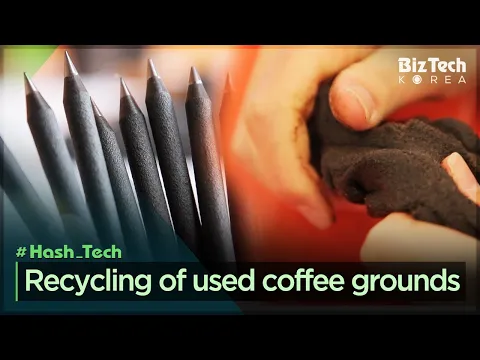
Academic research published in scientific journals on sustainable materials indicates that lignocellulosic wastes, such as coffee grounds, can improve stiffness and reduce specific weight of plastic composites when well integrated. Additionally, the use of this waste reduces the demand for traditional mineral fillers, such as calcium carbonate, decreasing the environmental footprint of the material.
In Italy, the use of coffee grounds also appears in sustainable industrial design projects, with applications ranging from household items to decorative components and promotional pieces.
Real Scale and Economic Impact of Coffee Grounds Recycling
It is important to distinguish what is consolidated industrial production from what is still in the expansion phase. There is no public evidence of Italian plants processing millions of tons of coffee grounds annually exclusively for bioplastics.
What exists are organized chains of collection and transformation with increasing scale, integrated into circular economy models.
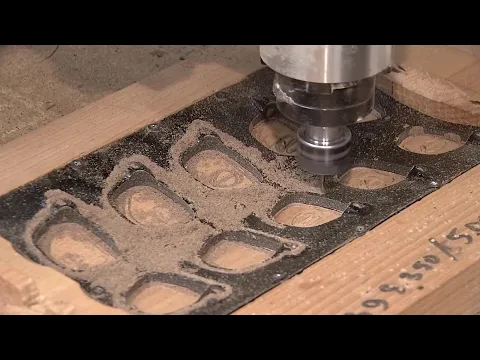
Italy consumes large volumes of coffee daily, generating a continuous flow of urban organic waste. Incorporating these grounds into industrial materials represents a fraction of this volume but symbolizes a strategic advance in waste valorization.
In addition to its application in bioplastics, coffee grounds also have potential use in composting and agricultural fertilization.
Rich in organic matter and with residual nitrogen content, it can contribute to soil improvement when properly treated. However, agricultural use on a large scale requires control of acidity and nutritional balance.
From an economic perspective, transforming coffee grounds into value-added material allows companies to reduce disposal costs and create new products with environmental appeal. In an increasingly European market pressured by sustainability targets and waste reduction, this type of solution is likely to gain relevance.
Technical Limits and Expansion Challenges
Despite the potential, converting coffee grounds into bioplastics faces logistical and technical limitations. The distributed collection across thousands of cafes requires efficient coordination to avoid contamination with other waste.
The stability of the supply is also a critical factor. The quality of the grounds can vary depending on the type of coffee and preparation method, requiring standardization for consistent industrial use.
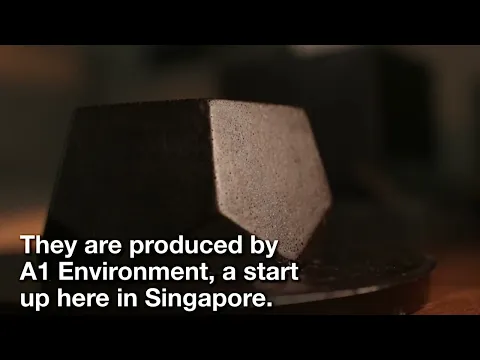
Another challenge is cost competitiveness. Although the waste is abundant, processing involves drying, transportation, and treatment that impact the final price of the composite. To compete with conventional polymers, the material needs to balance sustainability and technical performance.
Additionally, the biocomposite with coffee grounds does not fully replace high-strength structural plastics. Its use is likely to concentrate on medium-performance applications or sustainable design products.
Everyday Waste, Technological Raw Material
What is happening in Italy is not just the reuse of organic waste. It is the integration of urban waste into production chains that traditionally rely on petrochemical or mineral raw materials.
Coffee grounds, once discarded daily with no significant economic value, now integrate materials engineering as a functional component. This change represents a concrete example of circular economy applied to a cultural habit deeply rooted in Italian society.
Although the industrial scale does not reach volumes comparable to large petrochemical sectors, the movement signals a larger trend: urban waste can become sources of raw materials when combined with technology, traceability, and proper engineering.
In the European context, where environmental targets and emission reductions shape industrial policies, transforming coffee grounds into sustainable bioplastics is less about replacing the entire plastic industry and more about creating niches of innovation that decrease dependence on fossil resources.
What begins as waste left behind after a morning espresso can, through controlled extrusion processes and composite formulation, gain new life as a technological material. It is an example of how seemingly small solutions can alter the perception of value of an urban byproduct.
Italy, by connecting coffee tradition and innovation in sustainable materials, shows that the transition to more circular industrial models does not only depend on large manufacturing complexes but also on intelligent chains that convert the everyday into applied technology.








-

-

-

-

15 pessoas reagiram a isso.