





 Portuguese
  English
  Spanish
  4 min of reading
  0 comments


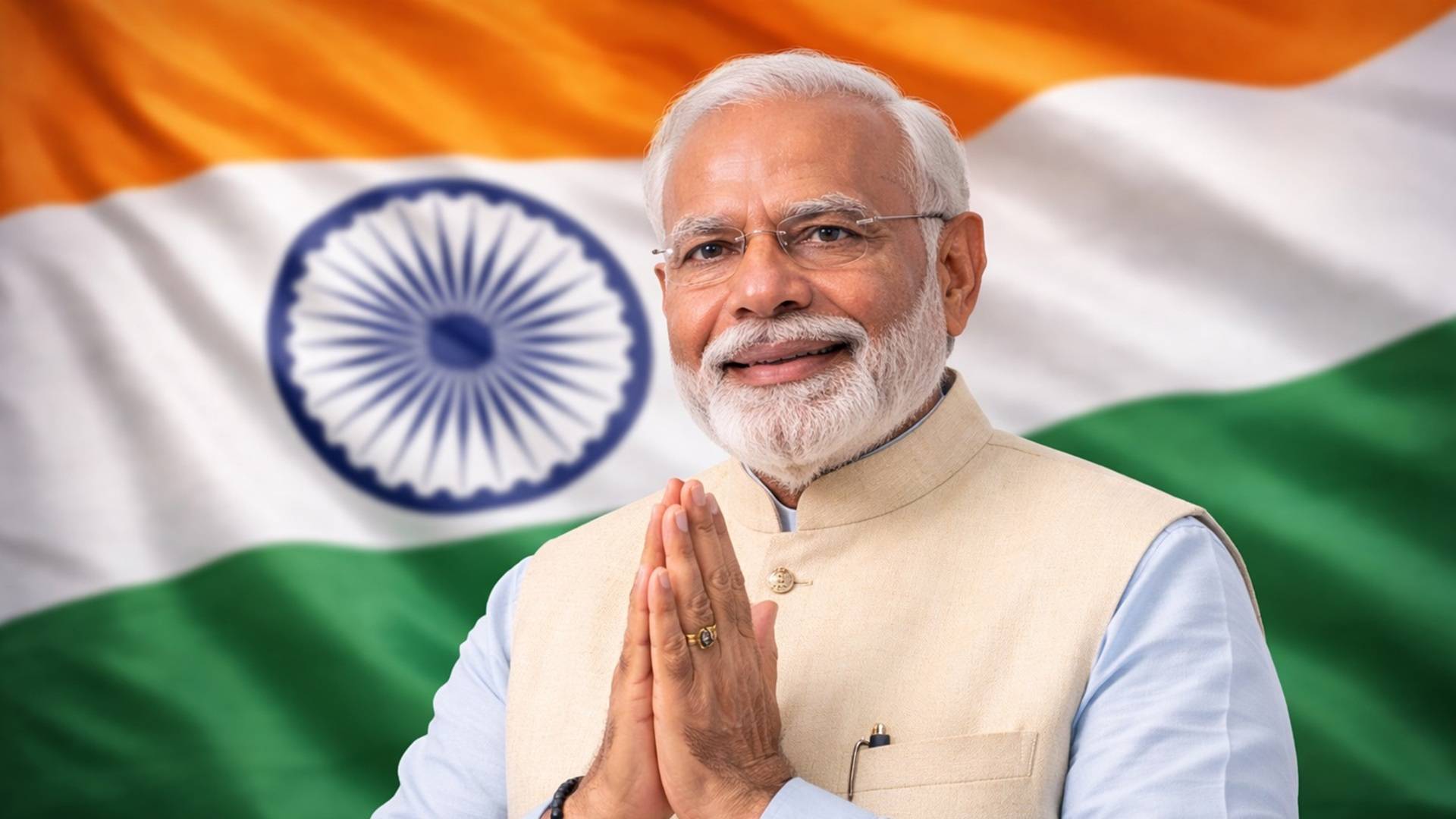
The Economy of India Registered Growth of 7.8% in the Quarter Ended in December, Surpassing Market Forecasts, Following Revision in GDP Methodology, Increase in Domestic Consumption, Expansion of the Manufacturing Sector, and Adaptation of Exports in the Face of International Trade Tariffs
The economy of India registered growth of 7.8% in the quarter ended in December, surpassing market forecasts and reinforcing economic performance after methodological revisions promoted by the government, according to official data released following the update of the national statistical series.
The economy of India showed expansion above the estimates made by economists surveyed by Reuters, who projected growth of 7.2% between October and December. The result was announced after structural changes in the way of calculating the economic production nationally.
In the previous quarter, growth had initially been estimated at 8.2%, but was revised to 8.4% in the new statistical series adopted by the Indian government.
-
The government requests the Federal Revenue Service for a new system to automate the income tax declaration, reducing errors, time, and bureaucracy for millions of Brazilians.

-
Pix in installments, international Pix, and contactless payment without internet: the Central Bank revealed the new features coming to the tool that is already used by almost every adult in Brazil.

-
Mercado Livre has just started selling medications with delivery in up to three hours to your door, and this move could completely change the way Brazilians buy medicines on a daily basis.

-
In Dubai, rising tensions from the war in the Middle East are causing super-rich individuals to leave the Gulf and direct their fortunes to a new financial refuge in Asia.


The official projection for GDP growth in the fiscal year 2026 was also raised to 7.6%, above the previous estimate of 7.4%.
Methodological Revision Alters the Measurement of the Economy of India
The changes were introduced in January by the Ministry of Statistics and Programme Implementation of India, known as MoSPI, which reformulated the series related to GDP, inflation, and industrial production.
According to an official statement, the aim was to strengthen the quality, credibility, and relevance of the data used in the formulation of public policies.
As part of the update, the economy of India began to adopt the base year of 2012 for the fiscal year 2023, replacing previous parameters considered outdated.
According to Alexandra Hermann, chief economist at Oxford Economics, the GDP data surpassed both the institution’s expectations and the consensus of the market.
The economist also stated that the new methodology offers a better representation of the economic segments that are experiencing faster growth.
According to Hermann, this change indicates that the measured growth trajectory could become structurally higher within the newly adopted statistical series.
Consumption and Investment Sustain the Expansion of the Economy of India
Official data indicates that both private consumption and gross fixed capital formation grew above 7.0% in the current financial year.
The Ministry of Statistics and Programme Implementation highlighted that the manufacturing sector has played a central role in economic resilience over the past three consecutive fiscal years following the revision of the calculation base.
Industrial performance was pointed out as the main driver of the stability observed in the economy of India during the recent period.
During the quarter ended in December, there was a selective increase in domestic consumption, driven mainly by the purchase of gold and automobiles during the festive season.
This movement contributed to sustain domestic economic activity in the analyzed period.
Previous Questions about Economic Data and Institutional Response
In a report released the previous year, the International Monetary Fund expressed concern about the accuracy of the economic data presented by the Indian government.
The organization assigned a “C” rating to the country’s economic statistics, considered the second lowest in its assessment.
The IMF pointed out limitations related to the use of an outdated base year, referring to the period 2011/12, in addition to the use of wholesale price indices and unique deflation methods in calculating inflation.
According to the report, these factors could cause distortions in measuring actual economic activity.
Saurabh Garg, secretary of MoSPI, stated in an interview with local media that the new GDP series should address most of the concerns raised by the International Monetary Fund.
According to Garg, the expectation is that future international evaluations will revise the classification attributed to India’s national accounts.
U.S. Tariffs and Impact on Exports
The December quarter also marked the first complete period in which Indian exporters faced the full impact of tariffs imposed by the United States.
India’s exports began to incur tariffs of 50% since August of the previous year. Subsequently, the two countries reached a provisional trade agreement that reduced the rate to 18%.
The trade situation underwent another change following a decision by the United States Supreme Court, which prohibited much of the tariff regime implemented by President Donald Trump.
After the court ruling, Washington began to apply a global tariff of 10%, while maintaining the possibility of future increases.
Despite the more restrictive external environment, an economic report released the previous month indicated that the growth of India’s economy was not adversely affected by the slowdown in exports to the North American market.
Export Sectors Find Alternative Markets
Among the main products exported by India are textiles, marine products, precious stones and jewelry, auto parts, and leather goods.
These segments were directly affected by the trade tariffs imposed by the United States.
According to data released by the Indian government, exporters managed to redirect a significant portion of these sales to alternative markets.
Diversifying trade destinations helped to mitigate the negative effects of tariff restrictions on overall economic performance.
The data reinforces that the economy of India maintained a high growth rate even in the face of changes in international trade and internal methodological adjustments.
The combination of statistical revisions, expansion of domestic consumption, and adaptation of the export sector constituted the scenario recorded in the quarter ended in December, consolidating the result above the initial market projections.









Seja o primeiro a reagir!