





 Portuguese
  English
  Spanish
  5 min of reading
  0 comments


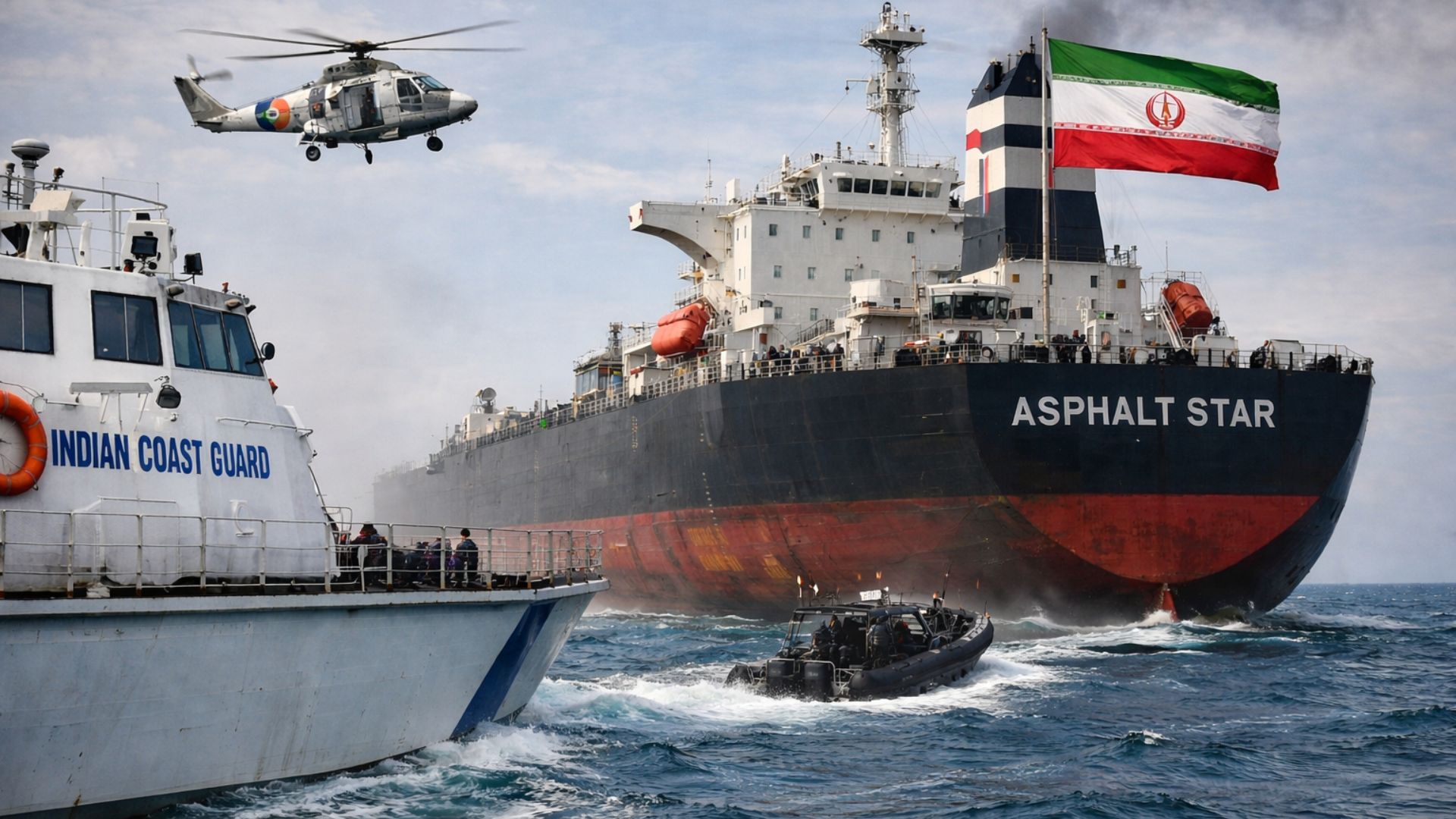
Understand How India Strengthens Maritime Surveillance After Intercepting Tankers Linked to Iran and Sanctioned by the USA, Impacting Oil Routes, Energy Security and International Relations.
India seized three tankers linked to Iran and sanctioned by the USA, in addition to significantly enhancing its maritime surveillance to prevent illegal oil transfers in its exclusive economic zone. According to a report published by CNN Brasil on Monday (16), the operation took place off the coast of Mumbai and was confirmed by sources interviewed by the Reuters agency, reinforcing a strategic movement that combines energy security, compliance with international sanctions, and diplomatic strengthening between New Delhi and Washington.
India Intensifies Maritime Surveillance to Contain Hidden Oil Transfers
The vessels were identified after activities considered suspicious at sea, including frequent changes of identification and unusual routes. According to official reports initially released in a publication that was later deleted, the ships were intercepted about 100 nautical miles west of Mumbai and subsequently escorted to shore for further investigations.
The episode gained international relevance for directly involving tankers, Iran, the USA, and the global oil market, in addition to highlighting the growing use of technology in maritime surveillance.
-
Petrobras evaluates suspension of sales to distributors and considers canceling the cooking gas auction following guidelines from the Federal Government.

-
Lula reveals a masterstroke by Petrobras to undo a deal made by Bolsonaro, which involves the return of an important refinery that currently produces less than half of what was expected and makes Brazil dependent on international diesel.
-
A study confirms that the natural gas sector will reduce greenhouse gas emissions in Brazil by 0.5% and accelerate the energy transition by 2026.

-
Petrobras implements a severe adjustment and confirms a 55% increase in the price of aviation kerosene with a proposal for installment payments for the companies.

The main goal of Indian authorities is to prevent their territorial waters from being used for cargo transfers between ships, a practice known as ship-to-ship transfer. This method allows the origin of the oil to be concealed, making enforcement more difficult and facilitating illicit trade. By strengthening maritime surveillance, India demonstrates concern about the integrity of its trade routes and compliance with sanctions imposed by the USA.
Sources with direct knowledge of the case stated that the Indian Coast Guard is now operating with about 55 vessels and between 10 and 12 aircraft in continuous monitoring. This significant mobilization indicates a strong commitment, even by naval security standards in strategic regions. The increased military presence also enhances the capacity to identify tankers that turn off tracking systems or change flags to evade international authorities.
Tankers Linked to Iran and the Impact of US Sanctions on Oil Trade
Two of the three tankers seized had operational ties to Iran, according to navigation and maritime trade data cited by international databases. One of them reportedly transported Iranian fuel oil to Djibouti in 2025, while the other was registered in Iranian territory. The third vessel was primarily operating on routes near China, according to movement records.
The Office of Foreign Assets Control of the USA had already sanctioned ships with identification numbers identical to those found on the intercepted vessels. The sanctions aim to restrict the circulation of oil of irregular origin and pressure distribution chains that use false documentation or front companies. This scenario increases the geopolitical sensitivity involving India, Iran, and the USA, especially at a time of commercial and diplomatic adjustments.
Intercepting in India Reveals Patterns of Disguised Operations
The vessels were located approximately 100 nautical miles off the coast of Mumbai after detecting behavior considered out of the ordinary. Among the indications were frequent changes of identification and attempts to conceal routes. Subsequently, the ships were brought to the Indian coast for more detailed inspections.
The initial publication made by Indian authorities on February 6 confirmed the interception, although the content was later removed. Nonetheless, sources reaffirmed that the action occurred and that investigations continue. The proximity to Mumbai, one of India’s main port centers, amplified the case’s repercussions, as the region concentrates a significant share of the flow of oil and tankers that fuel the local economy.
India and USA Relationship Strengthens Strategic Cooperation and Maritime Surveillance
The seizure of the vessels occurs at a time of rapprochement between India and the USA, with direct impacts on energy and trade policy. Washington announced the reduction of import tariffs on Indian products from 50% to 18%, after New Delhi agreed to suspend imports of Russian oil. This adjustment has strengthened bilateral dialogue and opened up space for greater cooperation on maritime security.
International trade experts believe that the enhancement of maritime surveillance also seeks to signal alignment with global regulatory standards. India, one of the largest energy consumers on the planet, relies on stable and predictable routes to ensure internal supply. Cooperation with the USA increases the exchange of information about tankers, suspicious routes, and business structures used to mask the origin of the oil.


Oil Market Faces Challenges with Parallel Routes and High Discounts
Trade in oil subject to sanctions often involves significant discounts due to financial and legal risks. Intermediaries use companies registered in different countries, complex contracts, and transfers at sea to make enforcement more difficult. This type of operation affects pricing predictability and generates uncertainties in the global market.
For India, preventing tankers from using its waters for these practices is a way to protect the integrity of the port system and reduce risks to international reputation. Continuous maritime surveillance allows for the identification of transponder shutdowns, flag changes, and documentary inconsistencies. These measures not only enhance security but also contribute to greater transparency in the distribution chains of oil.
Technology and Naval Monitoring Transform International Enforcement
Technological advancements have played a decisive role in identifying suspicious vessels. Tracking satellites, automatic identification systems, and the analysis of large volumes of data allow authorities to track tankers in almost real-time. India has been increasing investments in maritime surveillance precisely to enhance the accuracy of these operations.
This movement also favors cooperation with strategic partners, including the USA, which share sanction lists and naval intelligence data. The integration of technology and diplomacy creates a more transparent environment for oil trade, reducing loopholes that previously allowed disguised operations. The result is a more monitored logistics chain that is less susceptible to documentary fraud.
A New Scenario for Route Control, Energy, and International Relations
The seizure of the tankers and the reinforcement of maritime surveillance indicate that India is redefining its stance in the face of energy and geopolitical challenges. By acting in accordance with sanctions from the USA and monitoring vessels linked to Iran, the country expands its influence in the international oil trade and demonstrates concern for the legality of operations crossing its waters.
The episode illustrates that naval security has ceased to be merely a defensive measure and has begun to integrate long-term economic and diplomatic strategies. The strengthening of technological monitoring, combined with international cooperation, tends to impact trade routes, transportation costs, and regulatory standards.









-

Uma pessoa reagiu a isso.