





 Portuguese
  English
  Spanish
  4 min of reading
  0 comments


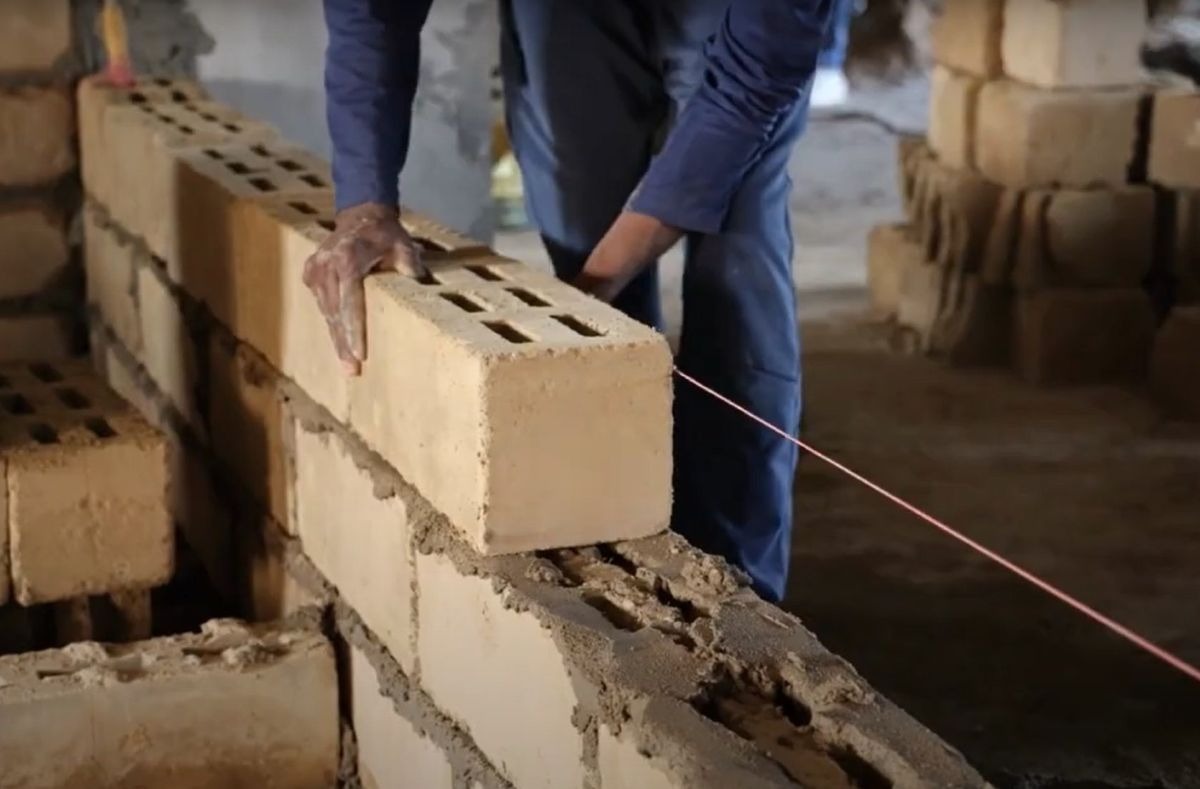
Created by startup GreenJams, Agrocrete® transforms agricultural waste into sustainable blocks that sequester CO₂, reduce construction costs by up to 50%, and offer thermal insulation up to 3.5 times superior to conventional concrete, also strengthening the rural economy.
An Indian engineer developed building blocks capable of storing 15 kg of carbon dioxide per square meter and offering thermal insulation up to 3.5 times greater than conventional concrete. The innovation, called Agrocrete®, was launched by the startup GreenJams and promises to transform the construction industry with environmental, economic, and social benefits.
Concrete That Cleans The Atmosphere And Insulates More
Agrocrete® is a carbon-negative bioconcrete, accessible and highly insulating, produced from agricultural waste and industrial by-products. This alternative to traditional concrete reduces carbon emissions, improves the energy efficiency of buildings, strengthens the rural economy, and promotes a circular construction model.
The technology utilizes crop residues that would normally be discarded or burned, a practice that causes serious atmospheric pollution problems in northern India. By using these materials, Agrocrete® prevents this burning and transforms waste into high-value raw material.
-
Motorola launched the Signature with a gold seal from DxOMark, tying with the iPhone 17 Pro in camera performance, Snapdragon 8 Gen 5 that surpassed 3 million in benchmarks, and a zoom that impresses even at night.

-
Satellites reveal beneath the Sahara a giant river buried for thousands of kilometers: study shows that the largest hot desert on the planet was once traversed by a river system comparable to the largest on Earth.

-
Scientists have captured something never seen in space: newly born stars are creating gigantic rings of light a thousand times larger than the distance between the Earth and the Sun, and this changes everything we knew about stellar birth.

-
Geologists find traces of a continent that disappeared 155 million years ago after separating from Australia and reveal that it did not sink, but broke into fragments scattered across Southeast Asia.

The secret of the process lies in the BINDR, a patented alkali-activated binder produced from industrial waste from sectors such as steel, paper, and energy. This material replaces Portland cement and, in addition to eliminating the emissions generated by its production, mineralizes biogenic carbon, permanently fixing it in the structure of the blocks.
Environmental And Energy Benefits
Each square meter of wall made with Agrocrete® sequesters 15 kg of CO₂, avoids the emission of another 40 kg, and prevents the burning of 35 kg of agricultural waste. At the same time, its thermal insulation is up to 3.5 times more efficient, significantly reducing the use of heating and cooling systems, saving energy throughout the building’s lifespan.
In addition to the positive environmental impact, the material offers compression strength greater than 10 MPa and water absorption between 10% and 12%, surpassing traditional bricks in durability and performance against moisture. Thanks to these properties, it can even be used in load-bearing structures.
The initiative also generates social benefits by transforming agricultural waste into a source of income. Farmers who previously burned these residues now sell them as raw material, creating new profit opportunities and contributing to the construction of more sustainable cities.
Significant Savings In Construction
Agrocrete® stands out not only for its environmental impact but also for its potential to reduce construction costs by up to 50%. This result comes from several combined factors: the blocks are larger and lighter, which speeds up work by up to 250%, require 60% less mortar, and reduce energy expenses over time thanks to superior insulation.
The founder of GreenJams, Tarun Jami, built a 102 m² building using Agrocrete® for less than 195,000 rupees (about 2,200 euros). With traditional materials, the same project would cost more than twice as much. The construction also captured over 3 tons of CO₂, demonstrating the direct environmental impact of the technology.
Scalability And Practical Application
GreenJams developed Agrocrete® with a focus on its large-scale application. The material has already been used in real projects, such as residences in Surajgarh and industrial workshops in Roorkee. Pilot tests showed significant reductions in construction timelines, greater thermal comfort, and a much smaller environmental footprint.
Another differentiator is that Agrocrete® easily adapts to existing construction systems, requiring no complex technology or specialized training. This feature makes its adoption practical and viable in various contexts and regions.
Potential To Transform Global Construction
The case of Agrocrete® demonstrates that it is possible to rethink civil construction based on waste and carbon capture, rather than relying on resource extraction and the emission of polluting gases. The technology has the potential to:
- Drastically reduce the carbon footprint of the construction sector, which accounts for about 40% of global emissions.
- Eliminate the burning of agricultural waste, one of the main sources of pollution in rural areas.
- Boost circular rural economies by adding value to waste and generating income for farming communities.
- Improve the energy efficiency of buildings, especially in regions with extreme climates.
- Accelerate the transition to sustainable cities with regenerative and accessible materials.
In order for this potential to materialize, investment in innovation, political support, and a cultural shift in the way we build will be necessary. Agrocrete® represents not just a new material — it is a decisive step towards a model where every block contributes to the planet instead of harming it.








Seja o primeiro a reagir!