





 Portuguese
  English
  Spanish
  3 min of reading
  0 comments


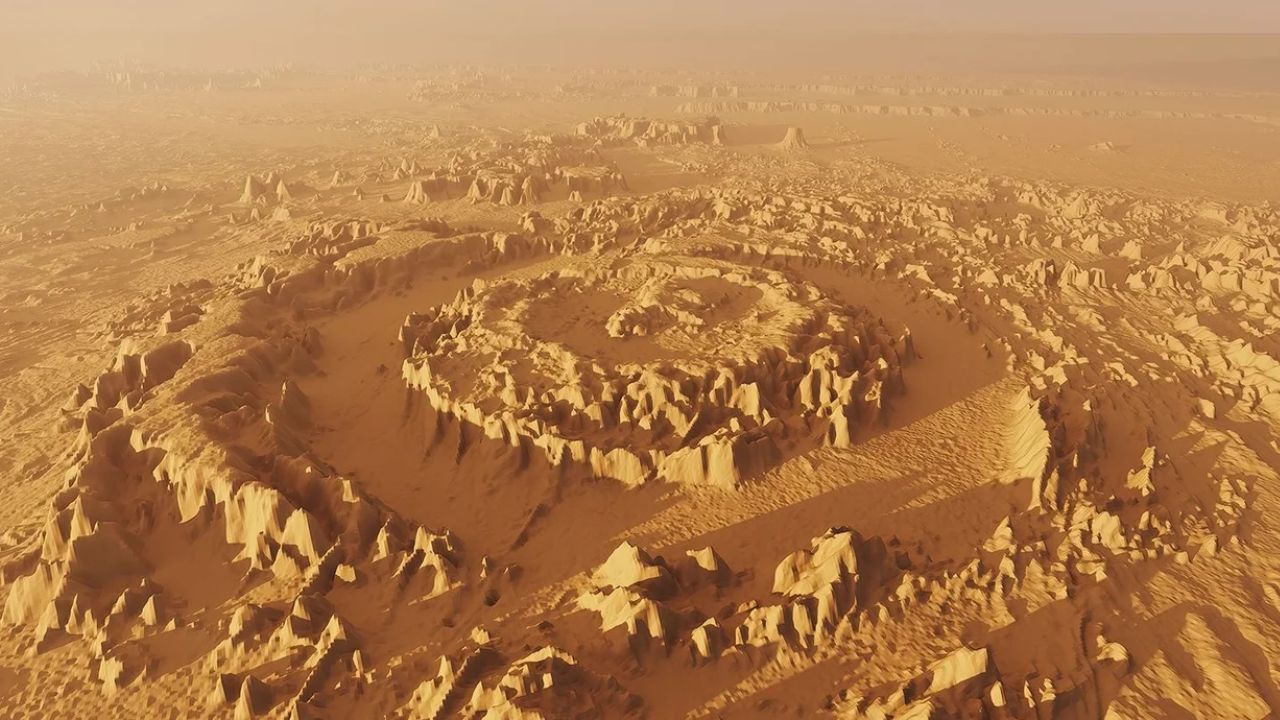
The Aorounga Structure Crater in the Sahara Desert Impresses with Its Circular Shape and Geological Stories. Understand How It Formed and Why It Is Still Studied.
A colossal impact that occurred about 345 million years ago in northern Chad gave rise to one of the planet’s most curious formations: the Aorounga Structure, a massive crater in the heart of the Sahara Desert.
Identified from satellite images and astronaut records, this circular structure, 12.6 km in diameter, resembles a gigantic eye sculpted into the earth. It continues to intrigue scientists today due to its unique features and geological significance.
Studied since the late 20th century, Aorounga reveals valuable information about the planet’s past, wind behavior in the desert, and even potential threats from space.
-
Friends have been building a small “town” for 30 years to grow old together, with compact houses, a common area, nature surrounding it, and a collective life project designed for friendship, coexistence, and simplicity.

-
This small town in Germany created its own currency 24 years ago, today it circulates millions per year, is accepted in over 300 stores, and the German government allowed all of this to happen under one condition.

-
Curitiba is shrinking and is expected to lose 97,000 residents by 2050, while inland cities in Paraná such as Sarandi, Araucária, and Toledo are experiencing accelerated growth that is changing the entire state’s map.

-
Tourists were poisoned on Everest in a million-dollar fraud scheme involving helicopters that diverted over $19 million and shocked international authorities.


The Origin of the Aorounga Structure Crater: Impact of a “City-Killer” Meteor
The formation of the Aorounga Structure occurred after the collision of a meteor approximately 600 meters in diameter with the Earth’s crust.
This type of object is informally called a “city-killer” due to its large-scale destructive potential.
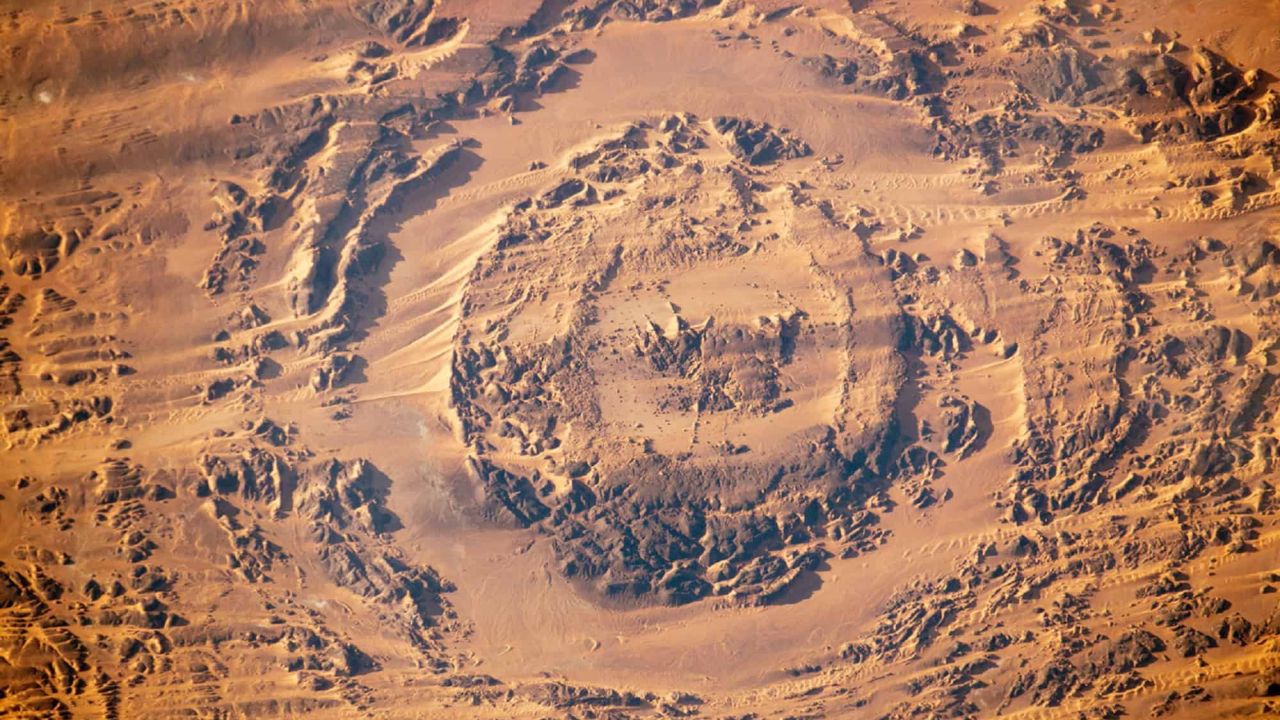
The impact not only sculpted the crater but possibly influenced the global climate at the time.
The structure features two concentric rings, with a central uplift that resembles the pupil of an eye, surrounded by rock formations that simulate natural eyelids.
Aorounga May Be Part of a Chain of Craters
Radar investigations in the 1990s revealed hints that the Aorounga crater is not alone.
Researchers identified possible similar structures nearby, raising the hypothesis that fragments of the same meteor may have caused multiple impacts in the region.
If confirmed, this theory reinforces the site’s relevance as a true natural laboratory for studies of cosmic collisions.
Constantly Moving Dunes Help Study the Desert
In addition to the crater, the region draws attention for the movement of the barchan dunes, crescent-shaped, surrounding Aorounga.
Comparative satellite images show that, between 2003 and 2013, some of these dunes moved more than 400 meters. The smaller ones are the most mobile, precisely because they are more sensitive to wind action.
According to NASA, some small dunes may even disappear in less than a decade, emphasizing the dynamism of the Sahara Desert.
Yardangs: Natural Sculptures Carved by the Wind
Another notable phenomenon is the yardangs, elongated rock formations that traverse the Aorounga crater.
Created by wind erosion over millennia, these dark structures rise like natural sculptures in the middle of the desert, contributing to the surreal landscape of the area.
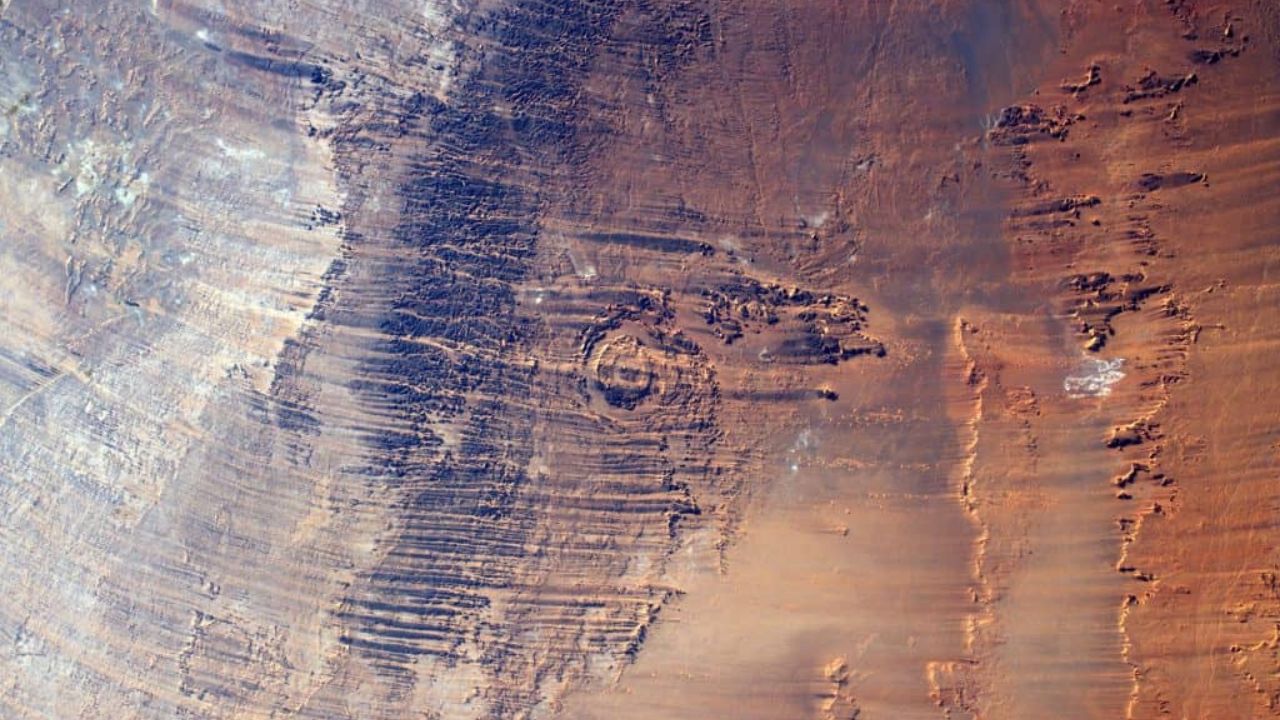
These formations help researchers understand the erosive force of winds and the processes that sculpt deserts over time.
The Aorounga Structure, viewed from space, seems to silently watch the millennia that have passed.
Beyond its visual impact, it is a rich source of knowledge about the events that shaped our planet and continues to inspire scientists in search of answers.
In the midst of the Sahara Desert, this crater is a reminder that Earth is a planet in constant transformation—and that the past is often written in the rock itself.










-

-

2 pessoas reagiram a isso.