





 Portuguese
  English
  Spanish
  3 min of reading
  0 comments



In 2016, a rare act of humility and respect for the consumer, the Japanese company Akagi Nyugyo publicly apologized on television for increasing the price of its famous Garigari-kun ice cream by only 10 yen, which had been frozen for 25 years.
In 2016, a Japanese company shocked the world by doing something unthinkable in other business cultures: apologizing on TV for raising the price of an ice cream by only 10 yen (about 9 cents). The episode featuring Akagi Nyugyo, the manufacturer of the popular Garigari-kun, became a symbol of corporate ethics in Japan and the extreme respect between brands and consumers.
The increase from 60 to 70 yen was the first in 25 years, a direct reflection of the rising cost of raw materials and the need to adjust operations. Even so, the company chose to air a 60-second commercial, where executives and employees appear making a deep bow, as a sign of remorse for the price adjustment.
The Apology That Became a National Symbol

The video broadcast nationwide showed the president and board of Akagi Nyugyo, side by side, performing the traditional Japanese gesture of apology, while the caption read: “We endured for 25 years, but… 60 → 70”. The simplicity and sincerity of the message turned the ad into a phenomenon.
-
More than 138 stone tools found on the seabed between Turkey and Europe reignite the hypothesis of a lost land bridge from the Ice Age that may have been used by humans to cross continents.

-
Argentina places the first U.S. Stryker 8×8 armored vehicles in operational units, while Brazil sets a record of $3.1 billion in military exports, reaching 140 countries and strengthening the Defense Industrial Base.

-
A flight attendant fell from 10,160 meters without a parachute after an airplane explosion, survived against all logic, and still holds the record for the highest fall ever survived by a human being.

-
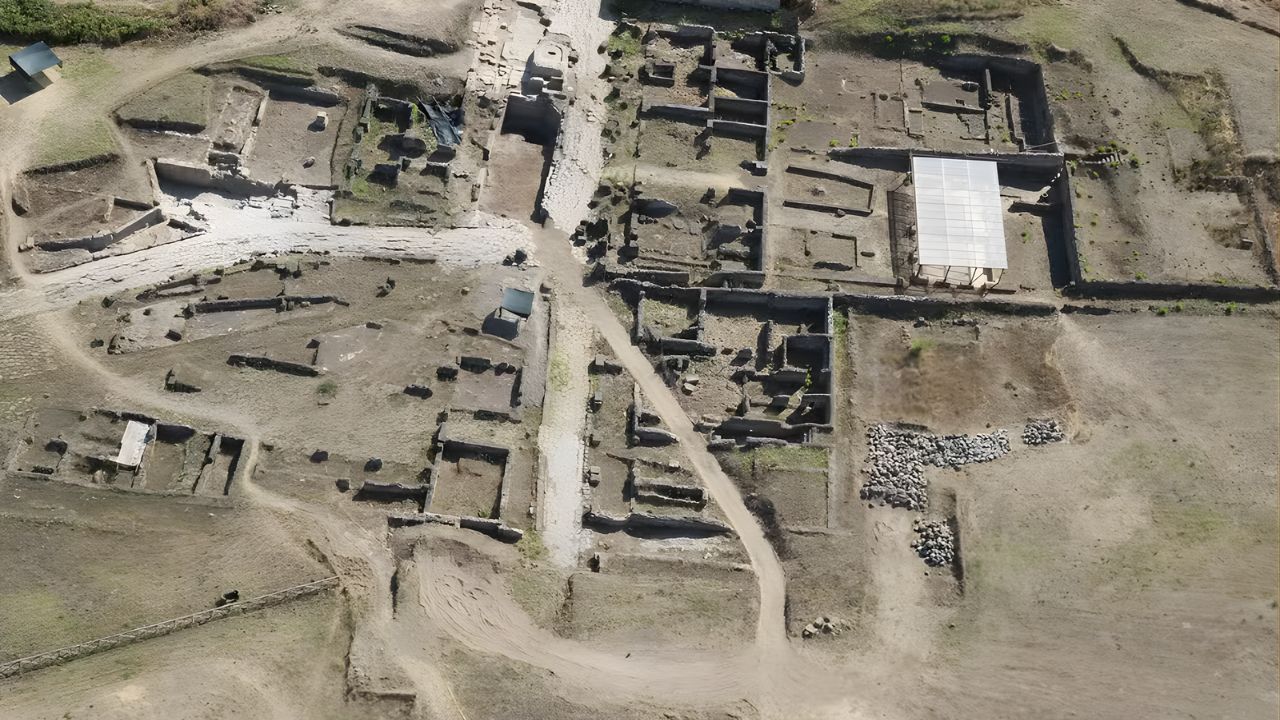
With a monumental stone structure dating back over 2,000 years, excavated 6 meters deep and with dimensions that surprise archaeologists, the newly discovered tank in Gabii may be one of the first major public works of Ancient Rome outside of temples and walls.

The public’s reaction was one of surprise and admiration. Instead of criticism, consumers praised the company’s honesty, considering the gesture a demonstration of integrity and empathy at a time when price increases were socially delicate.
The video quickly went viral on Japanese social media and was widely reported abroad as an example of cultural sensitivity.
The Economic Context Behind the Apology
For decades, Japan lived under the impact of deflation, a situation in which prices remain stable or even fall over time.
In this scenario, price adjustments were viewed with suspicion and often interpreted as disrespect to the consumer.
Maintaining the price of a popular product for 25 years became, therefore, an act of loyalty and stability, especially for a brand so present in the daily lives of the Japanese.
The increase of 10 yen represented an adjustment of about 17.5%, small in absolute terms, but symbolic within the local culture.
For Akagi Nyugyo, the apology was not merely a formality, but a way to reaffirm the commitment to trust and transparency, values deeply rooted in Japanese corporate behavior.
A Lesson in Business Culture and Empathy
The case of Garigari-kun illustrates how Japan views the relationship between company and society as a bond of mutual responsibility.
Apologizing for an economic decision, even if fair, is a way to demonstrate respect and consideration for consumers, acknowledging the emotional impact that small changes can have on a public accustomed to stability.
For the Japanese, public sincerity is a virtue greater than immediate profit. This gesture from Akagi Nyugyo also reinforces the importance of maintaining a balance between business and human values—a principle that distinguishes the country’s corporate culture and inspires companies worldwide.
The Change in Attitude Over Time
Almost a decade later, the company adopted a lighter tone in its communication.
In 2024, when announcing a new increase, Akagi Nyugyo opted for a lighthearted campaign, reflecting a gradual transformation in Japanese society’s perception of inflation and consumption.
Still, the memory of the 2016 apology remains alive as a milestone of humility and corporate ethics.
The episode of Garigari-kun continues to be studied in business schools and cited as an example of how small gestures can solidify corporate reputation.
Even with the end of deflation and the change in market behavior, Akagi Nyugyo’s attitude remains a reminder that, for the Japanese public, trust is worth more than price.
Do you think companies in other countries should act with the same transparency as the Japanese culture? Or do you believe that this kind of gesture wouldn’t have the same effect outside Japan? Leave your opinion in the comments—we want to know how you see this form of respect for the consumer.







-

2 pessoas reagiram a isso.