





 Portuguese
  English
  Spanish
  3 min of reading
  0 comments


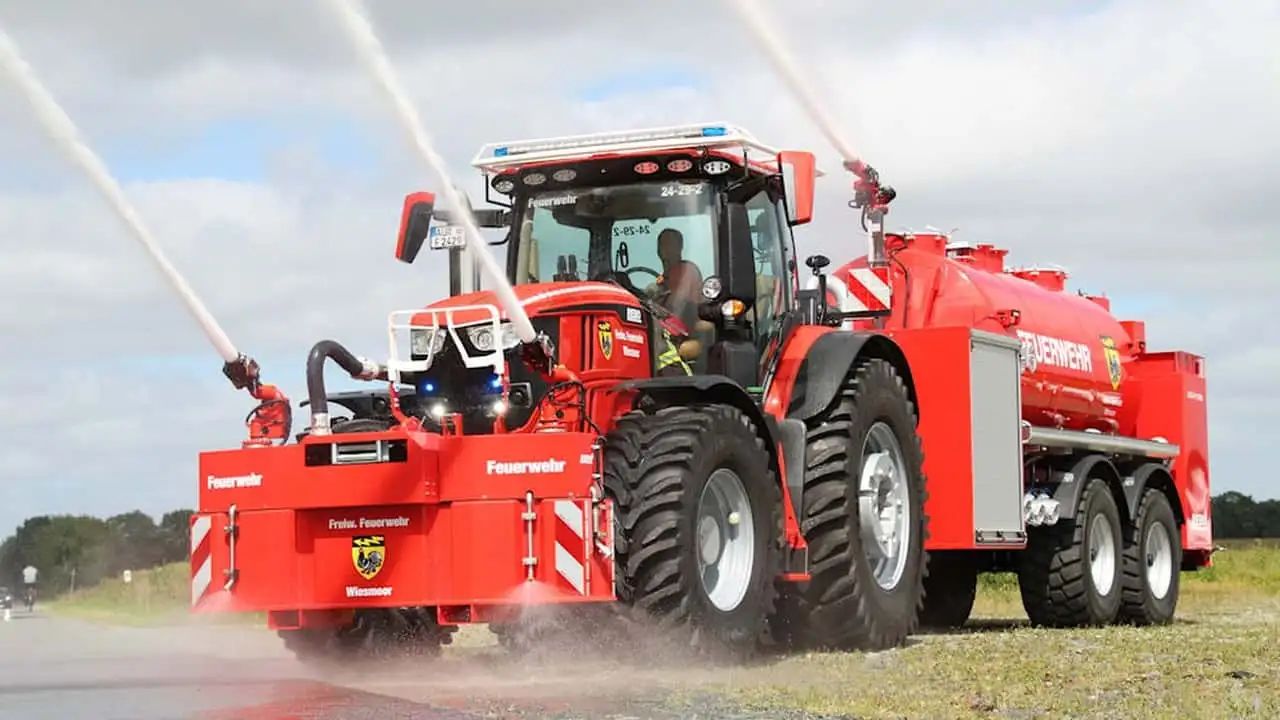
Meet the John Deere Series 6R Tractor That Is Revolutionizing Firefighting in Germany. Power, Technology, and Innovation in Action.
A John Deere Series 6R tractor, with an impressive 300 horsepower, has been transformed into a true hero on wheels.
The agricultural vehicle, now adapted for rescue functions, was recently presented by firefighters in the East Frisia region of Germany.
The idea arose to tackle extreme situations, such as large-scale fires and floods, which challenge conventional fire trucks.
-
A French brand placed a car on four huge red balloons to prove that its suspension made the vehicle “float,” and the surreal scene became one of the most iconic and unusual images in automotive history.

-
Jeep Avenger begins production in Brazil, debuting as the brand’s new entry-level SUV and inaugurating an unprecedented phase by becoming the first national Jeep manufactured outside of Goiana, as part of a R$ 3 billion plan.
-
Costing R$ 12,490, the new Shineray Urban Lite 150 “cheap one” arrives in Brazil with a CVT transmission, digital dashboard, and LED lights, making it more affordable than the Biz and targeting those who want to abandon the bus.

-
Ducati brings to Brazil the Superleggera V4 Centenario: 228 hp that become 247 with a track kit, carbon fiber and carbon-ceramic brakes, estimated price between R$ 1.5 and 2 million, deliveries only in 2027.

The adaptation is not by chance: the goal is to save lives and ensure greater efficiency in emergency operations in a territory vulnerable to natural disasters.
But how did a tractor become one of the most innovative vehicles in the European fire service? Understand below.
How Did a John Deere Tractor Become an Ally of Firefighters?
The John Deere Series 6R tractor, traditionally used in agriculture, gained a new role thanks to the German company Rebo Sondermaschinen.
In partnership with the Wiesmoor volunteer fire department, the company developed an ambitious project: to transform an agricultural tractor into a multifunctional firefighting vehicle.
With a 6.7-liter diesel engine and 300 hp, the model received special armor, a pressurized cabin, and modular accessories.
Among the highlights is the GTLF-V 12000 module, mounted on the rear, which carries up to 12,000 liters of water. This innovative design redefines emergency response standards.
Impressive Capacity: Crosses Rivers and Pumps Millions of Liters
Unlike a regular truck, the adapted tractor can operate in conditions where other vehicles cannot reach.
It crosses flooded areas up to 1.2 meters deep and withstands extreme temperatures without compromising the integrity of the cabin.
Additionally, its high-performance pumps can deliver up to 3 million liters of water per hour, an impressive figure for any emergency vehicle.
This technology makes the John Deere a true “amphibious monster” prepared for critical situations.
Why Was the Project Created? The Answer Lies in East Frisia
The East Frisia region in northern Germany is constantly threatened by floods and wildfires.
For local firefighters, it was essential to find a solution that combined strength, versatility, and mobility.
Thus was born the so-called Einsatz-Traktor, a concept that is attracting attention throughout Europe.
According to specialists involved in the project, the modular configuration is one of the initiative’s strongest points.
The tractor can accommodate different implements, such as blades for clearing roads, systems for quickly filling sandbags, and other disaster support equipment.
Repercussions and Impact: An Example for Other Countries?
Since its official presentation at the Wiesmoor fire station, the fire tractor has become a topic of discussion on social media and specialized forums.
Many question whether this solution will be replicated in other regions of the world, especially in areas prone to wildfires and flooding.
The proposal also raises discussions about how agricultural vehicles can be adapted for critical missions, combining technology, durability, and cost-effectiveness.
With this innovation, John Deere shows that its tradition in agriculture can go far beyond the fields.










-

-

-

-

-

-

32 pessoas reagiram a isso.