






 Portuguese
  Spanish
  4 min of reading
  0 comments


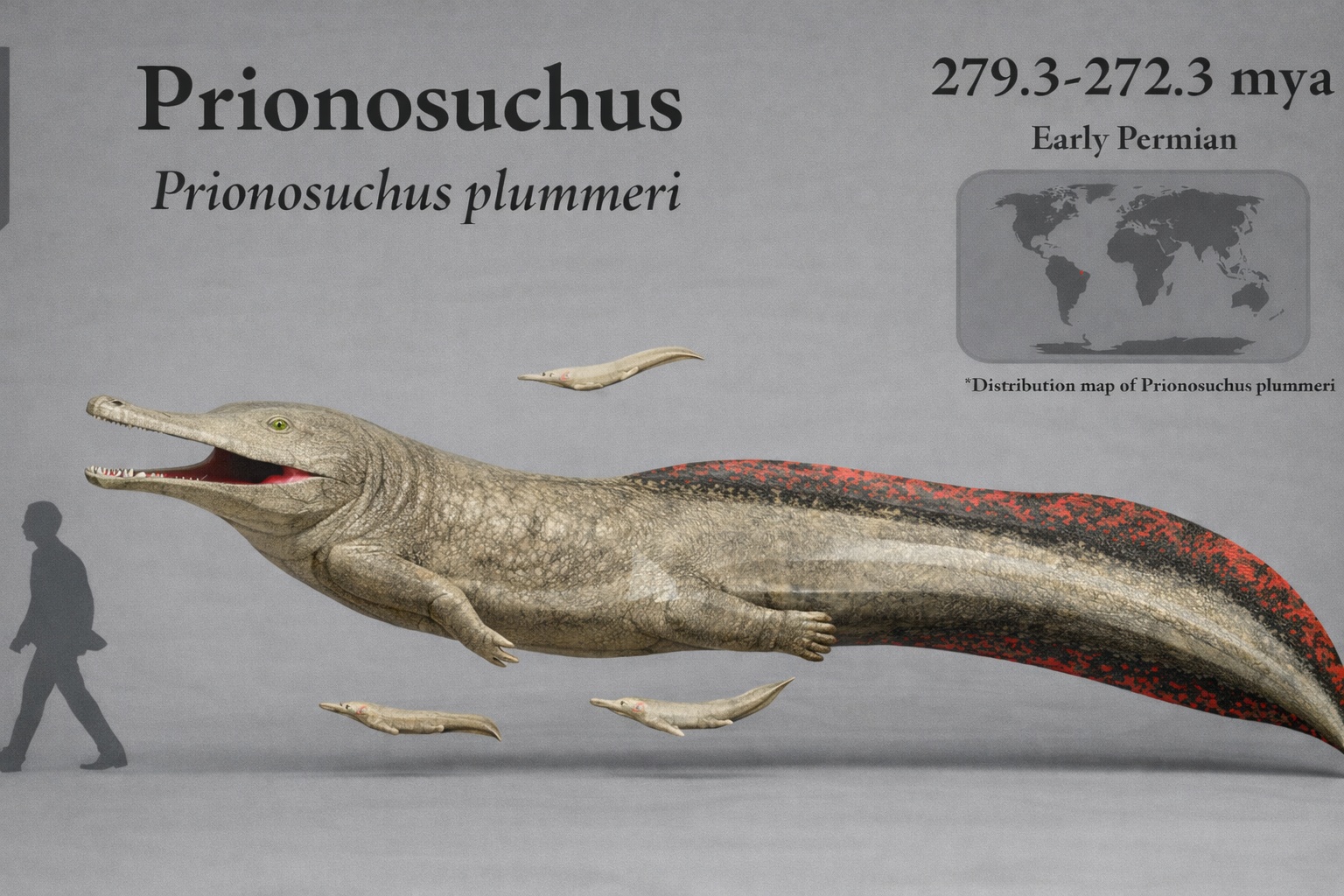
Fossil Found In Brazil Reveals That Prionosuchus Plummeri Reached Up To 6 Meters, Lived In The Permian, And Redefined The Limits Of Giant Amphibians.
Long before dinosaurs dominated the Earth, when the continents were still joined and the planet’s climate was undergoing profound transformations, a colossal predator glided through the rivers, swamps, and floodplains of what is now Brazil. Prionosuchus plummeri, described from fossils found in the present state of Minas Gerais, not only impresses with its size but also completely challenges the popular image of amphibians as small, fragile animals dependent on restricted environments. With estimates ranging from five to six meters in length, it is recognized in the scientific literature as the largest amphibian ever documented.
The fossil records date back to the Middle Permian, around 270 million years ago, an era marked by ecosystems dominated by large aquatic and semi-aquatic predators. In this scenario, Prionosuchus occupied the top of the food chain, acting as a super predator capable of capturing giant fish, other amphibians, and possibly primitive reptiles that approached the water.
An Amphibian The Size Of A Crocodile
What makes Prionosuchus so extraordinary is the combination of typical amphibian characteristics with dimensions comparable to those of large modern crocodilians.
-
Helicopter Drops 180 Tons of Sand and Gravel on Swedish River to Revive Ecosystem Damaged by Decades of Exploitation

-
Brazilian Company Launches Retro Smartphone with 48 MP Camera, T9 Keyboard, and Privacy Features for Social Media-Free Use

-
Self-Taught Chinese Farmer Builds 5-Ton Submarine from Scrap, Launches It in Anhui River
-
Invisible Induction Technology Enables Wireless Power for Blenders, Coffee Makers, and Air Fryers, Reducing Countertop Cables





Its elongated body, robust skull, and powerful jaw resemble more of a giant alligator than a salamander or frog. Anatomical studies indicate that the skull alone could exceed 1.5 meters in length, equipped with conical and curved teeth, ideal for gripping slippery prey.
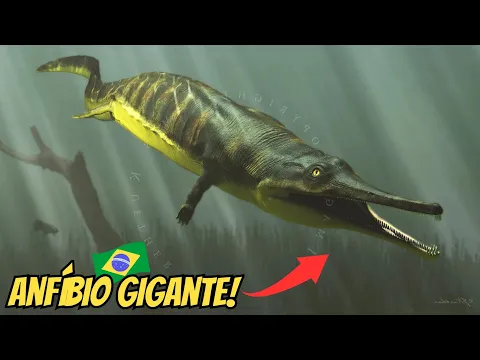

Despite its impressive size, it still retained typical amphibian traits, such as a physiology strongly tied to water and a skin likely permeable, making it dependent on humid environments.
This combination makes Prionosuchus an extreme example of amphibian gigantism, a rare phenomenon even in ancient geological periods.
Brazil As A Stage For Prehistoric Megafauna
The fossils of Prionosuchus plummeri were found in the Paraná Basin, one of the most important regions in the world for the study of the Permian.
At that time, Brazilian territory was located in a cooler and wetter climatic band of the supercontinent Gondwana, with vast river systems, lakes, and wetlands that favored the existence of large predatory amphibians.
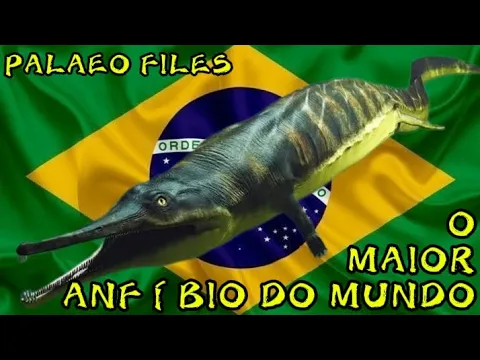
This environmental context explains how such a large animal could evolve. The abundance of prey, coupled with the absence of true crocodilians — which would only emerge millions of years later — allowed amphibians like Prionosuchus to occupy ecological niches that are unthinkable for this group today.
Semi-Aquatic Predator And Hunting Strategy
Evidence suggests that Prionosuchus adopted a semi-aquatic lifestyle, similar to that of modern crocodiles. It likely spent most of its time submerged or partially hidden, using the aquatic environment as a strategic advantage.
When a prey approached the shore, the attack would be quick and devastating, driven by a powerful bite and the weight of its own body.
The colossal size was not only an offensive advantage but also a defensive one. Few animals in the Permian would have the capacity to face an adult Prionosuchus, placing it in a dominant position within the ecosystem.
Comparisons That Help To Understand Its Dimension
When compared to modern amphibians, the contrast is almost absurd. The largest living salamander today, the Chinese giant salamander, rarely exceeds 1.8 meters. Even it, considered a “giant” today, would have just over one-third of the estimated length of Prionosuchus.

In relation to modern crocodiles, the Brazilian amphibian comes dangerously close to species such as the Nile crocodile or the saltwater crocodile, although with important structural differences. While crocodilians have denser bones and distinct metabolism, Prionosuchus depended on stable aquatic environments to maintain its size and vital functions.
The End Of A Giant And The Extinction Of Colossal Amphibians
The disappearance of Prionosuchus is linked to the profound environmental changes that marked the end of the Permian, a period that culminated in the largest mass extinction in Earth’s history.
Extreme climate changes, intense volcanism, and ecological collapses eliminated much of the existing species, including the giant amphibians that dominated aquatic environments.
Over time, reptiles better adapted to dry environments, and later, dinosaurs, began to occupy the niches left vacant. Amphibians, in turn, survived in smaller forms more dependent on specific environments, never reaching the gigantism observed in Prionosuchus again.
A Fossil That Changes The Way We See Amphibians
The scientific importance of Prionosuchus plummeri goes far beyond the visual impact of its size. It demonstrates that amphibians were once the absolute protagonists of terrestrial and aquatic ecosystems, challenging the idea that they have always played secondary roles in the evolution of vertebrates.
Described and studied in specialized journals such as the Brazilian Journal of Paleontology, the animal has become a global reference in studies on gigantism, evolution, and Permian paleoecology. Each new analysis reinforces Brazil’s role as one of the main territories for understanding prehistoric life on a global scale.
By revealing an amphibian the size of a small bus, Prionosuchus not only impresses but forces science to revisit concepts of biological limits, adaptation, and ecological dominance. It is proof that, in a distant past, the Earth was home to creatures that challenge everything we consider possible today.





-

-

-

-

10 people reacted to this.