





 Portuguese
  English
  Spanish
  4 min of reading
  0 comments


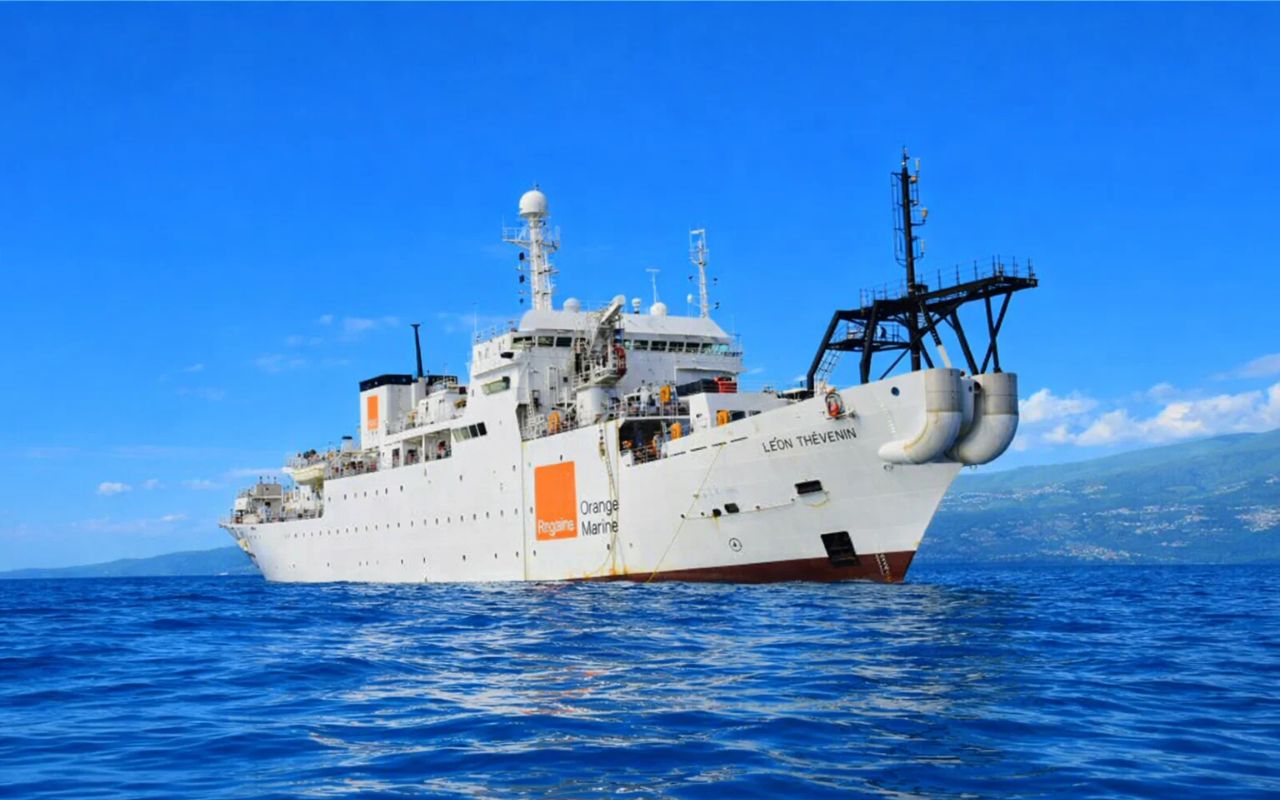
The Léon Thévenin Ship Has Been Repairing Submarine Cables Around Africa for Decades, Restoring Internet Connections Essential for Millions of People.
When a submarine cable breaks in the waters surrounding Africa, the response often comes from a single specialized vessel: the Léon Thévenin ship.
This maritime platform is responsible for locating and repairing faults in the infrastructure that supports much of the continent’s digital connectivity.
Whenever a break occurs, technical teams quickly embark to restore the network that connects millions of users to the internet.
-
A couple stumbles upon a rusty can during a hike in California and discovers the largest buried treasure in the U.S.: 1,427 gold coins from the 19th century valued at $10 million.

-
More than 13,000 fragments of pottery used as tickets, accounts, school exercises, and everyday messages resurface from the sands of Egypt, revealing a colossal archive of ordinary life hidden for centuries in Athribis.

-
A retired engineer in Canada built a water wheel by the river next to his house that generates 36 kWh per day without needing a dam, and now it produces so much energy that he exports the surplus to the power grid.
-
A huge Maya city has been detected beneath the Mexican jungle with the help of LiDAR, a system that shoots laser pulses from above to map the ground beneath the vegetation, revealing 6,764 structures.

The ship has been in operation for more than four decades and has been continuously active in the African region for about thirteen years.
Currently, it responds to emergencies involving submarine cables across an extensive maritime area that stretches from Ghana to Madagascar.
Submarine Cable Network Connects Africa to the Rest of the World
Around the African continent, there is a vast network of submarine cables connecting countries, data centers, and telecommunications stations to the global internet infrastructure.
In addition to them, the Equiano Cable, a project developed by Alphabet, establishes a link between Portugal and South Africa.
The largest project is the 2Africa Cable System, considered the longest in the world, with about 45,000 kilometers in length.
This submarine cable departs from the United Kingdom, circumnavigates all of Africa, and reaches as far as India.
Structure of the Léon Thévenin Ship Allows Complex Repairs
To handle failures in this global system, the Léon Thévenin ship was designed with specific equipment for deep-sea operations.
The vessel is approximately 107 meters long and has a crew of about 60 people.
Onboard, there are technologies capable of precisely locating a damaged submarine cable.
Among the resources are a remotely operated submarine and an auxiliary boat used for technical tasks.
With this structure, the ship is able to perform repairs in both deep waters and shallower areas.
Furthermore, the vessel was developed to operate even in adverse weather conditions.
Why Do Submarine Cables Suffer Damage
Despite being built to withstand the oceanic environment, submarine cables can suffer various types of damage.
Marine storms can cause sediment displacement on the seabed and affect these structures.
Another common cause occurs when vessels drop anchors in inappropriate locations, accidentally dragging the cables.
In some regions of the planet, interruptions may also be linked to geopolitical disputes, as has happened in areas near Taiwan or the Baltic Sea.
Léon Thévenin Ship Has Restored Connections After Major Failures
In recent years, the Léon Thévenin ship has played a crucial role in various incidents involving submarine cables.
One of the most notable episodes occurred in March 2024, when simultaneous failures in several cables affected connectivity in regions of West and Central Africa.
The vessel participated in the operation that restored internet access for millions of people.
Additionally, the crew also faced challenges near the Congo Canyon.
This large underwater canyon, extending about 280 kilometers in the Atlantic Ocean, suffers from underwater landslides that frequently impact various submarine cables.
Global Responsibility Behind the Léon Thévenin Ship
A large part of the infrastructure that supports the world internet is hidden at the bottom of the oceans.
Submarine cables are responsible for carrying approximately 99% of global data traffic, connecting continents and enabling the functioning of digital services worldwide.
When one of these cables suffers damage, the impacts can be immediate. International communications, financial systems, and online platforms may experience interruptions until the issue is resolved.
To deal with these situations, specialized vessels like the Léon Thévenin ship come into action.
The mission of this ship is to locate the point of breakage and repair the submarine cable, allowing data transmission to return to normal.
This type of operation has become even more important with the advancement of the digital economy and artificial intelligence, which depend on fast and stable connections to function.
Behind these missions is the crew of the vessel, who often spend long periods at sea.
Even with little time to spend with their families, these professionals remain ready to respond whenever a failure threatens to interrupt global connectivity.
Source: Xataka






Seja o primeiro a reagir!