





 Portuguese
  English
  Spanish
  5 min of reading
  0 comments


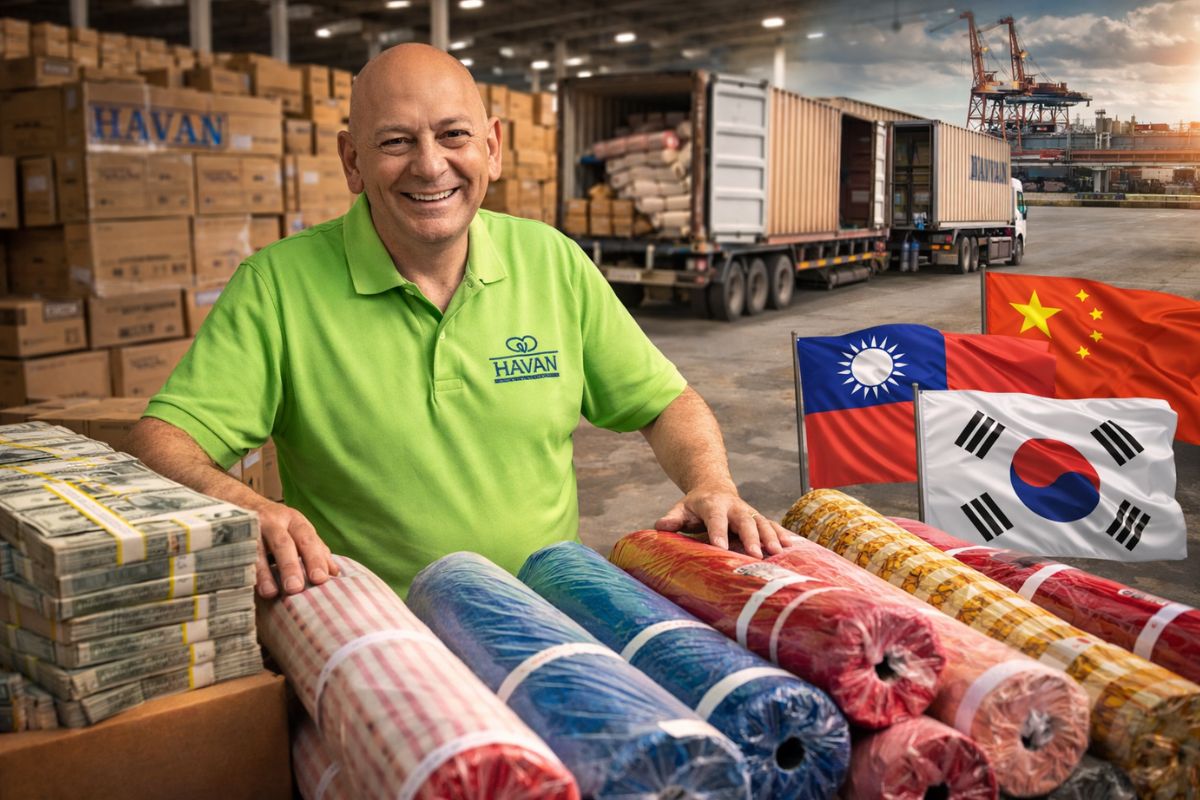
The Fabric Purchase in Rio de Janeiro, a 250 Thousand Loan, and the Absence of Product After the Sarney Plan Appear as the Turning Point Cited by Luciano Hang to Raise Havan, Still Young, After Leaving Renault and Risking Everything in Brusque, Santa Catarina.
Luciano Hang often describes the birth of Havan as a reaction to a type of emptiness that scares any merchant: doors open, customers arriving, and suddenly, no product to sell. In the context of the Sarney Plan, he claims he decided to leave Renault and bet on his own operation, even without guaranteed supply.
What seems like merely an origin story, in practice, becomes a portrait of how purchasing decisions, logistics, and timing become central when the economy distorts prices and depletes stocks. Havan started small but with an obsession for replenishment, and the route to Rio de Janeiro entered the map as an immediate solution for a scarcity that wasn’t resolved in Brusque.
The Day the Stock Disappeared and the Sarney Plan Became a Test of Nerves
In Luciano Hang’s reconstruction, the Sarney Plan does not appear as an academic concept, but as a daily shock: suppliers knocking at the door, deadlines pushed to “next year,” and the feeling that the display could look nice, but empty.
-
Friends have been building a small “town” for 30 years to grow old together, with compact houses, a common area, nature surrounding it, and a collective life project designed for friendship, coexistence, and simplicity.

-
This small town in Germany created its own currency 24 years ago, today it circulates millions per year, is accepted in over 300 stores, and the German government allowed all of this to happen under one condition.

-
Curitiba is shrinking and is expected to lose 97,000 residents by 2050, while inland cities in Paraná such as Sarandi, Araucária, and Toledo are experiencing accelerated growth that is changing the entire state’s map.

-
Tourists were poisoned on Everest in a million-dollar fraud scheme involving helicopters that diverted over $19 million and shocked international authorities.


For him, the experience at Renault helped him to see the problem rawly, because price tables and limits also blocked adjustments when costs changed.
Without alternatives in the region, Luciano Hang reports that the solution was to seek fabric where there was still supply, and Rio de Janeiro emerged as a direct destination, with factories and factory stores supplying a larger market.
There, Havan begins to take shape as an aggressive purchasing operation, designed to bring variety and volume to Brusque at a time when “there was no product to sell” became the rule, not the exception.
A 250 Thousand Loan and Full Trucks to Keep the Pace
The amount cited by Luciano Hang is objective: a loan of 250 thousand, taken to seize a rare window of availability and turn stock into survival.
The logic was simple and risky: if the goods existed in Rio de Janeiro, they needed to get to Brusque quickly, even without a structure ready to store everything.
Improvisation appeared as part of the method. According to the account, the trucks arrived in such large volumes that Havan had nowhere to put everything and resorted to space provided by a local transport company, Brusqueville, leaving fabric “at the transporter” and restocking the store as it sold.
The line and lack of space became, at once, proof of demand and operational alert.
Name, Society, and Origin in Renault Before Any Glamour
Before expansion, Luciano Hang describes a detail that often goes unnoticed: the brand was born out of a bureaucratic urgency.
He and Vanderlei, work friends at Renault, needed to register a name quickly, after an attempt that did not advance.
Accountant Sérgio Vitkosque suggested combinations, and the choice consolidated “Havan” as a synthesis of Hang and Vanderlei.
This point matters because it shows that Havan was not designed to be just a “fabric” forever, even having started with a focus on wholesale fabrics.
The base was a small address, 45 m², in Brusque, selling to bus tours and buyers from Santa Catarina, Paraná, and Rio Grande do Sul. Growth came less from an advertising piece and more from a fit between supply, price, and the flow of people.
From Fabric to the Map of Brazil and the Cost of Pushing Goods Far Away
When explaining the current operation, Luciano Hang anchors the story in Santa Catarina: headquarters in Brusque and a distribution center in Barra Velha.
He cites 25,000 collaborators and describes the physical dimension as part of the challenge, mentioning 2.5 million square meters built and periods when the company managed to build around 1,000 m² per day.
Geography comes in as a recurring obstacle. Luciano Hang mentions the distance of transporting goods from Santa Catarina to the North, citing Manaus as an example, and links this to a strategy of “doing the basics well” while the network tries to close gaps.
In the outline presented by him, there were still three federative units missing to complete national presence, referring to Ceará, Amapá, and Roraima, and the symbolic mark of 100 stores was associated with Acre.
Pioneering Import and the Impulse to Look to China, South Korea, and Taiwan
When the market opened to imports in the early 1990s, Luciano Hang says he was early to look abroad, targeting China, South Korea, and Taiwan.
The argument is that the same logic applied in the scarcity of the Sarney Plan, seeking supply where it exists and bringing it to the end customer, continued to guide decisions, now on an international scale.
In narrating this movement, he emphasizes that Havan sought differentiation by variety and opportunity, not just by quantity.
Importing did not appear as a luxury, but as a supply and pricing strategy in a retail environment that, for him, would always penalize those who depended on a few suppliers and a single shopping corridor.
Why Luciano Hang Took Time to Appear and What It Says About Reputation
A recurring part of Luciano Hang’s account is that, for years, he preferred to stay in the background and not associate his personal image with Havan.
The change happened in 2016, when he decided to appear publicly to confront versions about who owned the chain, according to him, rumors that harmed the company’s perception.
This decision is less about vanity and more about controlling narrative, something that also has operational costs.
In retail businesses with a large physical presence, reputation becomes both an asset and a risk, and Luciano Hang suggests that the exposure was a defensive response, not an initial plan. When the brand grows, silence ceases to be neutral.
What Remains When the Story Ends Where It Began: Product, Logistics, and Timing


The thread that runs through the story, from the Sarney Plan to the first batch of trucks in Rio de Janeiro, is the same question any manager faces in crisis: how to ensure supply without breaking the bank and without losing the customer.
Luciano Hang places logistics as part of the product because, without replenishment, sales become an empty promise.
At the same time, the account indicates that Havan was shaped by decisions made under pressure, with improvisation, credit, and calculated risk, and this memory continues to influence how he reads the market.
The past appears less as nostalgia and more as an alert manual: when the environment changes, stock is the first to shout.
In your city, what weighs most when it comes to opening or expanding a business: access to suppliers, credit prices, delivery logistics, or customer trust? And, looking at stories like those of Luciano Hang and Havan, what was the riskiest decision you’ve ever seen someone make to avoid running out of product?










-

5 pessoas reagiram a isso.