





 Portuguese
  English
  Spanish
  6 min of reading
  0 comments


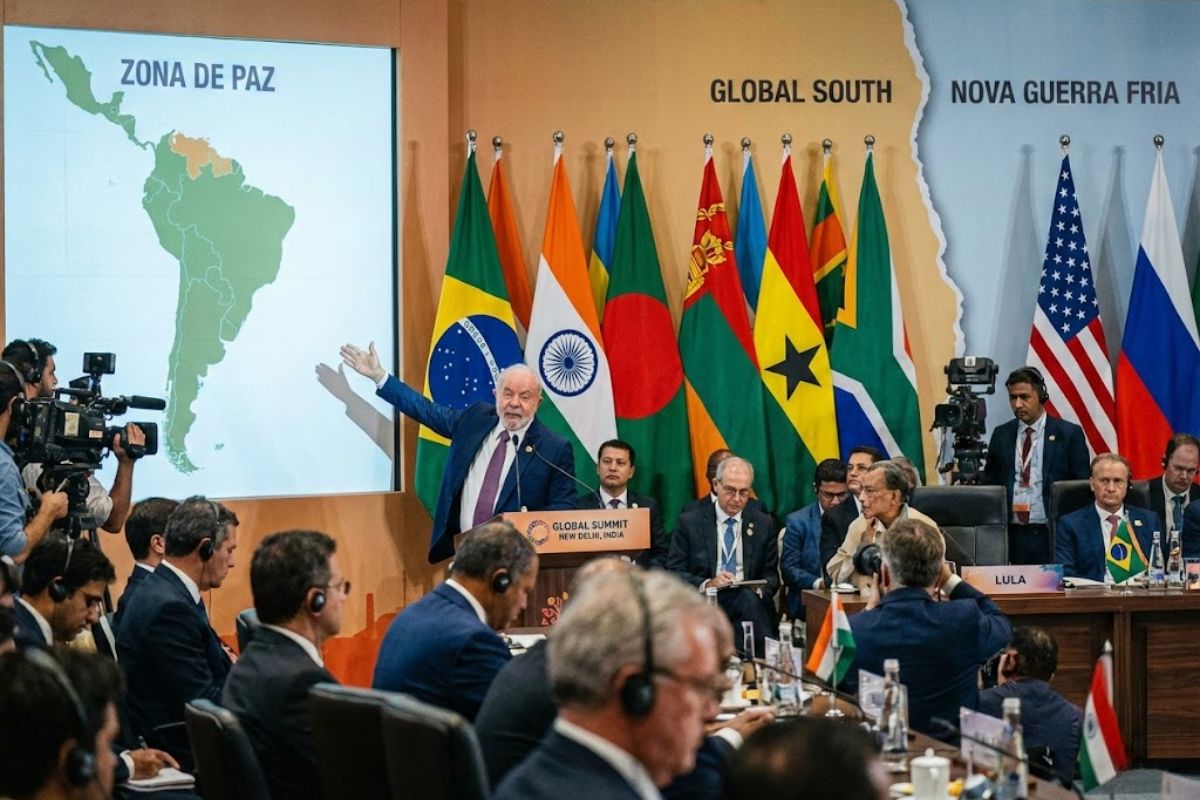
In New Delhi, Lula Stated That Brazil Wants to Keep South America as a Zone of Peace, Advocated Strengthening the Global South to Prevent a New Cold War and, Alongside Narendra Modi, Signed an Agreement on Critical Minerals and Rare Earths Related to Energy Transition and Technological Cooperation.
While Speaking in India on Saturday (21), President Luiz Inácio Lula Stated That Brazil Is Committed to Maintaining South America as a “Zone of Peace,” and Connected This Commitment to a Broader Vision of International Coordination to Reduce Tensions Between Great Powers.
Alongside Prime Minister Narendra Modi, Lula Also Advocated Strengthening the Global South and Announced an Agreement on Critical Minerals and Rare Earths, Placing Energy Transition and Technological Cooperation at the Center of the Bilateral Agenda, While Trade Between the Two Countries Continues as a Practical Axis of This Approach.
New Delhi as a Stage and the Political Message of Brazil
The President’s Visit to India, with a Speech in New Delhi Alongside Narendra Modi, Was Used to Take a Stand on Regional Security and on How Brazil Wants to Present Itself Before a More Competitive and Polarized International Scenario. According to the G1 Portal, the Focus Was Not Just Bilateral, but Also on How Alliances and Forums Can Be Reorganized Without Falling Into Rigid Blocks.
-
The government requests the Federal Revenue Service for a new system to automate the income tax declaration, reducing errors, time, and bureaucracy for millions of Brazilians.

-
Pix in installments, international Pix, and contactless payment without internet: the Central Bank revealed the new features coming to the tool that is already used by almost every adult in Brazil.

-
Mercado Livre has just started selling medications with delivery in up to three hours to your door, and this move could completely change the way Brazilians buy medicines on a daily basis.

-
In Dubai, rising tensions from the war in the Middle East are causing super-rich individuals to leave the Gulf and direct their fortunes to a new financial refuge in Asia.

By Advocating for South America as a “Zone of Peace,” Lula Signaled That Brazil Intends to Associate Diplomacy and Regional Stability with a More Predictable Foreign Strategy. The Central Message Is One of Containing Tensions, Emphasizing the Need to Prevent Disputes Between Powers from “Overflowing” into Regions Seeking Development and Autonomy of Decision.
“Zone of Peace” and What Brazil Tries to Preserve in South America
When Lula States That Brazil Is Committed to a South America as a Zone of Peace, the Concept Functions as an Umbrella: It Involves Reducing Risks of Diplomatic Escalations and Keeping Active Channels of Regional Dialogue. The Idea Is to Sustain Stability as a Strategic Asset, Not Just as a Rhetorical Detail.
This Type of Positioning Also Seeks to Provide Coherence Between Brazil‘s Foreign Policy and Its Actions in the Immediate Surroundings. Where Does This Matter in Practice? In a Context Where Global Crises and Disputes Can Affect Trade, Energy, Investments, and Production Chains, Maintaining Regional Predictability Becomes a Form of Indirect Protection for Economic and Social Interests.
Global South and the Argument Against a New “Cold War”
In His Speech, Lula Advocated Strengthening the Global South So That the World Does Not Return to a “Cold War Between Two Powers.” By Framing the Topic This Way, Brazil Tries to Assert That Developing Countries Do Not Want to Choose Sides Out of Inertia, But Rather Expand Their Negotiation and Cooperation Capacity in Technology, Energy, and Trade. It Is a Logic of Autonomy Through Coordination, Not Isolation.
By Mentioning Similarities Between Brazil and India, Lula Also Suggests That This Approach Is Not Episodic, but Sustained by Comparable Problems and Agendas, with Room for Scientific and Technological Collaboration. The Subtext Is That South-South Partnerships Can Reduce Vulnerabilities, Especially in Strategic Sectors at the Center of Global Disputes.
Critical Minerals and Rare Earths: Why the Agreement Matters in the Energy Transition
The Agreement Announced by Modi and Commented on by Lula Targets Critical Minerals and Rare Earths, Described as Strategic for Technologies Such as Electric Vehicles, Solar Panels, Smartphones, Jet Engines, and Guided Missiles.
At This Point, Brazil and India Signal a Cooperation That Directly Relates to the Energy Transition and the Digitalization of the Economy. It’s Not Just About Extracting, It’s About Ensuring Access and Continuity of Production.
By Placing Renewable Energies and Critical Minerals “At the Core” of the Understanding, Lula Associates Brazil with a Long-Term Agenda That Mixes Climate, Industry, and Supply Security.
Resilient Supply Chains Become the Key Expression: For India, There Is the Goal of Reducing Specific External Dependencies; For Brazil, There Is the Opportunity to Transform Resources and Cooperation into Influence and Technological Capability.
Reserves, Dependencies, and the Dispute Over Supply Chains
The Basis of the Conversation Includes a Sensitive and Relevant Piece of Data: Brazil Holds the Second Largest Global Reserves of These Resources.
This Reinforces Why the Country Appears at the Table When the Topic Is Energy Transition and Reindustrialization of Clean Technologies, and Why Cooperation with India Gains Strategic Density. Natural Resources, by Themselves, Do Not Guarantee Advantage, But Change the Political Weight of Any Negotiation.
From the Indian Side, the Declared Motivation Is to Reduce Dependency on China, with Investments in Expanding Domestic Production, Recycling, and Diversifying Suppliers.
In This Design, Brazil Enters as a Potential Partner in an Arrangement That Tries to Balance Growing Demand for Minerals with the Goal of Not Concentrating Risks in a Few Actors.
The Fundamental Question Is How to Transform the Agreement into Real Capacity, Without Letting the Agenda Just Remain in the Announcement.
Trade, Mercosur, and the Ambition to Scale the Brazil-India Relationship
Besides Geopolitics and Energy, There Is a Concrete Vector: Trade Between Brazil and India Exceeded US$ 15 Billion in 2025, and the Two Countries Aim to Raise Bilateral Trade to US$ 20 Billion by 2030.
This Number Serves as an Objective Measure to Assess Whether the Approach Translates into Consistent Economic Flow. Without Trade, Diplomacy Loses Traction; Without Diplomacy, Trade Loses Direction.
Lula Also Mentioned the Importance of Strengthening Mercosur’s Relationship with the Global South, Connecting Brazil to a Strategy of Market Expansion and Partnerships.
In This Context, India Appears as a Central Partner for Latin America, and Brazil as India’s Main Trading Partner in the Region. The Challenge Now Is to Align Block Interests and National Priorities, Without Stalling Initiatives Due to Lack of Coordination.
The President’s Agenda and What to Observe from Now On
The Visit Included an Official Ceremony, a Tribute to Mahatma Gandhi, and Meetings with Modi, and Occurred After Lula Participated in a Global Summit on Artificial Intelligence.
This Suggests That Brazil Is Trying to Stitch Together, in One Trip, an Agenda Ranging from Technology to Energy and International Security. The Common Thread Is to Reposition Priorities Without Abandoning Traditional Diplomatic Topics.
Next, Lula Will Head to South Korea, with Meetings Scheduled with President Lee Jae-myung and Participation in a Business Forum. For Brazil, This Expands the Asian Arc of the Trip and Allows Comparison of Cooperation Models: With India, Minerals and Energy Transition; With South Korea, an Agenda with a Strong Business and Technological Presence.
The Real Outcome Should Be Reflected in Projects, Investments, and Cooperation Mechanisms, More Than in Declarations.
Brazil Presented, in India, Three Messages in the Same Package: South America as a “Zone of Peace,” the Global South as an Antidote to a New “Cold War,” and Critical Minerals as a Key Element of Energy Transition and Technological Cooperation.
Do You See This Strategy as a Way to Give More Autonomy to Brazil, or as a Risk of the Country Being Squeezed Between Great Powers? And, Looking at Critical Minerals and Rare Earths, What Do You Think Should Come First: Attracting Technological Partnership, Expanding Trade, or Defining Clearer Rules to Transform Reserves into Long-Term Development?









-

-

2 pessoas reagiram a isso.