





 Portuguese
  English
  Spanish
  7 min of reading
  0 comments


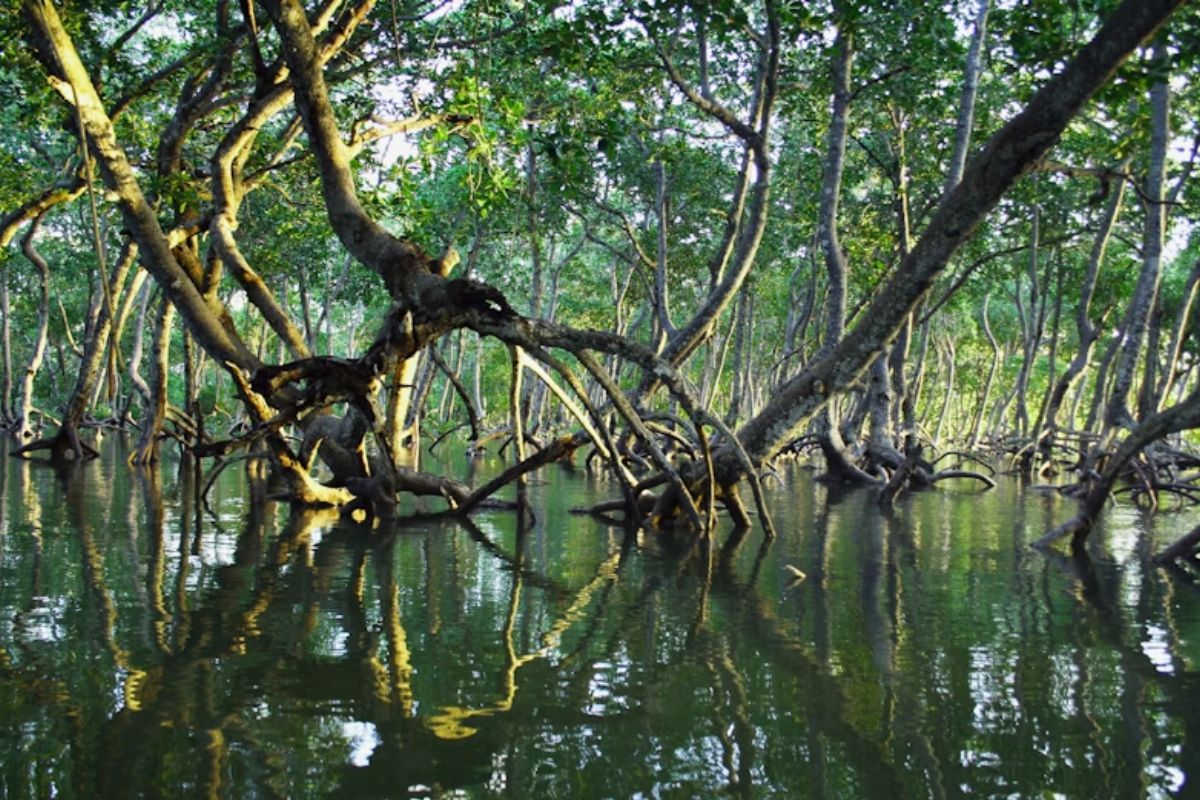
Study In Colombia Reveals That Mangroves Accumulate Up To 2.5 Debris Per Square Meter, Trapping Plastic For Decades, Generating Microplastics In The Food Chain, And Leaving Coastal Communities More Vulnerable.
Seen from afar, mangroves appear to be just twisted forests where rivers meet the sea, but a new study in Colombia shows that these ecosystems are accumulating up to 2.5 debris per square meter, functioning as true silent traps for plastic waste. What was once a natural shield against storms and erosion now also holds, layer upon layer, the traces of human consumption.
Among aerial roots and thick mud, bottles, bags, caps, packaging, and fragments of plastic are retained for decades, slowly degrading into microplastics that circulate back into the water and the food chain. Meanwhile, coastal communities that rely on mangroves for fishing, protection, and livelihood live the paradox of needing the mangrove to survive while also coexisting with the pollution that suffocates it.
Mangroves: Natural Shield That Became A Plastic Trap
Mangroves occupy the unstable zone where the freshwater of rivers meets the sea, in an area that seems always on the verge of changing shape.
-
Motorola launched the Signature with a gold seal from DxOMark, tying with the iPhone 17 Pro in camera performance, Snapdragon 8 Gen 5 that surpassed 3 million in benchmarks, and a zoom that impresses even at night.

-
Satellites reveal beneath the Sahara a giant river buried for thousands of kilometers: study shows that the largest hot desert on the planet was once traversed by a river system comparable to the largest on Earth.

-
Scientists have captured something never seen in space: newly born stars are creating gigantic rings of light a thousand times larger than the distance between the Earth and the Sun, and this changes everything we knew about stellar birth.

-
Geologists find traces of a continent that disappeared 155 million years ago after separating from Australia and reveal that it did not sink, but broke into fragments scattered across Southeast Asia.

Their roots emerge from the muddy soil and slow down the current, creating refuges for fish, crustaceans, and birds, as well as sustaining local economies based on artisanal fishing, ecotourism, and shellfish gathering.
In recent years, however, a much less visible role has become evident. Mangroves are turning into large traps for human waste, especially plastic, storing for decades what was discarded in just a few minutes.
Bottles, bags, food packaging, and fragments of broken objects accumulate between the roots and remain buried for long periods, as if the mangrove were keeping a subterranean archive of everyday consumption.
Study In Colombia Reveals The Accumulation Of Waste In Mangroves
A recent investigation on the Colombian coast analyzed 29 mangrove areas to understand how this accumulation occurs.
Field teams combined direct counts of waste with 671 interviews with residents of coastal communities, seeking not only to measure the amount of trash but also to connect the numbers to the daily lives of those living near these ecosystems.
The results are clear: human activity is the dominant factor in mangrove pollution, surpassing natural characteristics such as tree age, size, or forest density.
The proximity to urban centers, the lack of effective waste collection systems, and a consumption model based on disposable packaging explain why some stretches are more loaded with plastic than others.
Why Do Some Mangroves Accumulate More Waste Than Others
Not all mangroves behave the same way regarding waste. There are three main types of mangrove forests described in the study:
- Riverside mangroves, which grow along rivers and floodplains
- Fringe mangroves, which develop in open bays and coastal lagoons
- Basin mangroves, located further inland with less direct tidal influence
The data shows that fringe mangroves are the ones that retain debris the most. The tides push floating objects toward the edges of the forest, and the roots act as a natural net that holds this material.
In these areas, average levels reach about 2.5 pieces of waste per square meter, while in riverside and basin mangroves, the number usually stays below 0.4 pieces per square meter.
The distance to cities and towns also plays a role. The closer a mangrove is to an urban center, the more likely it is to accumulate a greater amount of waste.
In many coastal areas, the absence of regular collection makes rivers and channels turn into informal disposal routes, which end up dumping waste directly into the heart of the mangrove.
The Dominance Of Plastic And The Advancement Of Microplastics
In all types of mangroves analyzed, plastic accounts for almost 90 percent of the waste found. Items that float easily, such as bottles, caps, food packaging, and pieces of foam, dominate.
In basin mangroves, heavier materials like glass and metal appear more frequently, usually associated with direct disposal on the banks.
Over time, sun, water movement, and animal action degrade these materials. Crabs drag pieces of plastic into their burrows, where mud slowly covers them and traps them in the soil for decades, creating a type of plastic carbon in the soil that physically integrates into the sediments.
Smaller fragments, microplastics, can be returned to the water during strong tides or storms, re-entering coastal food chains.
Small fish ingest these microplastics, which pass to larger fish and, eventually, end up on the plates of human communities. What started as a discarded bottle in a distant river returns in the form of invisible particles within the food itself.
Roots That Protect While Also Trapping Debris
The roots are the great asset of mangroves and, at the same time, their greatest vulnerability in the face of plastic waste. Red mangroves develop aerial roots that form true natural walls, while black and white mangroves exhibit vertical roots that emerge from the soil like stakes.
Both systems slow down the water and capture floating debris. During calm tides, waste gets trapped in these labyrinths of roots.
In extreme events, some material may return to the sea, but the smaller fragments infiltrate the internal channels of the ecosystem, feeding a cycle of retention that repeats tide after tide.
Thus, the same mechanism that protects the coastline from waves and storms ends up holding the plastic that no one collects.
Coastal Communities Between Dependence And Pollution
The impact does not fall only on birds, fish, turtles, and crabs. The waste accumulating in the mangroves directly affects the quality of life of the people living in coastal communities.
Marine animals ingest plastic or become entangled in nets and bags, while toxic substances associated with polymers spread through the food chain and return to the tables of families that depend on fishing.
When the roots of mangroves are damaged or blocked by debris, the ecosystem’s capacity to buffer floods and storms decreases. This means more risk for coastal homes, more erosion, and greater vulnerability to rising sea levels.
Interviews conducted in Colombia reveal a paradox: many residents recognize the ecological value of the mangrove and the risks of pollution but point to the lack of real alternatives to deal with their waste.
Where there is no regular collection, recycling centers, or ongoing environmental education, waste inevitably ends up in the river or at the edge of the forest.
Urgent Measures To Protect Mangroves
Tackling the problem starts, first, by reducing the flow of waste at the source. Disposable packaging continues to be one of the main sources of floating debris reaching the mangroves, especially plastic.
Systems for collecting bottles, incentives for reusable containers, and drinking water refill stations have already shown, in different countries, that it is possible to drastically reduce the presence of plastics in rivers and beaches.
Improving basic services is another essential pillar. Regular waste collection, recycling infrastructure, and permanent environmental education programs create a direct link between daily habits and the state of the environment.
In some coastal municipalities in Latin America and Southeast Asia, models of local recycling cooperatives are being tested, generating income and reducing the amount of waste that reaches the mangroves.
Legal protection also counts. Several countries have strengthened rules that limit urbanization in mangrove areas and require waste management plans in tourist and port regions. These measures do not always attract immediate attention but make a difference in the long run.
Long-Term Environmental Impact And The Role Of Technology
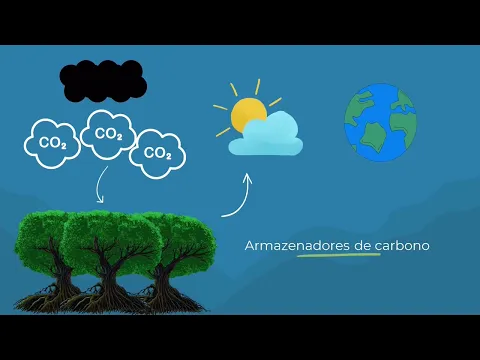

Restoring mangroves free of debris has a multiplier effect. These ecosystems store large amounts of carbon in their soils and biomass, becoming natural allies in the fight against climate change. A healthy mangrove captures carbon for centuries, not just during the life of the trees that form it.
At the same time, improving waste management in watersheds reduces pressure on seas and oceans beyond the immediate coast. Less plastic in the mangroves means fewer microplastics in reefs, beaches, and fishing areas.
Technology can support this process with sensors to monitor waste flow in rivers, floating barriers at strategic points, and community apps to report illegal waste dumping in real time.
These are not magic solutions, but they help connect people, public managers, and scientists to the problem. When the impact of waste on mangroves ceases to be invisible, the chances increase that policies, habits, and technologies will move in the same direction.
And you, in your opinion, what should be the number one priority to protect mangroves: reducing plastic at the source or removing the waste that is already trapped in these coastal forests?







Seja o primeiro a reagir!