





 Portuguese
  English
  Spanish
  4 min of reading
  1 comment


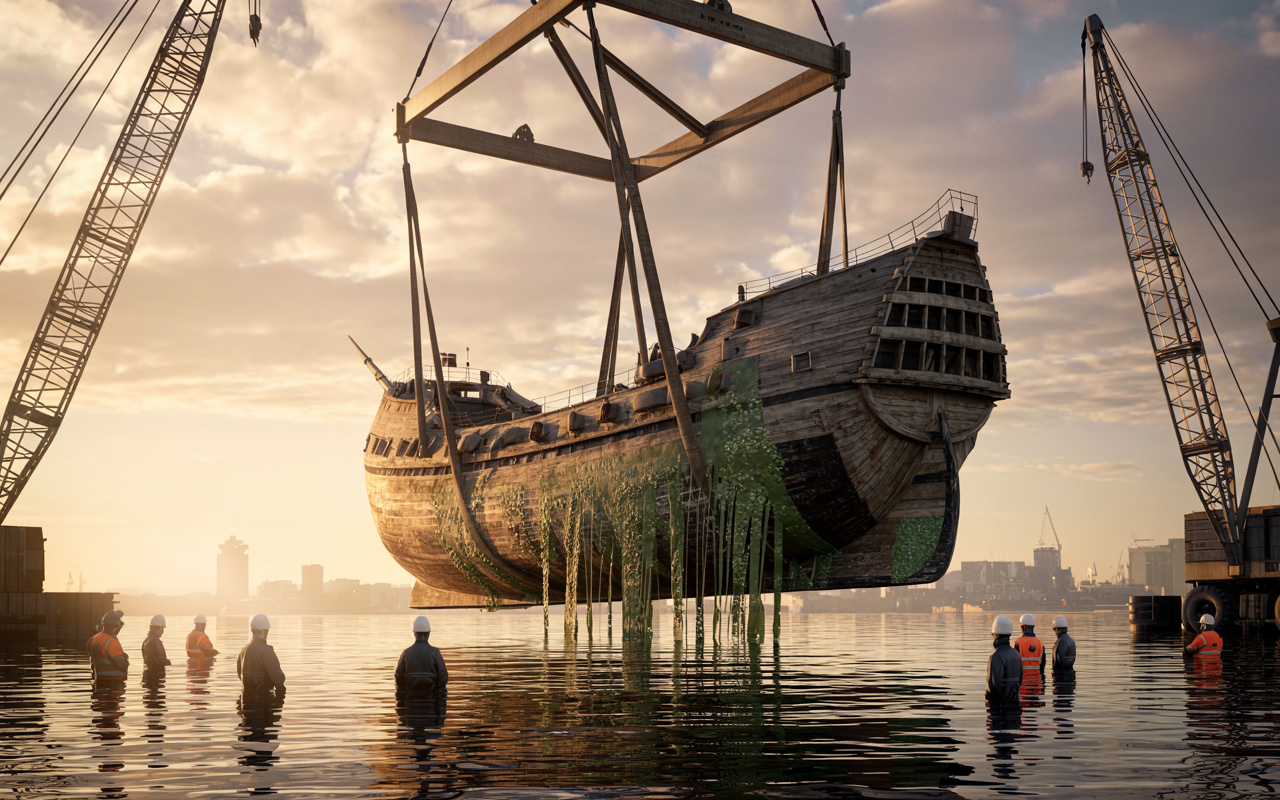


The Vasa Ship, Which Sank in 1628, Was Raised After 338 Years in One of the Largest Naval Salvage Operations. See How Sweden Rescued the Historic Warship and Took It to the Museum in Stockholm.
The warship Vasa, built between 1626 and 1628, is one of the greatest icons of Sweden’s naval history — but also one of the biggest maritime disasters of its time. On August 10, 1628, it sank in the shallow waters of the Stockholm harbor just 1.3 km after leaving the dock, on an inaugural voyage that lasted mere minutes. For more than three centuries, the Vasa remained buried 32 meters deep, protected by the cold and low-oxygen environment of the Baltic Sea, until, in one of the largest naval salvage operations ever performed, the wooden colossus was raised between 1957 and 1961.
The recovery of the Vasa was not only an engineering feat: it required nearly four years of excavations, preparations, and gradual liftings, interrupted part of the maritime traffic in Stockholm, and mobilized divers from the Swedish Navy, engineers, archaeologists, and even international press, which followed the operation step by step.
Vasa Ship: From Symbol of Power to Tragedy in 1628
The Vasa was commissioned by King Gustav II Adolf as the largest and most powerful warship of its time.
-
Friends have been building a small “town” for 30 years to grow old together, with compact houses, a common area, nature surrounding it, and a collective life project designed for friendship, coexistence, and simplicity.

-
This small town in Germany created its own currency 24 years ago, today it circulates millions per year, is accepted in over 300 stores, and the German government allowed all of this to happen under one condition.

-
Curitiba is shrinking and is expected to lose 97,000 residents by 2050, while inland cities in Paraná such as Sarandi, Araucária, and Toledo are experiencing accelerated growth that is changing the entire state’s map.

-
Tourists were poisoned on Everest in a million-dollar fraud scheme involving helicopters that diverted over $19 million and shocked international authorities.


The design called for a three-masted galleon that was 69 meters long and carried over 64 cannons, a true floating fortress. But the excess weight on the upper deck and an unstable hull doomed the vessel even before its first battle.
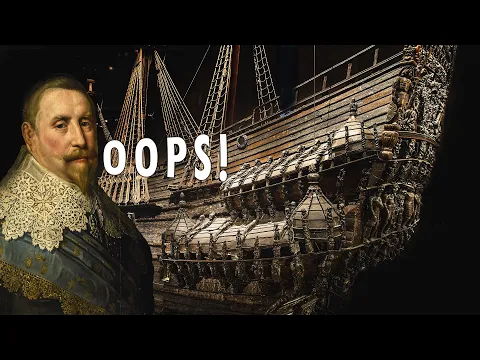

Shortly after setting sail, a gust of wind tilted the ship, and water entered through the open gun ports. The Vasa capsized in front of the astonished population of Stockholm, killing dozens of crew members and becoming a symbol of naval design failures in the 17th century.
Salvage of the Vasa: An Audacious Plan Begins to Take Shape in 1957
For 338 years, the Vasa lay dormant at the bottom of the harbor, but in 1957, the story began to change. Naval engineer Anders Franzén, who had identified the wreck site years earlier, led the efforts to recover the ship.
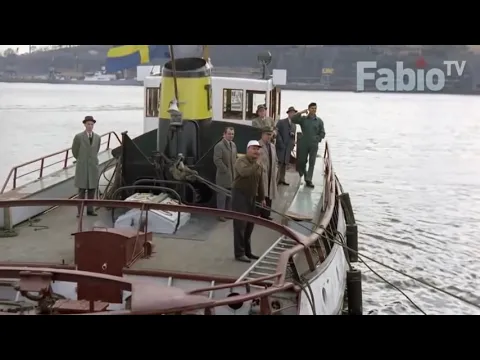
Between 1957 and 1959, divers from the Swedish Navy excavated six tunnels under the hull to pass steel cables. These cables were connected to two enormous floating pontoons, named Oden and Frigg, which would be used to gradually lift the vessel.
Lifting of Historical Ship: 18 Lifts and 4 Years of Work
The process was slow and delicate. The oak hull, although well preserved, was soaked and fragile, and any mistake could cause the Vasa to shatter. Between 1959 and 1961, there were 18 controlled lifts, each raising the ship a few meters, until it reached shallower waters.
Finally, on April 8, 1961, the final lift began. And on April 24, 1961, in front of thousands of spectators and journalists from around the world, the Vasa broke the surface of the sea for the first time in over three centuries — a historic moment broadcast internationally.
The Largest Naval Salvage Operation of the 20th Century
The magnitude of the salvage operation is impressive:
- Depth of the wreck: 32 meters
- Preparation time: 1957 to 1959
- Number of lifts: 18
- Date it emerged: April 24, 1961
- Total duration of the operation: nearly four years
Maritime traffic in the area had to be redirected, and underground rivers used for dredging were temporarily deactivated to allow for excavation and lifting work.
Vasa Museum in Stockholm: The Final Destination of the Swedish Ship Vasa
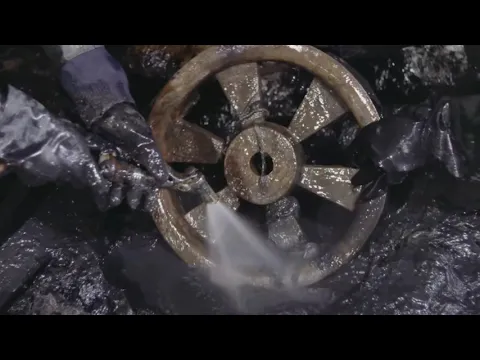
After emerging, the Vasa underwent a long conservation process. The hull was treated with polyethylene glycol (PEG), a substance used to replace water in the wood’s pores and prevent the ship from disintegrating as it dried.
Today, the Vasa is housed in the Vasa Museum in Stockholm, one of Sweden’s most visited attractions, with over a million annual visitors.
The museum not only exhibits the nearly intact ship but also tells the story of its construction, sinking, and recovery, including artifacts, clothing, and remains found on board.
Recovery of an Ancient Warship: Historical and Cultural Impact
The salvage of the Vasa became a landmark for underwater archaeology and naval engineering, inspiring similar operations around the world. No other warship from the 17th century has been preserved with such detail, making the Vasa an unparalleled time capsule about shipbuilding, life on board, and Swedish military power in the Modern Era.
The raising of the Vasa was more than a technical achievement — it was a rescue of history itself. The ship, which sank due to design flaws in 1628, now reigns in a museum dedicated to it, reminding us that even the greatest disasters can transform into invaluable cultural heritage.
With over 95% of its original structure preserved, the Swedish ship Vasa is today a symbol of power, engineering, and also human fragility — a giant of the sea that emerged from 32 meters of depth to tell its story to the world.










MUITO BOM ISSO. PARTE DA HISTÓRIA DO PAÍS RESGATADA. NO BRASIL UMA PRENSA OU MOENDA DE ENGENHO DE CANA DE AÇÚCAR, EU NÃO ME RECORDO BEM, FABRICADA NO SÉCULO 18 OU 19, SUMIU EM UM DEPÓSITO E DEPOIS DE MUITO TEMPO, DECOBRIRAM QUE ELA NÃO FOI PARAR NO LUGAR MERECIDO E ADEQUADO, QUE ERA NO MUSEU MAS FOI DERRETIDA E TRANSFORMADA EM CHURRASQUEIRAS. COISA DE BRASILEIRO.