





 Portuguese
  English
  Spanish
  6 min of reading
  1 comment


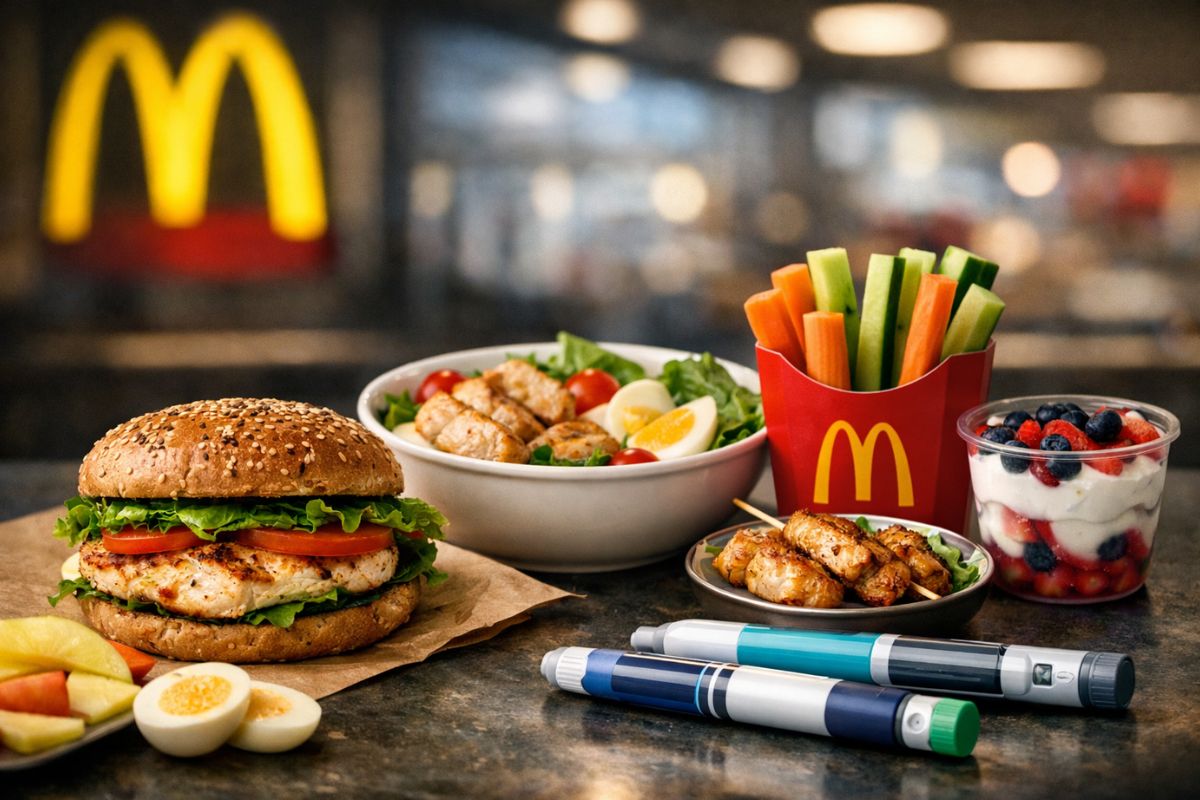


McDonald’s Discusses in Earnings Call How the Advancement of GLP-1 Drugs Alters Choices: Fewer Sugary Drinks, Fewer Snacks, and More Interest in Protein Items. The Chain Claims to Be Testing Adjustments to the Menu, Citing Existing Options, While Experts Project Versions with Fewer Carbohydrates and Smaller Portions Globally at This Time.
McDonald’s is preparing to cater to a growing group of consumers using weight-loss pens, reaching a sensitive point in fast food: what happens to the menu when appetite, impulse, and consumption routine change at the same time.
The change does not yet have an official list of new items, but the internal message is clear: as GLP-1 analog medications gain adoption, purchasing behavior tends to reorganize, and the chain wants to understand how this affects snacks, drinks, desserts, and even portion sizes.
A New Audience in the Drive-Thru
When a dietary habit changes, it doesn’t just change on the plate: it changes at the counter, in the app, in the drive-thru, and in the “automatic” choice of always.
-
The government requests the Federal Revenue Service for a new system to automate the income tax declaration, reducing errors, time, and bureaucracy for millions of Brazilians.

-
Pix in installments, international Pix, and contactless payment without internet: the Central Bank revealed the new features coming to the tool that is already used by almost every adult in Brazil.

-
Mercado Livre has just started selling medications with delivery in up to three hours to your door, and this move could completely change the way Brazilians buy medicines on a daily basis.

-
In Dubai, rising tensions from the war in the Middle East are causing super-rich individuals to leave the Gulf and direct their fortunes to a new financial refuge in Asia.


McDonald’s executives addressed the issue in a conference call about financial results, discussing consumers who use weight-loss pens and are reordering priorities when putting together their meals.
The takeaway is that this audience tends to seek options with more protein and reduce traditional choices associated with sugar and “snacking” throughout the day.
This doesn’t mean the consumer becomes another person, but that purchases become less predictable: less “completing the order” with extra items and more focus on something that seems sustaining, with fewer carbohydrates and less sweetness.
What Executives Said and What Remains Unresolved
CEO Chris Kempczinski expressed hope that the adoption of GLP-1 analog medications like Ozempic, Wegovy, and Mounjaro continues to grow, along with changes in behavior.
The key phrase is simple: as adoption increases, the way consumers eat also changes. This puts pressure on the menu to respond to a new choice logic without abandoning the traditional audience.
Vice President Jill McDonald emphasized that the chain already has items perceived as more protein-rich, citing examples like the Snack Wrap, the sausage biscuit sandwich, and McCrispy chicken strips.
At the same time, Kempczinski mentioned a trend toward less snack consumption and changes in beverage choices, with fewer sugary drinks, stating that these factors influence what is being tested. The important detail: no specific new items were presented, leaving room for market interpretations and bets.
Why More Protein Became a Key Term for GLP-1 Users
The demand for protein appears, in this context, as a practical response to what many doctors recommend for users of these medications: consuming plenty of protein to help avoid the loss of lean mass (muscles). It’s not a “menu trend,” it’s an attempt to align with a goal that consumers already bring to their meals.
For a chain like McDonald’s, this directly connects with the existing product structure: chicken, beef, eggs, combinations that can be communicated as “high in protein.” The challenge is making this transition without falling into health promises, avoiding a promotional tone, and without turning the counter into a consultation office.
These types of medications are prescribed and require professional monitoring; from the consumption side, the change that matters to the business is different: the customer starts choosing differently, allowing less room for “impulse extras.”
Existing Items That Can Take Center Stage
When Jill McDonald mentions Snack Wrap, the sausage biscuit sandwich, and McCrispy chicken strips, she also suggests a strategy: instead of reinventing everything, the chain can reposition items already in McDonald’s ecosystem. Changing the menu sometimes starts with changing the emphasis on the menu.
This could mean more explicit communication about protein or reorganizing combos and suggestions in the app, a type of adjustment the consumer feels without necessarily seeing it as a “major overhaul.”
If the GLP-1 audience tends to reduce snacks and sugary drinks, the likely consequence is that items traditionally used to “complete the order” will lose ground, while savory options with a protein profile gain centrality in the showcase and automatic recommendations.
What May Appear in Tests: Grilled Chicken, Alternative Base, and Less Bread
The lack of official details hasn’t prevented experts from speculating about possible pathways. Mike Haracz, former corporate chef at McDonald’s in the U.S., assessed that the audience will notice fewer carbohydrates and more proteins, with “fats” appearing as a marketing highlight to encourage buying intent among GLP-1 users.
The logic behind this is pragmatic: protein and fat are often perceived as more “filling” than items focused on sugar and flour.
Similarly, nutritionist Amy Goodson, from the Dallas–Fort Worth area, pointed out possibilities such as grilled chicken strips or nuggets; cauliflower tortillas instead of wheat or corn; and smaller burgers wrapped in lettuce instead of tortillas, a format already seen in other chains like Shake Shack.
Here, the point is less about “inventing trends” and more about adapting how the sandwich is assembled and its base to reduce carbohydrates, while maintaining practicality. Changing the structure (bread/tortilla) modifies the product perception without changing the heart of fast food: speed and standard.
The Side Effect for the Industry: Drinks, Desserts, and “Impulse” Snacks
When Kempczinski talks about fewer sugary drinks, he is touching on a category that has historically supported margins and volume: sodas and sweet drinks associated with the combo.
If part of the audience starts cutting this component, the chain needs to respond with alternatives that aren’t necessarily “fit,” but options that align with the customer’s new decisions without seeming like a punishment or loss.
The same applies to snacks and desserts. If the trend is to reduce “snacking” and additional orders, the competition is no longer just about selling more items, but about maintaining relevance within a shorter and more selective purchase.
This could push McDonald’s to review sizes, create smaller versions, adjust combinations, and rethink how the app suggests complements. In terms of habit, the consumer doesn’t disappear; they change their path to the register.
Where This Points in the Next Menu
What’s at stake is not merely launching a “protein sandwich,” but understanding how a pharmacological change that alters routines and choices reverberates through fast food culture.
For McDonald’s, the interest is in capturing the “new normal” without abandoning the old: keeping the menu broad, but with a testing axis focused on less sugar, fewer carbohydrates, and more protein for those already buying with this logic in mind.
It’s also a signal of how large chains learn: first observing behavior, then testing adjustments, then reorganizing what already exists, and only then, if it makes sense, creating a “new” product that seems definitive.
In the meantime, the most concrete change may not even be in the sandwich itself, but in how to suggest, group, and communicate options to an audience that now chooses with more intention and less improvisation.
McDonald’s is testing pathways to keep up with customers using weight-loss pens and changing their consumption patterns toward more protein, less sugar, fewer carbohydrates, fewer sweet drinks, and fewer traditional snacks.
The big question is whether this adaptation becomes a new chapter of the menu or just a course adjustment for a specific growing audience that influences the rest of the market.
If you were standing in front of McDonald’s panel today, what would weigh more in your choice: practicality, taste, satisfaction, or “lightness” of the order? And, in practice, which classic combo item would you remove first—sugary drink, dessert, or side?









Eu estou usando mais ou menos essa caneta emagrecedora, gostaria que vocês continuem usando muitas coisas diferentes e até mesmo algumas coisas sem açúcar e sem glútem e assim por diante, para ajudar as pessoas a emagrecer em e inclusive eu..