





 Portuguese
  English
  Spanish
  4 min of reading
  0 comments


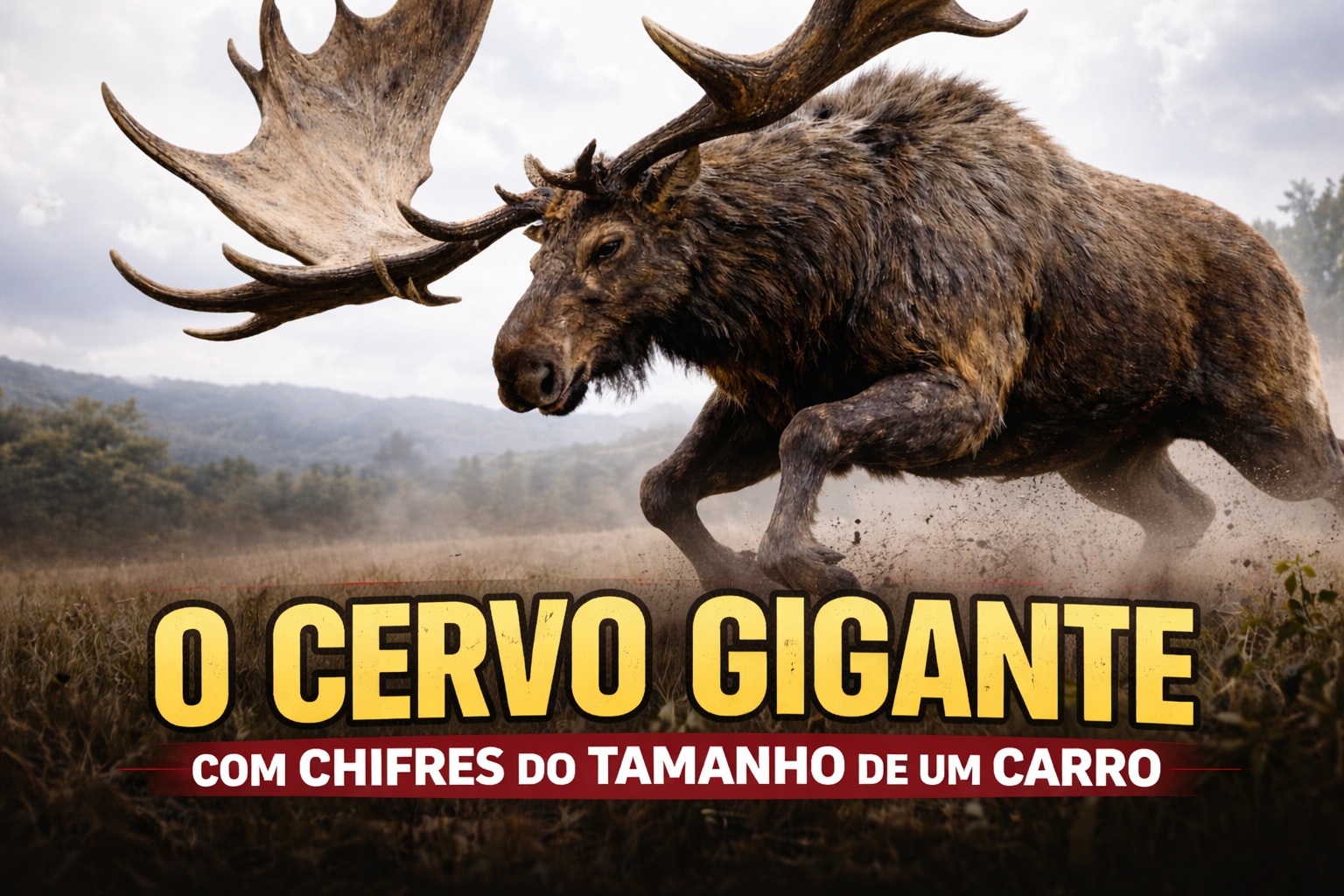
With Antlers Up to 3.6 Meters and Weight Close to 700 Kg, the Megaloceros giganteus Was the Largest Deer in History and Rivaled in Size with Large Modern Mammals.
The Megaloceros giganteus, commonly known as the giant elk or “giant deer,” was one of the most impressive mammals of the Quaternary period. Its size, proportions, and especially its colossal antlers place this animal in an almost unbelievable realm when compared to today’s deer. Although often exaggeratedly represented in popular illustrations, scientific data confirms that it was indeed the largest deer to ever walk the Earth.
The Largest Deer That Ever Existed: Dimensions That Challenge the Imagination
The Megaloceros was not just a “big” deer. It operated on another scale. Fossil records indicate that adult males reached between 1.9 and 2.1 meters in height at the shoulder, with a body length exceeding 3 meters, excluding the tail.
The estimated weight varied between 600 and 700 kilograms, a figure comparable to that of a large modern horse or some European bison.
-
Motorola launched the Signature with a gold seal from DxOMark, tying with the iPhone 17 Pro in camera performance, Snapdragon 8 Gen 5 that surpassed 3 million in benchmarks, and a zoom that impresses even at night.

-
Satellites reveal beneath the Sahara a giant river buried for thousands of kilometers: study shows that the largest hot desert on the planet was once traversed by a river system comparable to the largest on Earth.

-
Scientists have captured something never seen in space: newly born stars are creating gigantic rings of light a thousand times larger than the distance between the Earth and the Sun, and this changes everything we knew about stellar birth.

-
Geologists find traces of a continent that disappeared 155 million years ago after separating from Australia and reveal that it did not sink, but broke into fragments scattered across Southeast Asia.

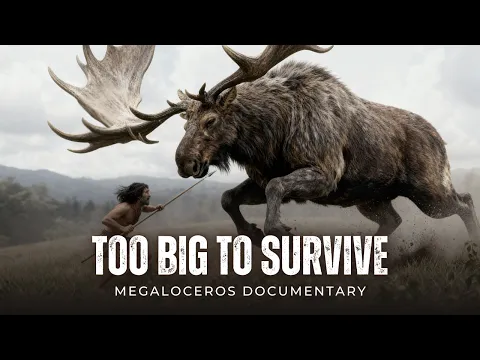

These numbers place it far above any current deer. For comparison, the modern European elk (Alces alces), considered today the largest living deer, rarely exceeds 600 kg and has significantly smaller antlers.
Antlers Up to 3.6 Meters: The Largest Skeletal Set Among Deer
The most iconic feature of the Megaloceros giganteus was its monumental antlers. Unlike the more vertical antlers of modern elk, those of the Megaloceros were wide, flattened, and extended laterally.
The most complete fossils show antlers measuring up to 3.6 meters from tip to tip, weighing alone between 35 and 45 kilograms. This represents the largest ornamental skeletal structure ever developed by a terrestrial mammal.
These antlers were not just weapons. Studies indicate that their primary function was linked to sexual selection, serving as a visual display of strength, health, and dominance during the breeding season. Conflicts between males certainly occurred, but the sheer size of the antlers already functioned as a factor of intimidation.
Where the Megaloceros Lived: Europe and Asia on a Large Scale
The Megaloceros giganteus had a wide geographical distribution. Its fossils were found throughout much of Europe, including Ireland, Great Britain, Germany, France, Spain, and Eastern Europe, as well as extensive areas of Asia, such as Western Russia, Siberia, and parts of Central Asia.
It thrived in open or semi-open environments, such as cold steppes, prairies, and sparse forests, typical of glacial and interglacial periods. Contrary to what is often believed, it was not a forest-dwelling animal—its gigantic antlers would make that environment impractical.
Diet, Behavior, and Ecological Limitations
The Megaloceros was herbivorous, primarily feeding on grasses, leaves, shoots, and low vegetation. Its dentition and cranial structure indicate an animal adapted to grazing in open areas, similar to the behavior of large modern herbivores.
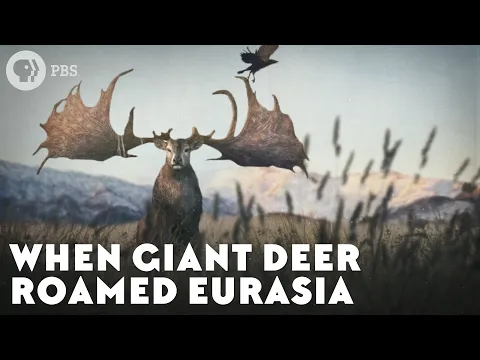
However, the very evolutionary success of the Megaloceros may have become its limitation. The gigantic antlers required a huge annual energy investment to grow and regenerate. During times of food scarcity or rapid environmental changes, this metabolic cost became a risk.
Furthermore, such wide antlers reduced mobility in expanding forest environments, which would become crucial in the last millennia of its existence.
Direct Comparison with Modern Deer
When compared to the largest living deer, the contrast is evident. The modern European elk has antlers that rarely exceed 2 meters in width, while the red deer, another large current representative, has even smaller antlers and a significantly lighter body.
Even the largest current deer fall one step below in body mass, height, and especially in the absolute size of their antlers. No living species comes close to the extreme combination presented by the Megaloceros giganteus.
Why the Largest Deer in the World Went Extinct?
The Megaloceros giganteus disappeared about 7,700 years ago, at the beginning of the Holocene. The extinction did not occur suddenly nor due to a single factor. The scientific consensus points to a combination of elements:
Climate changes after the end of the last Ice Age led to dense forest expansion, drastically reducing ideal open habitats for the animal. At the same time, the pressure from human hunting increased, especially in regions of Europe where human populations became more numerous and organized.

The high-energy cost of sustaining giant antlers in less productive environments was likely the final blow. What was once a reproductive advantage became an evolutionary disadvantage.
A Colossus Among Prehistoric Deer
The Megaloceros giganteus was not just the largest deer that ever existed—it was an extreme example of how evolution can push a species to the maximum limits of size, ornamentation, and specialization. Its record-breaking antlers remain a symbol of evolutionary excess and impress even today in museums and scientific studies.
More than just a “giant elk,” the Megaloceros represents a unique moment in natural history when deer reached dimensions comparable to those of large megamammals and dominated vast landscapes of Europe and Asia.
Even extinct for millennia, it remains the absolute benchmark of gigantism among deer, a record that no living species even comes close to breaking.








-

-

-

-

10 pessoas reagiram a isso.