





 Portuguese
  English
  Spanish
  3 min of reading
  0 comments


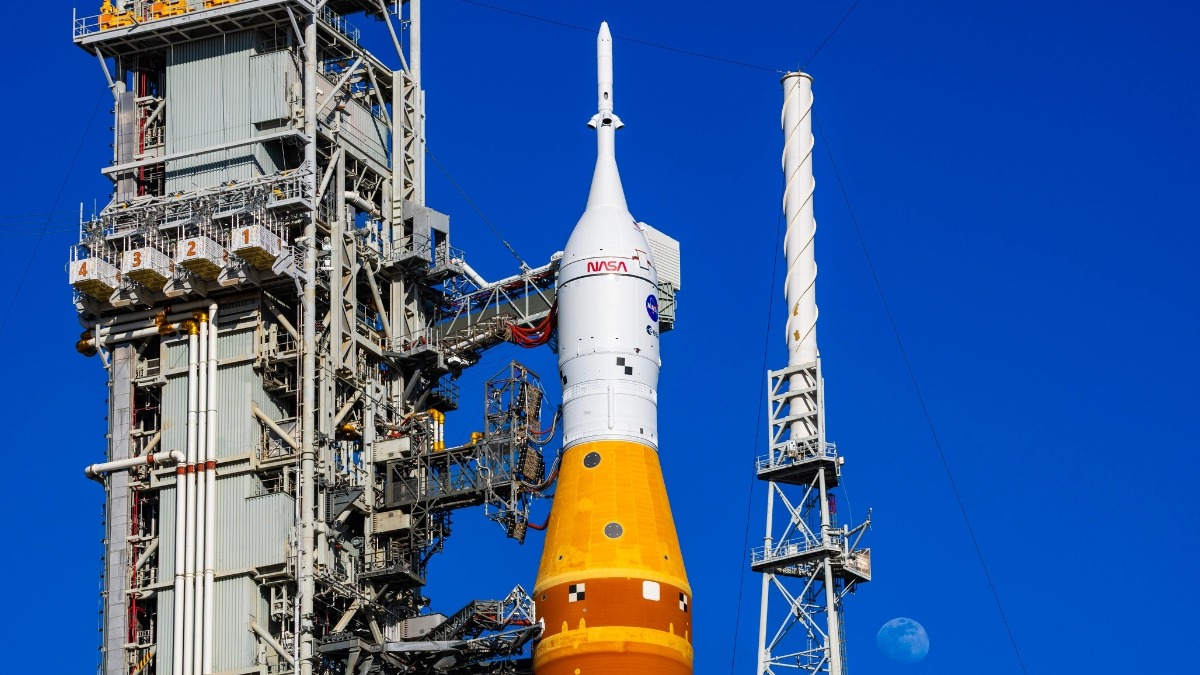
After Traveling 6.4 Kilometers at Kennedy Space Center, NASA’s Giant Rocket Returns to the Vehicle Assembly Building to Fix a Helium System Failure That Interrupted Flow to the Upper Stage and Delayed the Artemis II Mission, Initially Scheduled for March 6, with a New Attempt Conditioned on April
NASA’s giant rocket will return to the hangar this week after traveling 6.4 kilometers at Kennedy Space Center in Florida for new repairs to the helium system, delaying the Artemis II mission, initially set for March 6, with a possible launch in April.
New Helium System Failure Delays Mission
The space agency reported that it plans to make the slow crossing through Kennedy Space Center on Tuesday, weather permitting. NASA’s giant rocket will remain on the ground at least until April.
After completing a new fueling test on Thursday to ensure that dangerous hydrogen leaks were stopped, another problem arose. This time, the helium system showed a fault, interrupting flow to the upper stage.
-
Motorola launched the Signature with a gold seal from DxOMark, tying with the iPhone 17 Pro in camera performance, Snapdragon 8 Gen 5 that surpassed 3 million in benchmarks, and a zoom that impresses even at night.

-
Satellites reveal beneath the Sahara a giant river buried for thousands of kilometers: study shows that the largest hot desert on the planet was once traversed by a river system comparable to the largest on Earth.

-
Scientists have captured something never seen in space: newly born stars are creating gigantic rings of light a thousand times larger than the distance between the Earth and the Sun, and this changes everything we knew about stellar birth.

-
Geologists find traces of a continent that disappeared 155 million years ago after separating from Australia and reveal that it did not sink, but broke into fragments scattered across Southeast Asia.
Helium is necessary to purge the engines and pressurize the fuel tanks. According to NASA, it is necessary to return to the vehicle assembly building at Kennedy to determine the cause of the problem and fix it.
Launch Attempt Depends on Progress of Repairs
Engineers had controlled the hydrogen leaks and set the launch date for March 6, already a month delayed, when the helium problem was identified.
NASA stated that rapid preparations for the mission reversal preserve the launch attempt in April. However, it emphasized that this will depend on the progress of repairs on NASA’s giant rocket.
The agency has only a few days each month to launch the four-person crew around the Moon and bring them back. The schedule remains conditioned on available windows.
Crew Remains on Alert in Houston
The three Americans and the Canadian designated for the Artemis II mission remain on alert in Houston. They will be the first people to fly to the Moon since the Apollo program.
Between 1968 and 1972, the Apollo program sent 24 astronauts to the natural satellite. The new mission aims to repeat the trip around the Moon more than half a century later.
NASA Administrator Jared Isaacman was at the launch pad on Saturday, February 21, at Kennedy Space Center, according to a record released by the agency.
Possibility of Technology Application in Dry Regions of Brazil
The technology involved in NASA’s giant rocket includes pressurization control systems and engine purging with helium and hydrogen. The text does not detail applications outside the space program.
There is no information in the statement about the use of this technology in dry regions of Brazil, such as the Northeast. Any application would depend on specific studies and technical definitions not yet mentioned.
Meanwhile, the Artemis II mission remains conditioned on the completion of repairs and the availability of a new launch window, expected in April, if adjustments are finalized in time.








Seja o primeiro a reagir!