





 Portuguese
  English
  Spanish
  3 min of reading
  0 comments


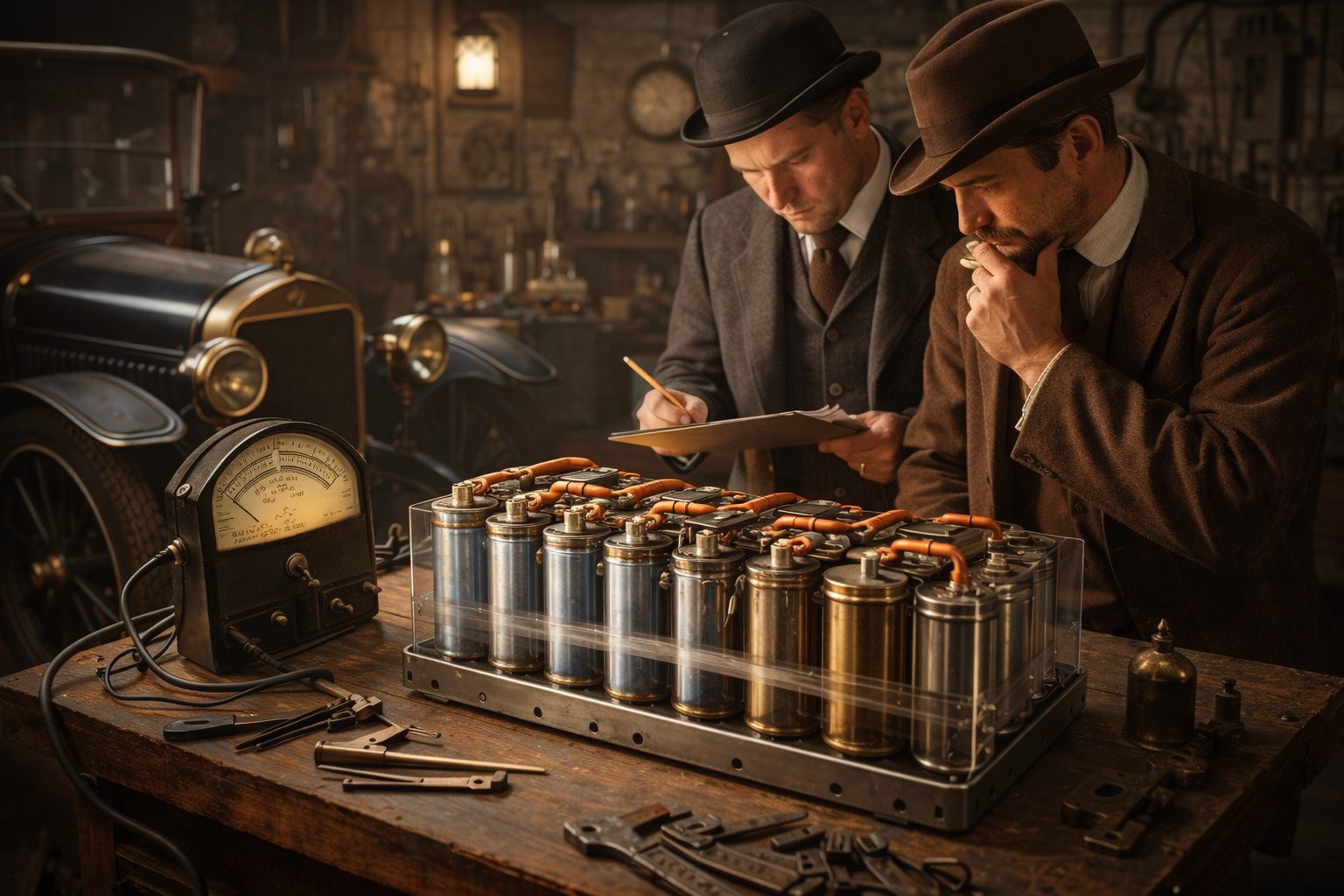
Historic Technology of Electric Cars Rises Again with Nanotechnology and Over 12,000 Durability Cycles
A technology created at the height of the first electric cars has returned to the center of energy research more than a century later. Thomas Edison conceived the nickel-iron battery around 1900, and now researchers at the University of California, Los Angeles (UCLA) are reviving this chemistry with the support of nanotechnology and scalable processes.
According to UCLA itself, the new version charges in seconds and supports over 12,000 complete cycles. This performance is equivalent to more than 30 years of daily use without significant degradation, which brings the technology back into the current energy debate.
Between 1900 and 1910, electric cars were frequently seen in the United States and competed with gasoline vehicles. The central problem was not the public’s interest, but the limitations of storage and efficient transportation of electricity.
-
Motorola launched the Signature with a gold seal from DxOMark, tying with the iPhone 17 Pro in camera performance, Snapdragon 8 Gen 5 that surpassed 3 million in benchmarks, and a zoom that impresses even at night.

-
Satellites reveal beneath the Sahara a giant river buried for thousands of kilometers: study shows that the largest hot desert on the planet was once traversed by a river system comparable to the largest on Earth.

-
Scientists have captured something never seen in space: newly born stars are creating gigantic rings of light a thousand times larger than the distance between the Earth and the Sun, and this changes everything we knew about stellar birth.

-
Geologists find traces of a continent that disappeared 155 million years ago after separating from Australia and reveal that it did not sink, but broke into fragments scattered across Southeast Asia.


To tackle this challenge, Thomas Edison developed a battery based on nickel and iron, abundant and stable materials. He sought to achieve ranges close to 160 kilometers per charge and surpass the lifespan of lead-acid batteries. Despite the technical potential, the combustion engine evolved more quickly and gained industrial scale, leaving the nickel-iron solution out of the dominant market.
Technological Update Focused on Fast Charging and Stability
More than 100 years later, researchers at the University of California re-evaluated this chemistry with a new strategy. The team prioritized durability and quick response, rather than competing directly with lithium batteries used in modern electric cars.
The new battery charges in seconds and maintains stable performance for thousands of cycles, according to data presented by the scientists. Additionally, the system operates for decades, reducing frequent replacements and increasing predictability in long-term energy applications.
Lower Dependence on Critical Materials
Although lithium still offers greater energy density for vehicles that require high range and lower weight, this is not the main goal of the research. The team focuses on wear resistance and continuous operational stability.
The chemistry eliminates the use of cobalt and reduces dependence on lithium, elements associated with supply challenges and geopolitical tensions. By utilizing less scarce materials, the technology expands the potential for sustainable production in a scenario of rapidly growing global demand for batteries.
Applications Beyond Electric Cars
Although it was created to power electric cars in the early 20th century, today’s most promising application is in stationary storage. Renewable energy systems that generate excess during the day can use this battery to balance supply and demand throughout the daily cycle.
Electric grids that require nighttime stability can also integrate the technology to enhance energy security. Data centers, remote communities, and critical infrastructures represent other fields of application, especially as the team describes the manufacturing process as straightforward and industrializable.
Thus, a battery created to make the first electric cars viable can assume a new strategic role in the 21st-century energy infrastructure.
In light of this scenario, an inevitable question arises: Can the technology that lost ground to gasoline in the past find a definitive role in the era of energy transition?








-

Uma pessoa reagiu a isso.