





 Portuguese
  English
  Spanish
  4 min of reading
  0 comments


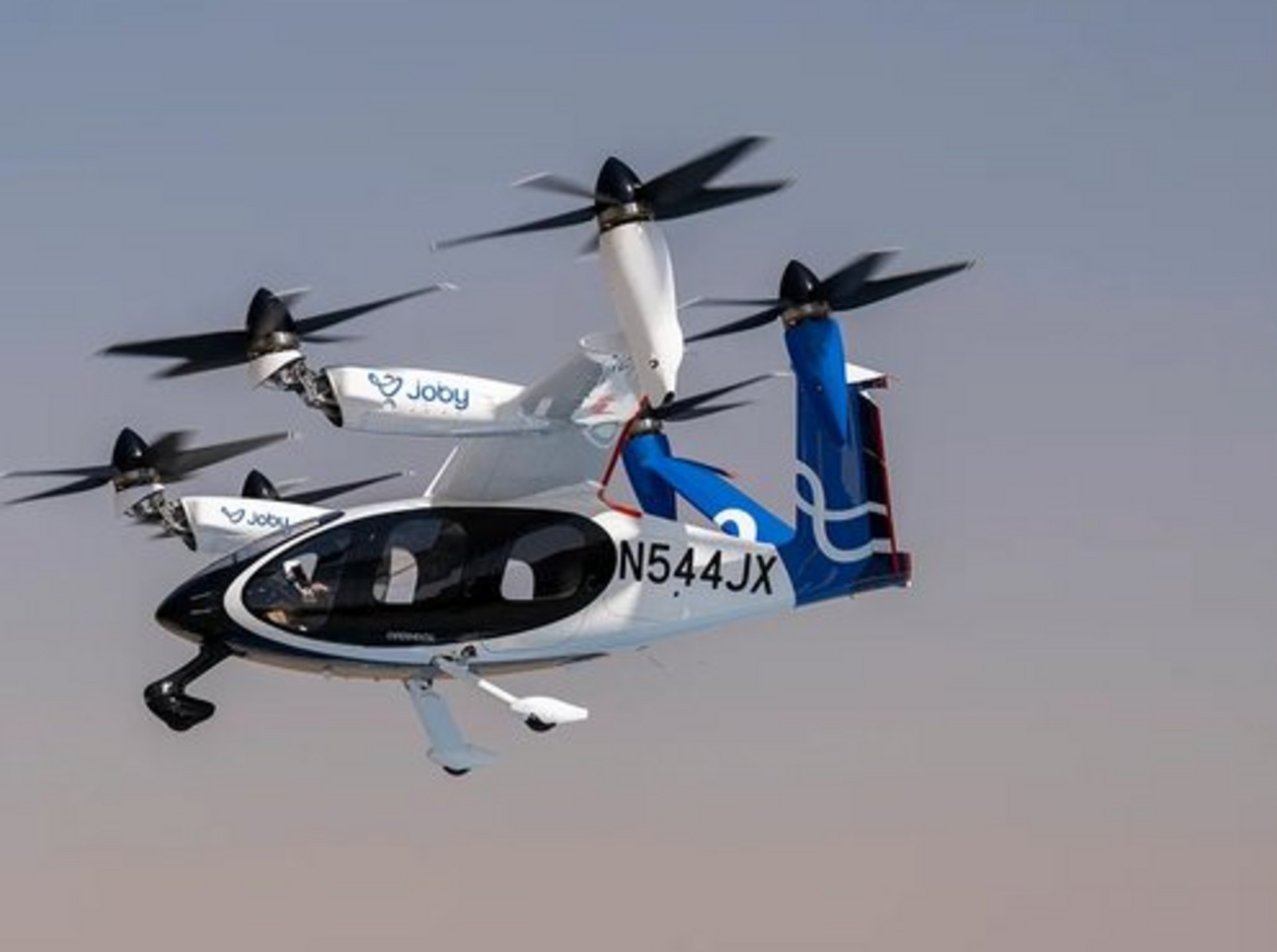
Uber Announces Beginning of Commercial Operation of Electric eVTOL Air Taxis in Dubai in the Coming Months with 11-Minute Flights for Routes That Take Up to 1h20 by Car
Uber Air will start commercial operations of electric air taxis in Dubai in the coming months, in partnership with Joby Aviation, promising to reduce trips of up to 1 hour and 20 minutes to 11 minutes and integrate the entire journey into the app.
The announcement was made during an event held in Dubai, where Uber and the American manufacturer Joby Aviation confirmed the start of commercial operations of their eVTOLs in the United Arab Emirates. The initiative marks the transition from testing to paid flights for the public.
The central proposal is to integrate the entire journey into the app. A car takes the passenger to a vertiport, the flight occurs over urban traffic, and at the final destination, another vehicle waits to complete the land journey.
-
Motorola launched the Signature with a gold seal from DxOMark, tying with the iPhone 17 Pro in camera performance, Snapdragon 8 Gen 5 that surpassed 3 million in benchmarks, and a zoom that impresses even at night.

-
Satellites reveal beneath the Sahara a giant river buried for thousands of kilometers: study shows that the largest hot desert on the planet was once traversed by a river system comparable to the largest on Earth.

-
Scientists have captured something never seen in space: newly born stars are creating gigantic rings of light a thousand times larger than the distance between the Earth and the Sun, and this changes everything we knew about stellar birth.

-
Geologists find traces of a continent that disappeared 155 million years ago after separating from Australia and reveal that it did not sink, but broke into fragments scattered across Southeast Asia.

During the presentation, the company detailed a route considered classic in Dubai that, during peak hours, can take up to 1 hour and 20 minutes by car. By air, the same route was completed in 11 minutes.
According to Uber, the main justification for the service is time savings. The price has not yet been announced, but expectations are that it will be close to Uber Black rates in this initial phase.
Bet on Efficiency and Total Integration Through the App
Sarfraz Maredia, global head of autonomous mobility at Uber, stated that the idea of vertical takeoff is no longer theoretical. The company bets on operational simplicity to reduce adoption barriers for the new mode.
Sachin Kansal, head of products at Uber, described the app as a remote control for the journey. By selecting the route, the user will see the Uber Air option alongside the Black or X categories.
The intention is to eliminate the traditional complexity of chartering helicopters, offering direct booking in the app. The company argues that the user will be able to request the service at any time of day.
Despite the promise, the operational cost involves aircraft certification, high-density batteries, and ground infrastructure, factors that raise the investment needed to keep the model running.
FAA Certification Is the Final Step Before Mass Production of Air Taxis
Anthony El-Khoury, an executive at Joby Aviation in the United Arab Emirates, stated that global expansion depends on FAA certification, the civil aviation agency of the United States.
According to him, the company is in the fifth and final stage of aircraft type certification. The process is described as rigorous, costly, and prolonged, requiring continuous submission of technical data for analysis.
El-Khoury stated that most of the tests have already been conducted. The current stage involves validating the results to ensure absolute safety before mass commercial production.
The operation in Dubai occurs due to the partnership with the local government, while American certification is seen as an essential condition for the international expansion of the service.
Air Taxi: Electric Aircraft Promises to Be 100 Times Quieter Than Helicopter
The Joby eVTOL is designed to carry four passengers and a pilot. The interior has been developed to resemble an executive sedan environment, with refined finishes and panoramic windows.
The most emphasized technical differentiator is acoustic comfort. The electric aircraft promises to be 100 times quieter than a conventional helicopter during takeoff and landing.
In practice, this would allow normal conversations inside the cabin, without the need for noise-canceling headphones. The proposal is to transform the flight into an extension of the office or living room.
The promise of silence is part of the strategy to differentiate the service from the traditional utilitarian experience of urban helicopters.
Brazil Enters the Radar and Competition Includes Embraer and Eve Air Mobility
Joby considers Brazil a potential market for expanding Uber Air, citing the existence of helicopter infrastructure and a consolidated habit in cities like São Paulo.
According to Anthony, existing helipads could be adapted with minimal regulatory changes, involving ground markings, fire protection, and electrification for charging the aircraft.
São Paulo has the largest fleet of urban helicopters in the world, a factor that, according to the company, could facilitate the adaptation of infrastructure for eVTOLs.
However, Uber will face direct competition from Eve Air Mobility, a subsidiary of Embraer. The Brazilian company has an order book of over 2,900 vehicles and regulatory experience with Anac and Decea.
Startups like Joby, Archer, Lilium, and Wisk still need to demonstrate the ability to scale production massively. For Uber, the base of 150 million monthly users could ensure constant demand.
Maredia emphasized that utilization is the central point of the business model. If the aircraft remains idle for too long carrying or without passengers, the model could become unviable.
The announcement in Dubai represents the materialization of a decades-old promise. For global metropolises, however, the consolidation of Uber Air will still depend on the equation between operational cost, scale, and real demand.
With information from O Globo.







-

Uma pessoa reagiu a isso.