





 Portuguese
  English
  Spanish
  4 min of reading
  0 comments


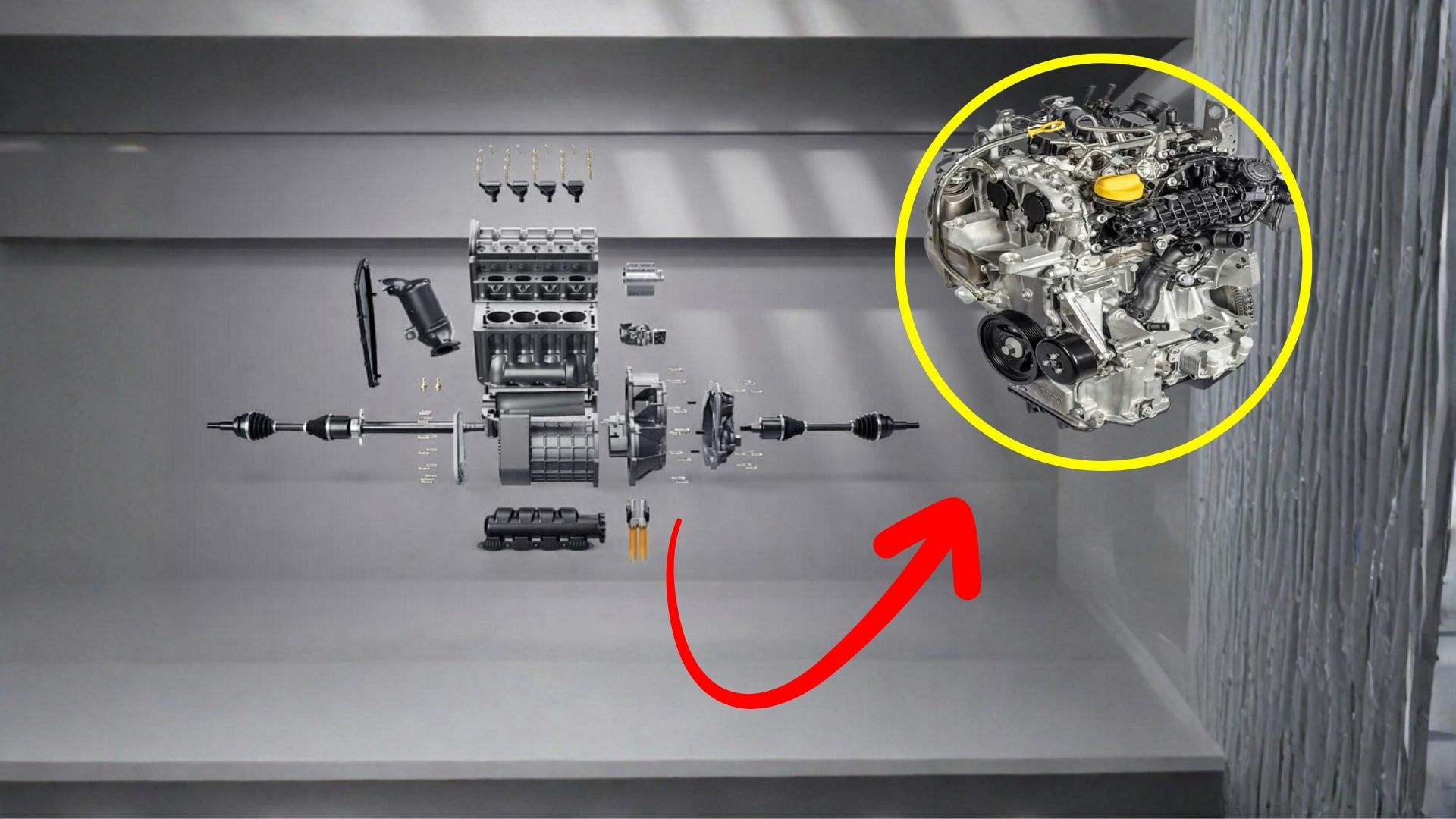
New Hybrid System Developed by Renault Joint Venture Focuses on High Thermal Efficiency and Use of Renewable Gasoline to Reduce Consumption and Emissions, While Strengthening Industrial Strategy That Keeps Internal Combustion Engines in the Debate on Decarbonization and Energy Transition in the European Market.
The Horse Powertrain, a joint venture formed by Renault, Geely, and Aramco, presented a new hybrid powertrain developed with Repsol, with consumption below 3.3 L/100 km in the WLTP cycle and 44.2% maximum thermal efficiency, according to data released by the companies.
Released as a concept, the project aims to enhance the efficiency of a gasoline engine without requiring a radical architectural change, combining improvements to the internal combustion engine with adjustments to the management of the hybrid system, targeting a reduction in internal losses and consumption.
Thermal Efficiency of 44.2% and Compression Ratio of 17:1 in the H12 Engine
The so-called HORSE H12 Concept was described with a compression ratio of 17:1, as well as an updated exhaust gas recirculation system and an optimized turbocharger, elements that together seek to increase the energy utilization of the fuel.
-
Motorola launched the Signature with a gold seal from DxOMark, tying with the iPhone 17 Pro in camera performance, Snapdragon 8 Gen 5 that surpassed 3 million in benchmarks, and a zoom that impresses even at night.

-
Satellites reveal beneath the Sahara a giant river buried for thousands of kilometers: study shows that the largest hot desert on the planet was once traversed by a river system comparable to the largest on Earth.

-
Scientists have captured something never seen in space: newly born stars are creating gigantic rings of light a thousand times larger than the distance between the Earth and the Sun, and this changes everything we knew about stellar birth.

-
Geologists find traces of a continent that disappeared 155 million years ago after separating from Australia and reveal that it did not sink, but broke into fragments scattered across Southeast Asia.

By focusing on thermal efficiency, Horse aims to advance in an area where conventional gasoline engines traditionally lag behind more mature hybrid solutions, exploring calibration, more efficient combustion, and friction reduction to extract more useful work per unit of energy.

Even with high numbers for a gasoline engine, the presentation was not treated as an absolute record, as Chinese manufacturers have been announcing even higher levels in engines specifically for hybrids, such as the case announced by Dongfeng with 48.09% thermal efficiency.
Horse stated that the consumption reduction of around 40% is a comparison with the average consumption of new passenger cars registered in Europe in 2023, a sample that includes models without hybridization and, therefore, tends to raise the reference.
100% Renewable Gasoline and Promise of Up to 1.77 Tons Less CO₂
In the presented configuration, the engine was designed to operate on 100% renewable gasoline developed by Repsol, and the disclosed estimate indicates that an average car driving 12,500 km per year could avoid emitting up to 1.77 tons of CO₂ compared to a fossil gasoline-fueled equivalent.
This type of calculation, however, varies with methodology, because there is a difference between emissions measured at the exhaust and the complete carbon footprint, which considers the fuel cycle, from production to final use, which requires transparency about criteria.

As it is an internal combustion engine, CO₂ emissions occur during operation, and the proposed reduction relies mainly on the renewable origin of the fuel and the assumption of a closed carbon cycle, conditioned to scale and industrial availability.
Without making promises beyond what was disclosed, the central point of the strategy is to argue that lower carbon intensity fuels, combined with efficient hybrid systems, can cut emissions more rapidly in part of the fleet than immediate replacement with a single solution.
Hybrid Strategy and Adaptation of Electric Platforms
The presentation of the H12 connects to a line of development previously shown by the company when the “Future Hybrid” concept was unveiled, a modular proposal that combines an internal combustion engine, electric motor, and transmission in a single set designed to fit into electric vehicle platforms.
The idea described at that time was to reduce the industrial adaptation time for brands wanting to launch hybrids based on originally electric foundations, with smaller interventions in the front compartment and structure, following the logic of a compact module.
With the H12, the discourse shifts to a complete hybrid powertrain that uses the efficiency of the engine as a showcase, emphasizing that the modernization of the Otto cycle can still advance with combustion engineering and hybrid integration, without solely relying on technological disruptions.
Horse also uses the circulating fleet argument to support the bet, citing that most vehicles in circulation in Europe are still equipped with internal combustion engines, which, in the company’s view, opens up space for transition solutions.
Development in Spain and Debate on Energy Transition

According to the project’s communication, the development involved teams in Spain, with participation from Horse Technologies’ structures in Valladolid and Repsol in Madrid, in an attempt to link the technology to a European industrial strategy amid the debate on competitiveness.
In this context, Luis Cabra, deputy general director of Repsol responsible for energy transition, defended “clear and ambitious” rules that encourage investment in renewable fuels and efficient engines, associating the path with quicker cuts in transportation.
Meanwhile, Patrice Haettel, general director of Horse Technologies, stated that the company advocates a “technologically neutral approach,” with innovation in electric, hybrid, range extenders, and low-carbon fuels, aiming for regulatory space for multiple routes.
The narrative dispute occurs while automakers recalibrate the pace of electrification, and the joint venture seeks to position itself as a global supplier of combustion and hybrid systems, expanding partnerships and arguing that efficiency can be a relevant bridge.
In practice, what has been shown so far remains in the realm of concept and technical demonstration, with metrics disclosed for standardized testing, and the real impact depends on scale, cost, and availability of renewable fuel in volumes compatible with the European market.







-

-

-

-

-

-

80 pessoas reagiram a isso.