





 Portuguese
  English
  Spanish
  4 min of reading
  1 comment


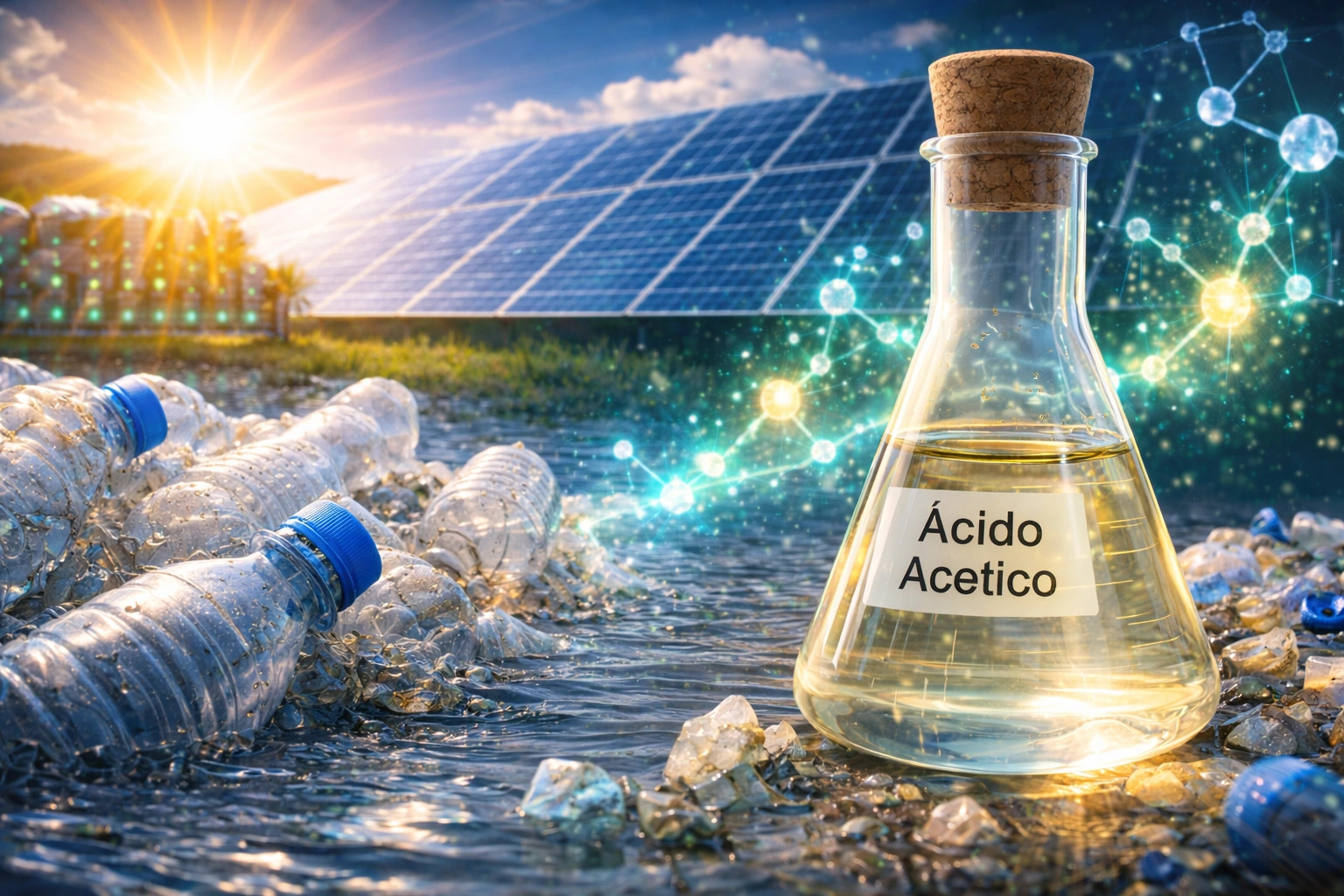


Researchers Developed a Solar-Light-Activated Iron Catalyst Capable of Transforming PVC, PET, PP, and Any Other Type of Common Plastic into Vinegar, Acetic Acid, a Compound Used in the Chemical and Energy Industries, Without Additional Carbon Dioxide Emissions
Plastic thrown into the sea can end up inside a bottle of vinegar. It sounds like an exaggeration, but it isn’t. Researchers at the University of Waterloo have created a system that uses solar light to break down plastic waste and turn it into acetic acid, the main component of vinegar and a strategic input for the chemical industry.
The proposal goes beyond traditional recycling. Instead of melting or burning, the method dismantles plastic at the molecular level, using free energy from the sun and operating in water.
This detail changes the game for one of the planet’s biggest environmental problems.
-
Motorola launched the Signature with a gold seal from DxOMark, tying with the iPhone 17 Pro in camera performance, Snapdragon 8 Gen 5 that surpassed 3 million in benchmarks, and a zoom that impresses even at night.

-
Satellites reveal beneath the Sahara a giant river buried for thousands of kilometers: study shows that the largest hot desert on the planet was once traversed by a river system comparable to the largest on Earth.

-
Scientists have captured something never seen in space: newly born stars are creating gigantic rings of light a thousand times larger than the distance between the Earth and the Sun, and this changes everything we knew about stellar birth.

-
Geologists find traces of a continent that disappeared 155 million years ago after separating from Australia and reveal that it did not sink, but broke into fragments scattered across Southeast Asia.

The Billion-Dollar Environmental Challenge of Microplastics Invading Oceans and Pressuring the Global Industry
Microplastics have already been found in oceans, rivers, soils, and even in the human body. The industry produces tons of polymers every year, but disposal remains an environmental and economic bottleneck.
The problem is that many recycling methods require intense heat and energy derived from fossil fuels. In other words, they reduce waste but increase emissions.
Now an alternative emerges that promises to tackle two fronts at the same time. It reduces the volume of plastic and prevents the release of additional carbon dioxide in the process.
The question that arises is straightforward: can this move from the lab to the industry?
The Secret of the Catalyst with Isolated Iron Atoms That Activates a Chain Reaction Under the Sun
The heart of the technology lies in a microscopic detail.
The researchers incorporated single iron atoms within a carbon nitride structure. When sunlight reaches the material, a sequence of chain chemical reactions occurs.
This effect resembles biological processes. Some fungi degrade organic matter step by step. Here, the same principle has been applied to plastic.
The result is selective conversion into acetic acid, avoiding a chaotic mixture of byproducts. This chemical control is what differentiates the technology from previous attempts.
And there’s more: the system works in water, paving the way for treating microplastics directly in aquatic environments.
PVC, PET, PP, and PE Enter the Reaction and Transform into a Strategic Compound for the Chemical and Energy Industries
The method has been tested on plastics widely used in construction, packaging, the automotive industry, and the consumer goods sector.
Among them are PVC, PET, PP, and PE. Moreover, the system maintained efficiency even with mixtures of waste, something essential for any real industrial application.
The final product, acetic acid, is a relevant raw material for food, solvents, chemical production, and even energy applications. In other words, it’s not just about eliminating waste but generating economic value.
This is where innovation begins to challenge traditional recycling and incineration models.
Solar Energy vs. Traditional Thermal Processes, the Silent Dispute That Could Affect the Market
Today, a large part of chemical recycling depends on high heat and energy consumption.
The new process uses abundant and free solar energy. This reduces operating costs and avoids extra emissions.
According to the researchers, technical and economic analyses indicate potential commercial viability. There’s no official number released regarding industrial scale, but initial projections suggest a promising scenario.
If the technology evolves to mass production, it could therefore pressure industrial chains based on fossil fuels and alter the logic of plastic waste repurposing.
The impact could thus reach everything from treatment plants to petrochemical hubs.
What Could Happen if the Technology Leaves the Laboratory and Gains Industrial Scale in the Coming Years
For now, the system is in the laboratory phase.
Experts say that advancements in materials engineering and manufacturing will be crucial to increase catalyst production and improve efficiency at scale.
If this happens, the effect could be significant.
Imagine transforming waste that suffocates oceans into valuable chemical inputs, using only sunlight. It’s a powerful reversal in the logic of waste.
The technology draws attention because it combines materials engineering, sustainability, and economic potential in a single process.
If it gains traction, it could represent a new chapter in the relationship between the chemical industry and the environment.
Do you believe this technology can really change the fate of plastic in the world? Leave your opinion in the comments.








This is massive and yes it can definitely