





 Portuguese
  English
  Spanish
 4 min of reading
  1 comment


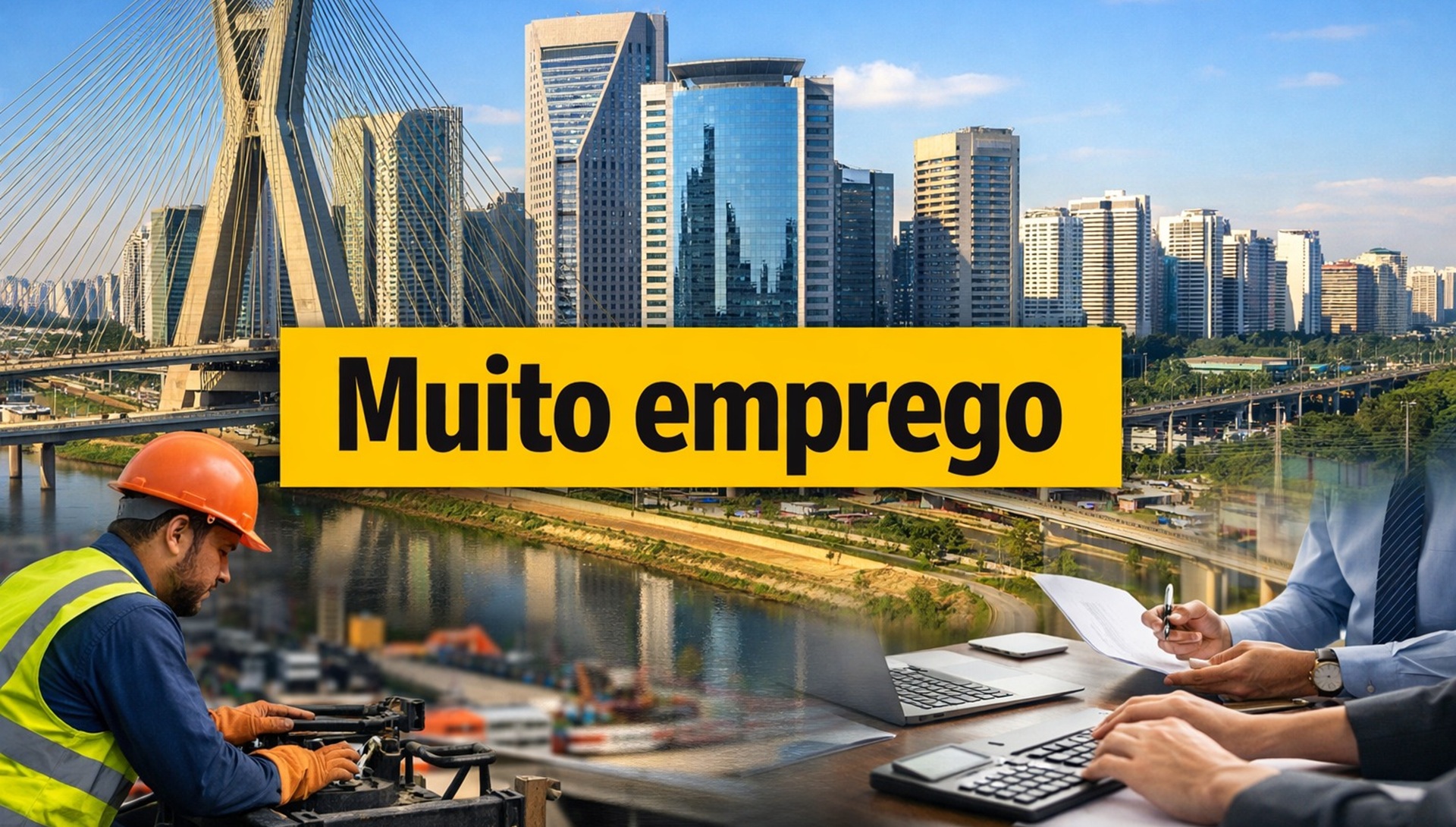

With An Annual Unemployment Rate of 5% in 2025, São Paulo Records the Lowest Rate Since 2012, Surpassing National and Southeast Averages, Expanding Formal Employment, Reducing Informality to 29% and Reaching an Average Income of R$ 4,190 in the Analyzed Period
The state of São Paulo recorded an annual unemployment rate of 5% in 2025, the lowest in 13 years since 2012, according to IBGE and Fundação Seade, declining from 2024 and performing below the national and regional averages.
The unemployment rate of 5% in 2025 represents the lowest mark in the historical series that began in 2012 by the Brazilian Institute of Geography and Statistics. The data was made available by IBGE and released by Fundação Seade.
The unemployment rate in São Paulo was below the national average of 5.6% and the Southeast region, which recorded 5.3% during the same period. This result consolidates the downward trend in unemployment in the state over the past few years.
-
The government requests the Federal Revenue Service for a new system to automate the income tax declaration, reducing errors, time, and bureaucracy for millions of Brazilians.

-
Pix in installments, international Pix, and contactless payment without internet: the Central Bank revealed the new features coming to the tool that is already used by almost every adult in Brazil.

-
Mercado Livre has just started selling medications with delivery in up to three hours to your door, and this move could completely change the way Brazilians buy medicines on a daily basis.

-
In Dubai, rising tensions from the war in the Middle East are causing super-rich individuals to leave the Gulf and direct their fortunes to a new financial refuge in Asia.


From 2024 to 2025, the unemployment rate dropped by 1.2 percentage points. In the comparison between 2023 and 2025, the reduction was 2.5 percentage points. Compared to 2022, the accumulated drop was 4.1 percentage points.
Unemployment Reaches Lowest Annual Rate Since 2012
The historical series shows that unemployment in São Paulo decreased from 14.4% in 2021 to 9.1% in 2022, 7.5% in 2023, 6.2% in 2024, and 5% in 2025. This is the lowest annual rate since the research began.
Between 2012 and 2014, rates fluctuated between 7.2% and 7.4%. Starting in 2015, unemployment rose and reached 14.4% in 2017 and 2021. Since then, there has been a continuous decline to the level recorded in 2025.
According to Governor Tarcísio de Freitas, the results are linked to the commitment to modernizing the public sector since the beginning of his administration. He stated that the business environment contributes to job creation.
Unemployment and Formal Market Show Opposite Movements
While unemployment decreased, the number of people employed with a formal contract increased by 5.2% from 2024 to 2025. In the same period, the number of informal workers fell by 8.7%.
The annual informality rate was 29% of the employed population in São Paulo, the third lowest among the states. The rate was below the national average of 38.1% and the Southeast region’s 33%.
For habitual real average income, the state recorded R$ 4,190 in 2025, above the national average of R$ 3,560 and the Southeast average of R$ 3,958. The value also surpassed Rio de Janeiro, Espírito Santo, and Minas Gerais.
The data follows the guidelines of the São Paulo in the Right Direction program, which sets goals to enhance state efficiency, attract investments, and create opportunities.
Unemployment in the Fourth Quarter Also Hits Record for the Series
In the fourth quarter of 2025, from October to December, the unemployment rate was 4.7%, also the lowest since the series began in 2012. The rate was below the national average of 5.1% and the Southeast’s 4.8%.
The total number of people employed with a formal contract in the private sector reached 11.593 million, an increase of 2.7% compared to the same quarter of the previous year. In the country, there were 39.409 million. The state accounted for 30% of this total.
The percentage of employees with formal contracts in the private sector was 82.2%, the second highest in the country. In Brazil, the rate was 74.4%.
The total number of people employed in the state reached 24.576 million, an increase of 1.1% compared to the previous quarter and 1.3% in the annual comparison. This was the highest number in the historical series since 2012.
The number of unemployed was 1.212 million, a decrease of 9.3% compared to the previous quarter and 20.7% compared to the same period last year. This was the lowest level recorded in all quarters since 2012.
Unemployment Quarter by Quarter Shows Downward Trend
In 2025, unemployment rates were 6.3% in the 1st quarter, 5.1% in the 2nd, 5.2% in the 3rd, and 4.7% in the 4th quarter. In 2024, it varied from 7.4% in the 1st quarter to 5.9% in the 4th.
In 2023, the rates were 8.5%, 7.8%, 7.2%, and 6.9% throughout the four quarters. In 2022, the rates registered were 9.2% in the 2nd quarter, 8.7% in the 3rd, and 7.7% in the 4th.
In 2020, in the 1st quarter, the unemployment rate was 12.3%, impacted by the pandemic on the survey. In 2019, the rates varied from 13.6% in the 1st quarter to 11.6% in the 4th.
Between 2018 and 2016, the rates fluctuated between 14.1% and 12.2%. In 2015, unemployment increased from 8.6% in the 1st quarter to 10.2% in the 4th. In 2014, it varied between 7.1% and 7.3%.
In 2013, unemployment ranged between 7.8% and 6.6%. In 2012, the first year of the series, the rates were 7.8% in the 1st quarter and 6.8% in the 4th quarter, marking the beginning of the historical trajectory of the survey.









Mais uma vez o Brasil que está quebrando segundo a narrativa da direita kkkkkk