





 Portuguese
  English
  Spanish
  5 min of reading
  1 comment


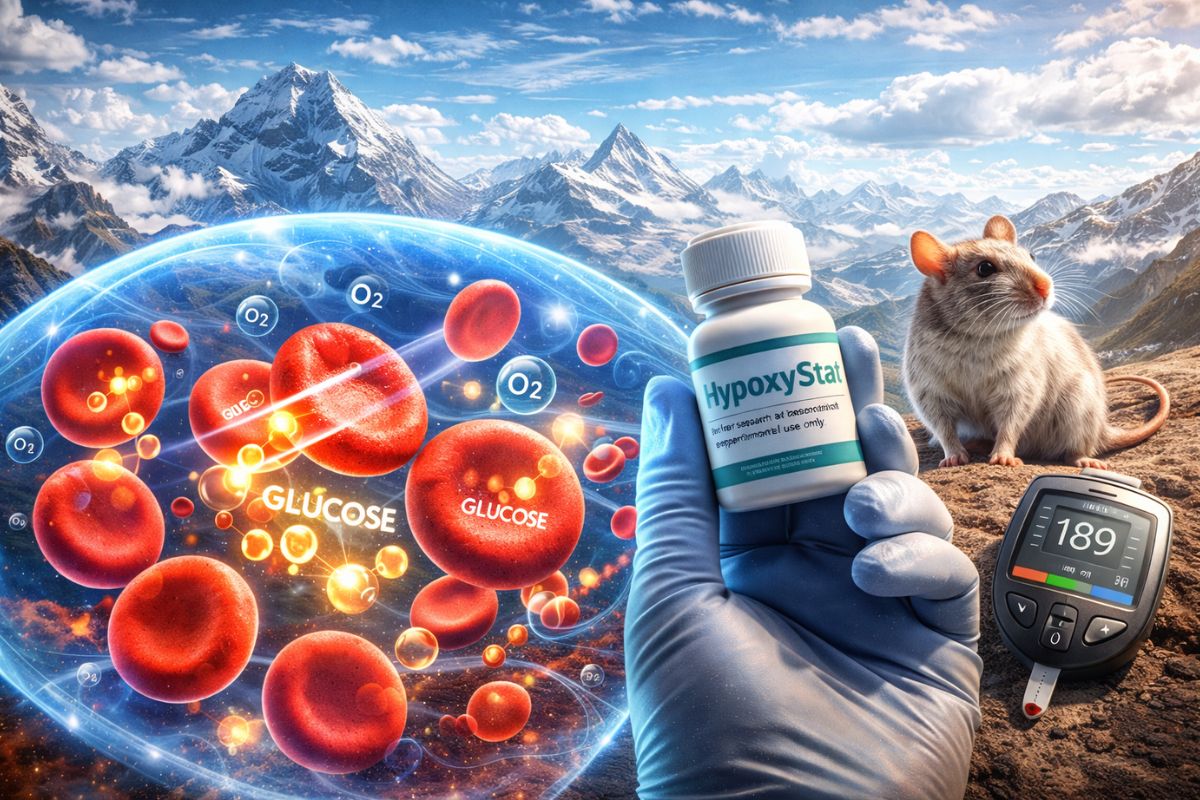


In A New Study, Science Shows That Red Blood Cells Adapted To High Altitudes And The Experimental Drug HypoxyStat Help Control Diabetes By Absorbing Blood Glucose.
Diabetes is a chronic disease marked by excess glucose in the blood, which can damage vessels, organs, and nerves over time. According to 2025 data from the International Diabetes Federation, 11.1% of adults aged 20 to 79 live with the disease, equivalent to 1 in 9 people, and more than 40% are unaware that they are diabetic, making the discovery even more relevant. For decades, diet, body weight, and genetic predisposition have been seen as the main protagonists. Now, science brings the environment to the center of the conversation, showing that the oxygen available in the air can directly affect how the body handles glucose.
In the new study published in the journal Cell Metabolism, scientists from the Gladstone Institutes observed that those living at high altitudes seem to have natural protection against diabetes. In low-oxygen conditions, red blood cells start to absorb more glucose from the bloodstream, significantly reducing blood sugar levels. This same logic was taken to the lab with the experimental drug HypoxyStat, and in diabetic mice, science managed to completely reverse blood sugar levels in experimental diabetes models, something that until then seemed restricted to approaches focused on insulin, liver, and muscles.
Science And The Mystery Of Protection At High Altitudes
For years, observational studies indicated that residents of mountainous regions tend to show lower rates of diabetes, but the explanation for this phenomenon remained vague.
-
Motorola launched the Signature with a gold seal from DxOMark, tying with the iPhone 17 Pro in camera performance, Snapdragon 8 Gen 5 that surpassed 3 million in benchmarks, and a zoom that impresses even at night.

-
Satellites reveal beneath the Sahara a giant river buried for thousands of kilometers: study shows that the largest hot desert on the planet was once traversed by a river system comparable to the largest on Earth.

-
Scientists have captured something never seen in space: newly born stars are creating gigantic rings of light a thousand times larger than the distance between the Earth and the Sun, and this changes everything we knew about stellar birth.

-
Geologists find traces of a continent that disappeared 155 million years ago after separating from Australia and reveal that it did not sink, but broke into fragments scattered across Southeast Asia.

The dominant interpretation was that everything boiled down to insulin, either in production or in tissue sensitivity. It seemed logical, as this hormone is primarily responsible for allowing muscles and adipose tissue to absorb glucose.
When researchers began to test the hypothesis in detail, something didn’t add up. In mice exposed to hypoxia, that is, low oxygen levels similar to those at high altitudes, glucose rapidly disappeared from the blood after meals, and the main metabolic organs did not explain this drainage. The liver, muscles, and adipose tissue could not justify the rapid disappearance of sugar.
The data showed that the classical mechanism linked to insulin was insufficient. There was an important piece missing in the puzzle, and science decided to look at a previously underestimated character: red blood cells.
Red Blood Cells Stop Being Background Characters And Become Glucose Sponges

Red blood cells, or erythrocytes, are traditionally described as simple oxygen carriers.
Without nuclei, without mitochondria, and with limited metabolism, they seemed little relevant in discussions about diabetes. The new study showed that this view was incomplete.
At high altitudes, the body produces more red blood cells to compensate for the thin air. What scientists discovered is that, in addition to being more numerous, these red blood cells absorb much more glucose from the circulation, as if millions of tiny sponges began sucking sugar from the blood simultaneously.
This glucose is converted into a molecule called 2,3-DPG, which helps hemoglobin release oxygen more efficiently to the tissues, something crucial when there is little oxygen available.
In practice, science revealed a dual strategy of the organism: while improving oxygen transport, the body reduces circulating glucose using red blood cells as a “metabolic reservoir”.
And this completely changes the way we understand the role of blood in glucose control.
Adaptation That Reprograms Blood In Low Oxygen Environments
From there, the next question was inevitable: does this change in red blood cells happen only in existing cells, or does the body begin to produce different red blood cells in hypoxia?
By analyzing the origin of these cells, researchers observed that red blood cells produced in low oxygen conditions are born with a different programming.
They display a higher quantity of the transporter GLUT1 on the membrane, responsible for transporting glucose into the cell. This means that the bone marrow itself responds to the environment and produces a new generation of red blood cells with a greater ability to capture glucose.
This finding reinforces the idea that science needs to look at blood not only as a means of transport but also as an active metabolic organ, capable of modulating glucose levels according to oxygen availability.
Instead of only acting on classic organs such as the liver and muscles, the body recruits red blood cells as an additional defense tool in extreme environments.
HypoxyStat: When Science Mimics The Mountain In The Laboratory
If living at high altitudes seems to protect against diabetes, the next question was obvious: could this effect be replicated without taking anyone from sea level?
To test this idea, the team developed and evaluated an experimental drug called HypoxyStat.
The drug increases hemoglobin’s affinity for oxygen, simulating in the body the metabolic effects of an environment with low oxygen availability, as if the body were living at high altitudes even at low ground levels.
In experimental diabetes models in mice, both with type 1 and type 2 diabetes, science observed a complete reversal of blood glucose levels, with results better than conventional treatments used for comparison.
Instead of only targeting insulin, the liver, or muscles, the strategy was to use the red blood cells themselves as a temporary “storage” for glucose, draining the excess directly from the blood.
It is important to highlight that all of this was tested in animal models, meaning it is still not an approved treatment for humans.
Even so, the concept opens a new metabolic pathway for future studies, showing that manipulating the balance between oxygen and glucose could be a promising avenue.
What Science Changes In The Way We Understand Diabetes
For decades, the fight against diabetes has been organized around three main fronts: insulin, diet, and physical activity.
The new study does not invalidate any of this, but it broadens the map. It suggests that the environment, especially the amount of available oxygen, directly influences how the body handles glucose and how red blood cells come into play to help control this excess.
This broader view makes science stop looking only at isolated organs and start seeing the organism as an integrated system, where blood, oxygen, altitude, and glucose constantly interact.
The discovery that red blood cells can act as a metabolic shield in hypoxia and that a drug like HypoxyStat can replicate part of this effect in diabetic mice in the lab shows that there is still plenty of room for innovation.
In the short term, the study helps explain why populations at high altitudes seem to have fewer cases of diabetes.
In the long term, it reinforces the idea that deeply understanding these mechanisms is essential before any attempts to apply the concept in treatments for humans, maintaining the scientific rigor that such a sensitive topic requires.
And what do you think is more promising for the future of diabetes combat: science exploring new mechanisms like that of red blood cells in hypoxia or further refining traditional insulin and dietary treatments?







A pesquisa científica deve explorar todas as possibilidades, tanto nos neficamentos já existentes como também ampliar os estudos observados com as novas descobertas.