





 Portuguese
  English
  Spanish
  4 min of reading
  1 comment





A Structural Error Almost Caused the Citigroup Center in New York to Collapse on the Heart of Manhattan, but a Review by an Engineering Student Changed the Fate of One of the Most Risky Buildings Ever Built.
In the 1970s, the Citigroup Center symbolized the technological and architectural advancement of New York’s skyscrapers. With 59 floors and 280 meters tall, the building was designed to be one of the most modern corporate headquarters on the planet. However, in 1978, a civil engineering student identified a structural error that put the entire construction at risk, a mistake capable of causing total collapse of the building and devastating several blocks of Manhattan.
According to the Engineering Channel, the young woman, named Diane Hartley, was working on a thesis about the Citigroup Center project when she realized that the wind resistance calculations were incomplete. The building could topple if winds over 110 km/h hit its corners, a common scenario during storms that frequently hit New York. Her observation triggered an emergency operation that was kept secret for nearly two decades.
The Bold Design That Challenged the Laws of Physics
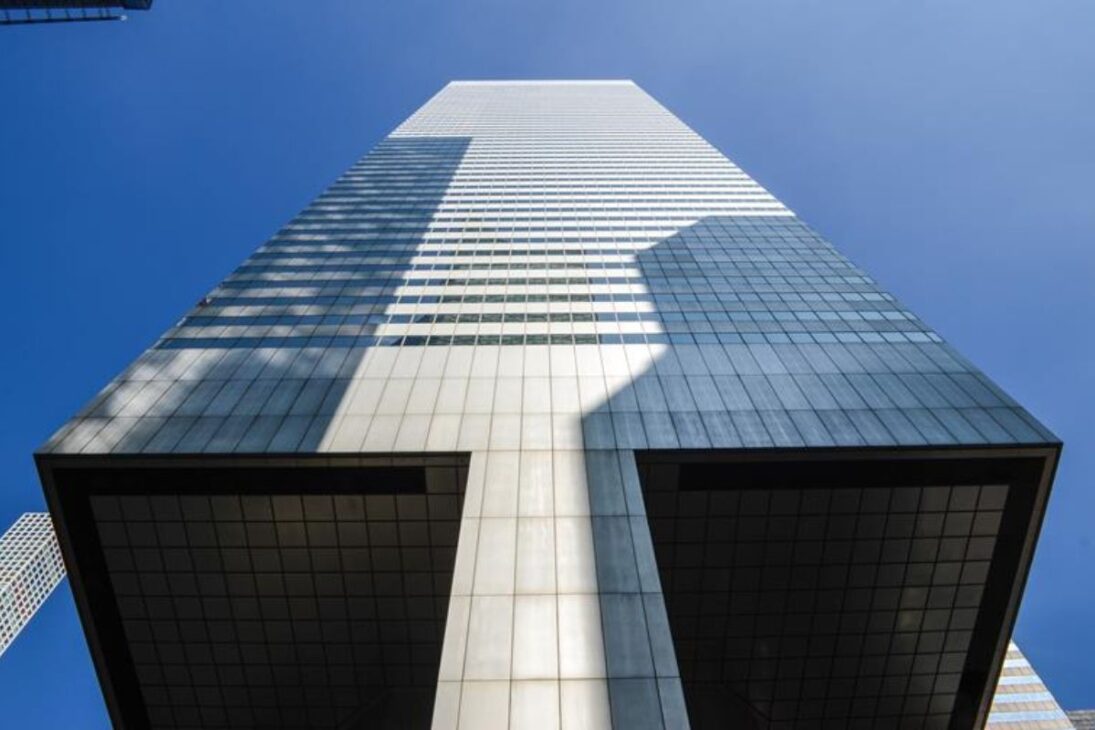
The chosen site for construction was at 618 Lexington Avenue, in the heart of Manhattan, where the historic St. Peter’s Church already existed.
-
Children from the 1980s and 1990s who spent hours playing in the street until dark naturally developed spatial intelligence, which today has become the subject of expensive courses, cognitive training, and modern methods of child and adult learning.

-
Without bombs, without electricity, and without drilling the ground, villages in southwestern Morocco have discovered how to extract water directly from the air using only polymer nets, wind, and the humidity of the Atlantic amidst the advancing desert.

-
Son of a Brazilian, a 20-year-old young man defies extreme pressure, wins the world rodeo championship, and takes home a million-dollar prize of nearly R$ 5 million.
-
The largest freshwater aquarium in the world is in Brazil, impressing with 5 million liters, 380 species, and will host a national congress that brings together specialists in biodiversity, animal conservation, and unprecedented research with more than 100 species bred in captivity.


The congregation refused to sell the land, which forced architects to come up with an unusual solution: to raise the skyscraper above the church, without the structure touching the ground occupied by the temple.
This decision led engineer William LeMessurier, responsible for the structural calculations, to adopt an unprecedented system.
Instead of columns at the corners, the building was supported by four central columns positioned in the middle of each face, leaving the vertices completely suspended.
To stabilize the building, a massive mass damper was installed at the top—a pioneering technology to reduce oscillations caused by the wind.
The Calculation Failure and the Student’s Alert
The original design seemed flawless until Diane Hartley questioned a crucial point: the behavior of the building under diagonal winds, which hit the structures at the corners, and not just the faces.
This type of force had not been properly calculated. When recalculating, engineer LeMessurier realized that she was right.
The structural error could lead to the collapse of the building under winds above 110 km/h, a speed that New York recorded periodically.
The situation was even more serious because, during construction, the steel connections designed to be welded were replaced with bolts, a change made to cut costs.
This reduced the rigidity of the structure and increased the building’s vulnerability.
If the damping system failed—for example, during a power outage, it would only take a moderate storm for the Citigroup Center to collapse.
The Secret Operation to Save the Citigroup Center
The discovery plunged engineer LeMessurier into despair. He feared that the building could collapse at any moment, destroying several blocks and killing thousands of people.
Immediately, he called a meeting with executives from Citigroup and the New York City government.
An emergency reinforcement operation was decided upon, in absolute secrecy, to avoid panic and a potential public crisis.
For three months, teams of workers worked at night, welding and discreetly reinforcing the entire internal metal structure.
An emergency plan was prepared in case of collapse: about 200 rescuers were on standby, without knowing exactly why.
Fortunately, the repairs were completed before the arrival of a strong tropical storm, which could have tested the building.
The Secret Revealed Almost Twenty Years Later
The case remained hidden until 1995, when a BBC investigation revealed the entire operation.
Engineers who participated in the repairs confirmed the details of the error and the silent correction.
Diane Hartley, now a licensed engineer, only then discovered that her academic work had prevented one of the greatest tragedies in modern engineering history.
The attitude of the student and the engineer’s quick reaction turned the episode into one of the most emblematic cases about ethics, responsibility, and technical humility.
Today, the Citigroup Center, renamed 601 Lexington Avenue, remains standing, safe, and fully operational, as a reminder that knowledge can literally save lives.
A Case That Redefines the Role of Engineering and Scientific Curiosity
The episode of the structural error at the Citigroup Center is remembered in engineering universities as an example of technical vigilance and professional courage.
It shows that, in large projects, scientific curiosity and a critical eye can be as decisive as experience itself.
Even under pressure, the student chose to question what didn’t make sense, and the engineer had the greatness to review her work. Both prevented the collapse of one of the most complex and iconic buildings of the 20th century.
And you? Do you think you would have the courage to question an expert if you noticed something wrong in such a grand project?







A pergunta é você teria coragem? Acredito quê sim e parabéns a estudante e ao engenheiro que teve a coragem de perceber e evitar o caus