





 Portuguese
  English
  Spanish
  3 min of reading
  0 comments


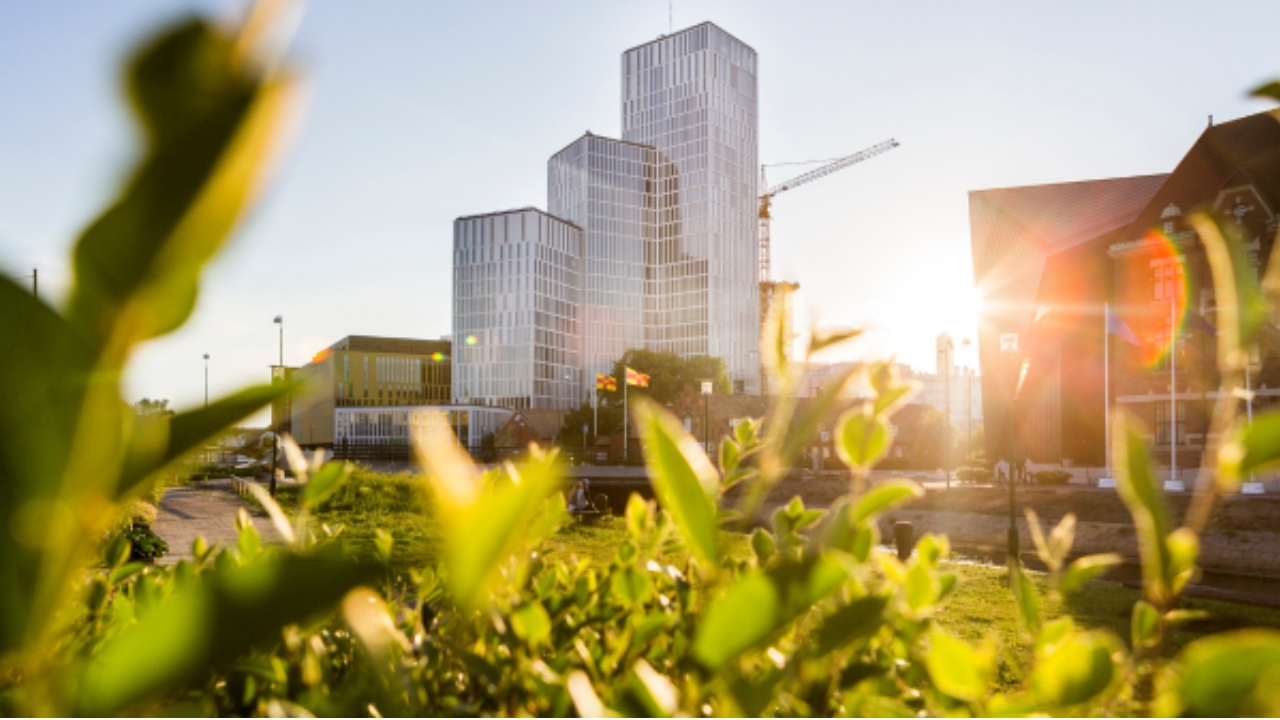
In Diverse Countries, Companies and Governments Adopted Circular Economy, Technology with Real-Time Monitoring, and Traceable Chains in 2026 to Reduce Environmental Impacts, Causing Deep Strategic Changes and Catching Global Market Attention.
Sustainability is no longer a competitive differential.
In 2026, it became a survival criterion for companies, cities, and governments. What was once treated as innovation turned into a strategic obligation.
The impact is direct on competitiveness, reputation, and operational efficiency. Accelerated urban growth, pressure on natural resources, climate change, and more demanding consumers have accelerated this transformation.
-
Motorola launched the Signature with a gold seal from DxOMark, tying with the iPhone 17 Pro in camera performance, Snapdragon 8 Gen 5 that surpassed 3 million in benchmarks, and a zoom that impresses even at night.

-
Satellites reveal beneath the Sahara a giant river buried for thousands of kilometers: study shows that the largest hot desert on the planet was once traversed by a river system comparable to the largest on Earth.

-
Scientists have captured something never seen in space: newly born stars are creating gigantic rings of light a thousand times larger than the distance between the Earth and the Sun, and this changes everything we knew about stellar birth.

-
Geologists find traces of a continent that disappeared 155 million years ago after separating from Australia and reveal that it did not sink, but broke into fragments scattered across Southeast Asia.

The discourse lost space. Structured action gained prominence.
Circular Economy Goes from Trend to Rule in Companies and Cities
In 2026, the circular economy ceased to be an aspirational concept and began to guide real decisions.
Companies and public administrations started to reduce waste from the design stage, keep materials in use for as long as possible, and completely rethink the end of product life.
In practice, this means integrated production chains, smart reuse, and shared responsibility.
Countries in Europe and Asia advanced with legislation requiring manufacturers to take responsibility for the waste they generate. The linear model of producing, consuming, and discarding started to generate higher costs and regulatory risks.
The detail that caught the most attention was the speed of change. Those who did not adapt lost competitiveness.
Technology and Data Transform Sustainability into Measurable Strategy
Data-based sustainability established itself as a prerequisite in 2026.
Sensors, artificial intelligence, automation, and monitoring systems began to track water consumption, energy usage, and waste generation in real time.
Smart cities invested in platforms that accurately identify bottlenecks. Managers can act before problems escalate.
In the corporate environment, environmental indicators ceased to be estimates and became metrics integrated into business strategy.
Those who measure better, decide better. And those who decide better, get ahead.
Transparent Production Chains Pressure Brands on a Global Scale
Consumers, investors, and regulatory bodies began to demand total transparency.
Knowing where the product comes from, how it was made, and what impact it has caused became a decisive factor in purchasing and investment.
This has driven traceability systems, environmental audits, and strict governance criteria.
It’s not enough to be sustainable internally if suppliers do not follow the same principles.
Companies that cannot prove responsible practices quickly lose ground. Those who invest in governance build stronger and longer-lasting relationships.
Sustainability became a collective responsibility, from suppliers to end consumers.
Urban Sustainability Redefines the Future of Cities
The accelerated growth of cities has turned urban sustainability into one of the greatest global challenges of 2026.
Mobility, energy, waste management, and land use gained prominence in public decisions.
Cities like Freiburg in Germany have become references by investing in integrated planning, sustainable infrastructure, and more efficient services.
Waste management ceased to be merely operational and became strategic, connected to public health, the environment, and quality of life.
The focus has shifted: it’s not just about solving problems, but about preventing them from existing.
Companies that Anticipate Change Gain Strategic Advantage
The global scenario showed a clear pattern.
Efficiency, responsibility, and intelligence in resource management define who progresses and who falls behind.
Companies that act strategically have ceased to be mere service providers and have started to contribute directly to the transformation of cities.
Organizations that offer solutions aligned with new environmental demands strengthen their market position and increase their positive impact.
In an environment where sustainability is a strategic decision, those who prepare today build the future with more security.
The consolidation of sustainability in 2026 is not a distant promise. It is an ongoing reality, with direct effects on the economy, public management, and consumer behavior. What seemed like a trend has turned into an obligation, and the impact is already visible on a global scale.
And you, do you believe that Brazil is prepared to keep up with this transformation? Share your opinion in the comments.








Seja o primeiro a reagir!