





 Portuguese
  English
  Spanish
  5 min of reading
  0 comments


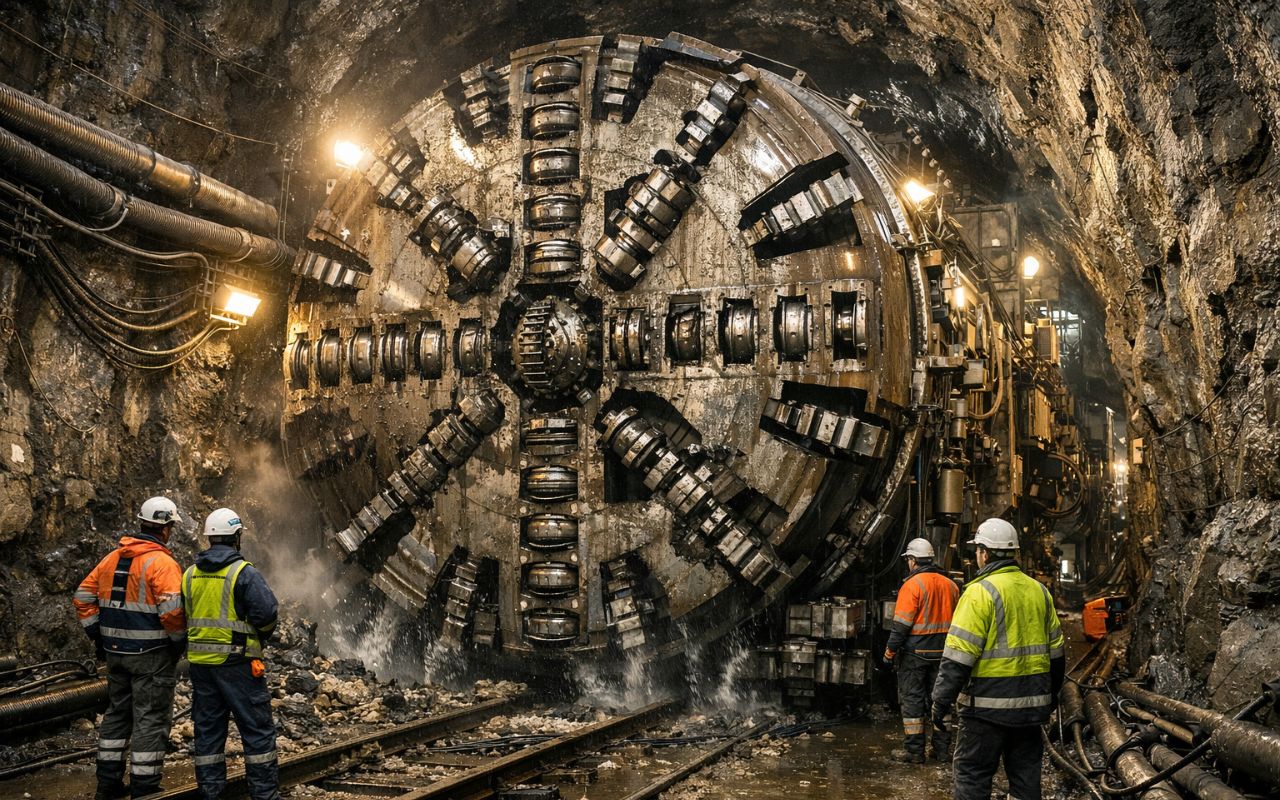
The Hallandsås Tunnel Is a Major Railway Project in Sweden That Took 23 Years to Complete, Faced Environmental Scandals, and Changed Logistics Between Countries in Europe.
The Hallandsås Tunnel is a major project located in southwestern Sweden, designed to eliminate one of the largest bottlenecks in the Scandinavian railway network.
The work connects the northern and southern sides of the Hallandsås geological formation, allowing for faster, safer, and continuous traffic between major urban centers in Europe.
Conceived in the early 1990s, the tunnel began construction in 1992 and was only inaugurated in December 2015.
-
Friends have been building a small “town” for 30 years to grow old together, with compact houses, a common area, nature surrounding it, and a collective life project designed for friendship, coexistence, and simplicity.

-
This small town in Germany created its own currency 24 years ago, today it circulates millions per year, is accepted in over 300 stores, and the German government allowed all of this to happen under one condition.

-
Curitiba is shrinking and is expected to lose 97,000 residents by 2050, while inland cities in Paraná such as Sarandi, Araucária, and Toledo are experiencing accelerated growth that is changing the entire state’s map.

-
Tourists were poisoned on Everest in a million-dollar fraud scheme involving helicopters that diverted over $19 million and shocked international authorities.

Throughout this period, it faced technical failures, water infiltrations, operational collapses, environmental scandals, and a budget overruns that turned it into a symbol of the risks associated with large infrastructure projects.
Where Is the Hallandsås Tunnel Located and Who Benefits Directly?
The Hallandsås Tunnel is situated between the cities of Ängelholm and Halmstad, integrating the so-called West Coast Line, one of the most important railway routes in Sweden.
This line connects Gothenburg in western Sweden to Malmö in southern Sweden and continues to Copenhagen in Denmark.

With its entry into operation, the major project began benefiting passengers, logistics companies, and international cargo transport.
Moreover, the tunnel is considered a key piece for future high-speed plans connecting Oslo to Hamburg, crossing important Scandinavian capitals.
Why Was the Construction of the Hallandsås Tunnel Considered Essential?
Before the existence of the Hallandsås Tunnel, the railway section over the crest of the geological formation was steep, winding, and limited to only one track.
This configuration prevented capacity expansion, generated frequent delays, and forced freight trains to take long detours.
In addition, there were 13 level crossings, a single-track station in Båstad, and a critical point in Grevie where trains needed to pass each other.
Any minimal delay propagated throughout the line. Therefore, the major project emerged as a definitive solution to eliminate this logistical bottleneck.
How Did the Hallandsås Tunnel Change the Timing and Capacity of Railway Transport?
With the completion of the Hallandsås Tunnel, operational gains were immediate. Passenger trains began saving between 10 and 15 minutes on the route.
The line’s capacity jumped from just four trains per hour to up to 24 in both directions.
In practice, this allowed for more frequency, greater punctuality, and better integration between regional, national, and international services.
The major project also created space for the growth of freight railway transport, reducing dependence on road routes.
The Initial Failures That Turned the Hallandsås Tunnel Into a National Problem
Despite its strategic importance, the start of the Hallandsås Tunnel work was marked by serious planning errors.
The geological complexity of the region was underestimated, especially the presence of large volumes of groundwater.

The original tunnel-boring machine, designed to advance about 100 meters per week, broke after digging only 18 meters.
The rock was so soft that it prevented the equipment from properly supporting itself. As a result, the contractor attempted traditional methods but began facing constant leaks.
The Environmental Scandal That Paralyzed the Major Project for Eight Years
The most critical point in the history of the Hallandsås Tunnel occurred in 1997 when the use of a chemical sealant called Rhoca-Gil came to light.
The product contained acrylamide, a highly toxic, mutagenic, and potentially carcinogenic substance.
Without informing workers or residents in the area, the contractor used the compound to try to contain leaks.
Shortly after, fish died, livestock became ill, and workers began presenting severe symptoms. The local press investigated the case, and tests confirmed high levels of contamination.
Legal, Political, and Social Consequences of the Hallandsås Tunnel
In the face of the crisis, the area was declared a high environmental risk zone, and the sale of local agricultural products was prohibited. The major project was halted in late 1997, with less than half of the tunnel dug.
Involved companies, such as Skanska, as well as manufacturers of the chemical product and railway authorities, were criminally indicted.
High-level executives resigned, and the Hallandsås Tunnel began to be debated at the national level as an example of institutional failure.
The Resumption of the Hallandsås Tunnel and the Change in Technical Strategy
After years of studies, environmental remediation, and political debates, the Swedish Parliament authorized the resumption of the Hallandsås Tunnel in 2005. This time, the approach was completely different.
The Skanska-Vinci consortium took over the execution, using a modern tunnel-boring machine called “Åsa”.
The machine bored while simultaneously installing pre-cast concrete linings, ensuring greater structural safety.
How the Freezing of the Rock Enabled the Major Project
One of the most innovative solutions of the Hallandsås Tunnel was ground freezing. Before the tunnel-boring machine advanced, a pilot tunnel was bored, and the surrounding rock was frozen to -40 °C.
This process solidified the groundwater-saturated ground, allowing for controlled advancement of the machine.
This technique was crucial, especially in the most unstable sections, where water pressure posed a high risk.
In critical areas, thicker linings and additional deadlines were used to ensure safety.
The Definitive Conclusion and Inauguration of the Hallandsås Tunnel
The final advancement of the first tunnel occurred in August 2010. The second tunnel was completed in September 2013, followed by the drilling of 19 emergency cross passages, finished in 2014.
The official opening ceremony took place on December 8, 2015, and the Hallandsås Tunnel began full operation five days later. Thus, a major project that started in 1992 finally became a reality after 23 years.

The Final Cost of the Hallandsås Tunnel
Initially budgeted at 1 billion Swedish kronor, the Hallandsås Tunnel ended up with a total cost of 11.3 billion SEK.
Today, the major project is seen not only as an essential logistical solution but also as a landmark that redefined environmental and technical standards in infrastructure projects in Europe.









Seja o primeiro a reagir!