





 Portuguese
  English
  Spanish
  4 min of reading
  0 comments


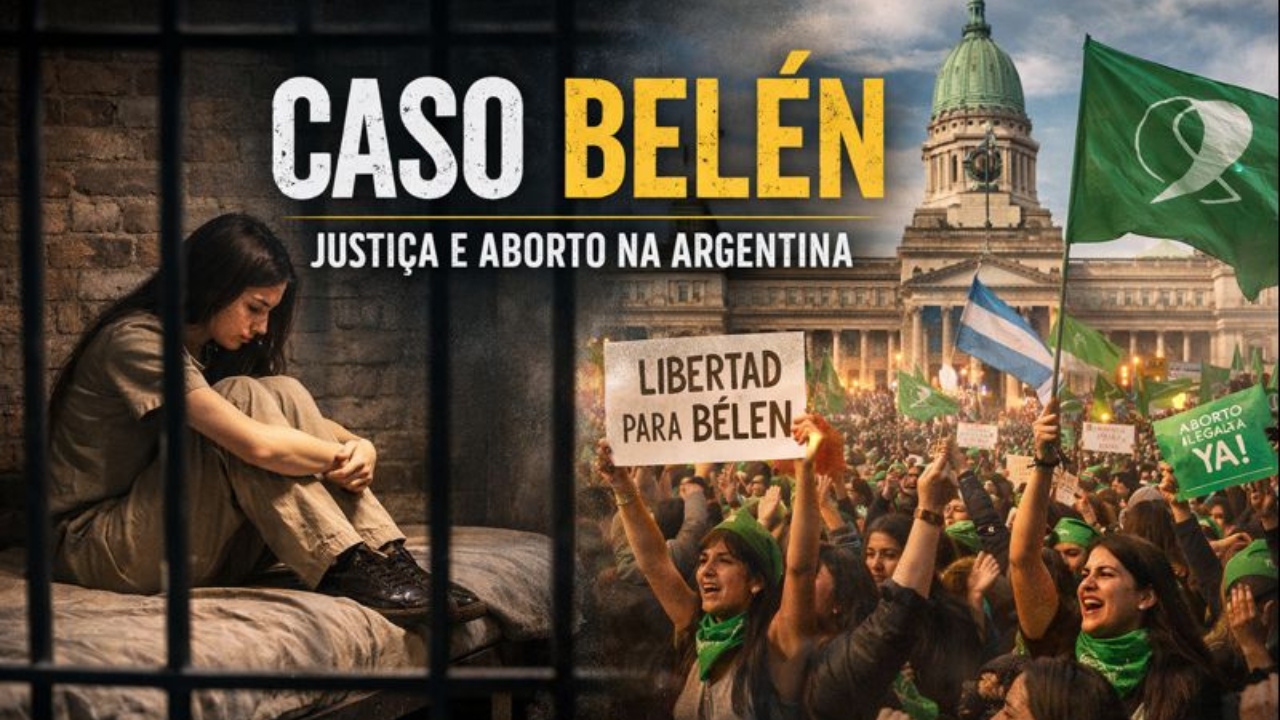
Belén Case Condemnation Exposed Abortion Criminalization and Spurred the Fight for Sexual and Reproductive Rights in Argentina.
The Argentina returned to the center of the international debate on abortion, sexual and reproductive rights, and gender justice after the impact of the Belén Case, which uniquely exposed how abortion criminalization affected poor and vulnerable women.
The episode occurred in Tucumán, in the northwest of the country, gained national and international attention from 2014 and became a political and social landmark by exposing how the State applied, in practice, punitive legislation, directly influencing the process that led to the legalization of abortion in 2020.
Belén Case and the Real Face of Abortion Criminalization
The Belén Case began when a 27-year-old woman sought treatment at a public hospital in Tucumán due to intense vaginal bleeding.
-
The noise law will no longer be in effect at 10 PM starting in June with a new rule valid during the 2026 World Cup.

-
The Chamber opens a debate on driver’s licenses at 16 years old as part of a reform that includes around 270 proposals to change the Brazilian Traffic Code and may redesign rules for licensing, enforcement, and circulation in the country.

-
The new Civil Code could revolutionize marriages in Brazil with “express divorce” and changes that could exclude spouses from inheritance.
-
Banco do Brasil sues famous influencer for million-dollar debt and intensifies debate on delinquency, risks of seizure, and direct impact on Gkay’s credibility.


Even reporting pain and signs consistent with a miscarriage, she was accused of discarding a fetus in the bathroom of the health unit. To preserve her identity, the authorities began publicly calling her Belén and arrested her while still in the hospital.
Later, the Justice system sentenced Belén to eight years in prison for “aggravated homicide by relationship”, a decision that shocked jurists, social movements, and human rights organizations.
In imposing the sentence, the court starkly highlighted how the criminalization of abortion could serve as a tool of punishment, even in the face of weak evidence.
Sexual and Reproductive Rights at the Center of Argentine Debate
Argentine lawyer Soledad Deza, a specialist in gender and bioethics, took on Belén’s defense. According to her, the case had serious flaws.
“There were inconsistencies and the lack of a DNA test linking that gestational product to Belén,” she explained.
Additionally, the medical record indicated right on the first page “incomplete spontaneous abortion, no complications,” information ignored by the judiciary.
For Deza, the case laid bare how the justice system disregarded sexual and reproductive rights when gender and class inequalities intersected the situation.
Social Mobilization Against Abortion Criminalization
In light of the sluggish judicial system, the defense decided to take the Belén Case to the public.
The strategy proved decisive. Thousands of women took to the streets in different cities in Argentina demanding Belén’s immediate release.
The case also received support from international organizations like Amnesty International and the UN.
“The mobilization was a challenge because it forced us to dismantle the narrative that Belén was a ‘killer’,” Deza stated.
According to her, it was a collective effort involving advocacy, feminist movements, and communication.
A System that Punishes Women
At the time of the conviction, abortion in Argentina was only allowed in cases of rape or health risks to the pregnant woman. Still, estimates indicated around half a million clandestine abortions per year, having a high impact on maternal mortality.
The Belén Case showed that abortion criminalization was not merely symbolic. Between 1992 and 2014, only in Tucumán, there were 532 recorded cases of abortion, including spontaneous abortions. “The case gave political urgency to this injustice,” emphasized the lawyer.
From Court to Cinema
The story inspired the film Belén, based on the books Somos Belén by Ana Correa and Libertad para Belén, written by Soledad Deza.
The feature was scripted, directed, and starred Dolores Fonzi, released in 2025, and available in Brazil on Prime Video.
Chosen to represent Argentina at the Oscars and Goya, the film brought the Belén Case to an even broader audience, reinforcing the discussion on sexual and reproductive rights.
Advances and Setbacks After Legalization
In 2020, Argentina approved the Voluntary Termination of Pregnancy Law.
However, according to Deza, women’s rights remain under pressure, especially after the arrival of President Javier Milei.
“From the first day of the government, there were direct offensives,” she stated, citing the closure of the Ministry of Women and the defunding of public policies.
For the lawyer, the Belén Case remains relevant because it showed that any woman could be affected by abortion criminalization, even in cases of spontaneous abortion.
“This opened a gap of empathy,” she concluded.
Then, Belén was released in 2017, after more than two years in prison. Today, according to Deza, she sees the film as a symbolic closure.
“Belén has always said, ‘I don’t want anyone else to go through what I went through.’ That is the true message.”
See more at: Oscar 2026: Argentine film revives abortion case that mobilized the country – BBC News Brasil










Seja o primeiro a reagir!