





 Portuguese
  English
  Spanish
 6 min of reading
  5 comments


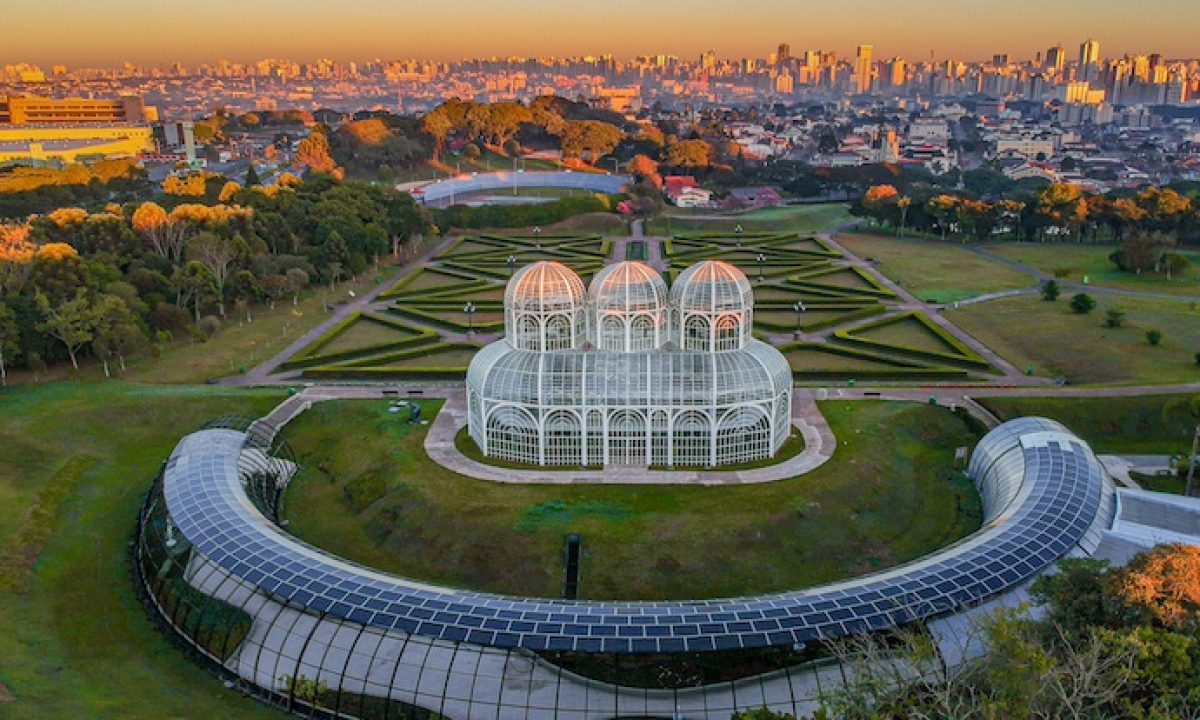


International Awards, Social Indicators, Urban Parks, and a Historic Transportation System Highlight Curitiba and Help Understand Why the Capital of Paraná Frequently Appears in Rankings and Debates About Smart Cities.
Urban Routine in Curitiba: Parks, Bicycle Paths, and Integrated Transportation
In the early winter mornings, the low temperature often requires a jacket before seven, while parks and green areas are just a few minutes’ walk away in different neighborhoods.
In Curitiba, the capital of Paraná, the urban routine is marked by public leisure spaces, bicycle paths, and an integrated transportation system that has been internationally recognized since the 1970s, although it currently operates under pressure of demand and costs.
Recent recognitions at international smart city events have placed Curitiba at the center of discussions about urban innovation.
-
Friends have been building a small “town” for 30 years to grow old together, with compact houses, a common area, nature surrounding it, and a collective life project designed for friendship, coexistence, and simplicity.

-
This small town in Germany created its own currency 24 years ago, today it circulates millions per year, is accepted in over 300 stores, and the German government allowed all of this to happen under one condition.

-
Curitiba is shrinking and is expected to lose 97,000 residents by 2050, while inland cities in Paraná such as Sarandi, Araucária, and Toledo are experiencing accelerated growth that is changing the entire state’s map.

-
Tourists were poisoned on Everest in a million-dollar fraud scheme involving helicopters that diverted over $19 million and shocked international authorities.


In 2023, the capital of Paraná was awarded the title of World’s Smartest City at the World Smart City Awards, an award associated with the Smart City Expo World Congress held in Barcelona.
The following year, in 2024, the Intelligent Community Forum (ICF) announced Curitiba as the Intelligent Community of the Year.
The organization highlights criteria related to connectivity, digital inclusion, innovation, and economic development, among others, to select the finalist communities and the winner.
Smart City Awards: What They Indicate and What Limits They Have
International awards typically evaluate projects, results, and strategies presented by local governments and partners.
Because of this, experts often treat this type of recognition as an indicator of policies and initiatives, not as an automatic summary of the experience of living in the city.

In practice, public indices and service data help contextualize the awards.
Moreover, the perception of “quality of life” varies according to income, place of residence, access to services, and travel time, among other factors.
History of Curitiba: Tropeiros, European Immigration, and Cultural Identity
Curitiba consolidated its urban formation from the 17th century and developed along internal routes associated with the cattle-driving trade.
The city gained new cultural and economic layers with waves of European immigration in the 19th century, which left marks on neighborhoods, institutions, and memory spaces.
Among the most cited groups are the Poles, whose settlement in Santa Cândida is recorded by the Municipality as dating from 1875.
Shortly thereafter, Italian immigration was associated with the establishment of the Santa Felicidade Colony in 1878, an area that remains known for its restaurants and community traditions.
The Ukrainian presence has also become one of the cultural references of the capital.
Within Tingui Park, the Ukrainian Memorial was inaugurated as a tribute to the centenary of Ukrainian immigration, according to cultural records from the municipality.
Another local landmark is the Federal University of Paraná.
The institution states that it was officially founded on December 19, 1912, with activities starting the following year, and claims recognition as the oldest continuously operating university in Brazil.
Quality of Life Rankings: IPS 2025, IPDM, and Public Data
Curitiba has been featured in surveys comparing Brazilian capitals.
In the Social Progress Index (IPS) 2025, published by institutions that compile social and environmental indicators, the city was identified as having the highest score among capitals in Brazil, with a score of 69.88, according to local official releases.
In the state analysis, Ipardes reported that Curitiba recorded the highest Overall Municipal Performance Index (IPDM) of 2022, with 0.9013.
The indicator considers areas such as income, education, and health, according to the institute’s methodology.
Data on sanitation has also been published.
In 2025, the Municipality reported that the capital had 100% of treated water supply and 100% of sewage collection, with 97.14% sewage treatment, in reference to rankings and reports from the sector.
In the health sector, a survey released in 2024 by the State News Agency indicated that Curitiba had 15,902 doctors, with a density of 8.83 professionals per thousand inhabitants, above the state average in the same analysis.
Green Areas in Curitiba: Parks, Woods, and Square Meters Per Inhabitant
The network of parks and woods is one of the elements most associated with the city in surveys and institutional presentations.
Data from the Municipality indicates that Curitiba has 52 parks, and the green area per inhabitant reached about 68 m² per person, a number that may vary depending on the calculation method and territorial range adopted.

The municipality also mentions the reference of 12 m² per inhabitant as an international parameter used in discussions about urban green areas.
As with other indicators, comparisons require caution because different cities use distinct methodologies to account for protected areas and leisure spaces.
In daily use, these spaces function as accessible public facilities in various regions.
Barigui Park, for example, is described by the municipality as having an area of 1.4 million m² and includes trails and paths for physical activities.
On the other hand, Tanguá Park incorporated an old quarry into its design and contains an observation deck and circulation areas.
The Botanical Garden frequently appears as a postcard.
Descriptive records and image collections indicate that the iron and glass greenhouse is inspired by the Crystal Palace of London, a recurring reference in descriptions of the space.
Public Transport in Curitiba: BRT, Exclusive Lanes, and Modernization
The organization of collective transportation and land use has become one of the most recognized marks of Curitiba.
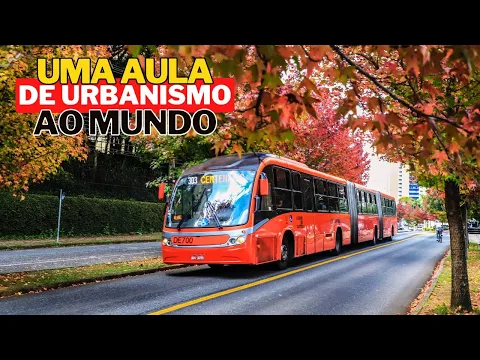
In the 1970s, the city implemented exclusive bus corridors that later became associated with the concept of BRT, a model adopted by dozens of cities worldwide in different formats.
Urban planning documents from the municipality record the Integrated Transport Network with 81 km of exclusive lanes.
The operation includes feeder lines, integrations, and high-capacity vehicles along part of the corridors, although the network faces challenges regarding demand, funding, and the need for upgrades, as seen in major public transport systems across the country.

In recent years, Curitiba has also announced tests and projects aimed at reducing emissions in collective transportation.
In 2025, the Municipality announced the testing phase of an electric bi-articulated bus and reproduced a statement from the president of Volvo Buses Latin America: “We aim to achieve zero CO2 emissions from our vehicles by 2040.”
Bicycle mobility appears in public policies and actions to encourage active commuting.
In 2022, the Municipality reported that the city had 208.5 km of bicycle paths, a number disclosed in official materials about routes and infrastructure for cyclists.
Climate of Curitiba: Altitude and Variations in Winter
The altitude of approximately 934 meters is one of the factors related to the climate of Curitiba, often described as colder in winter compared to other Brazilian capitals.
With temperature variations throughout the day, some residents tend to follow weather forecasts to plan their trips and clothing, especially in the colder months.
Among international awards, quality of life indices, green areas, and a transportation system that has become a historical reference, Curitiba continues to be mentioned in discussions about urban planning in Brazil.









Visitei Curitiba e não vi nada demais. Uma cidade como outras do Brasil. Falaram que os carros paravam nas faixas e quase fui atropelado isso sim. Esse parque com essa estufa é outra enganação, uma estufinha minúscula e as pessoas se matando para tirar fotos. O gostoso de Curitiba foi sair de lá e fazer o passeio para Morretes.
Morei lá 48 anos e saí pela insegurança atual, poucos dias de sol no ano e obviamente todos os problemas de uma cidade que cresceu demais.
Cidade modelo mas opovo horrível morei lá péssima experiência.
Você de ser boa pessoa, pra falar mal de uma comunidade inteira generalizando uma diversidade toda de cultura e povos.
Povo horrível porque não se deixa enganar por lábia de aproveitadores!