





 Portuguese
  English
  Spanish
  5 min of reading
  0 comments


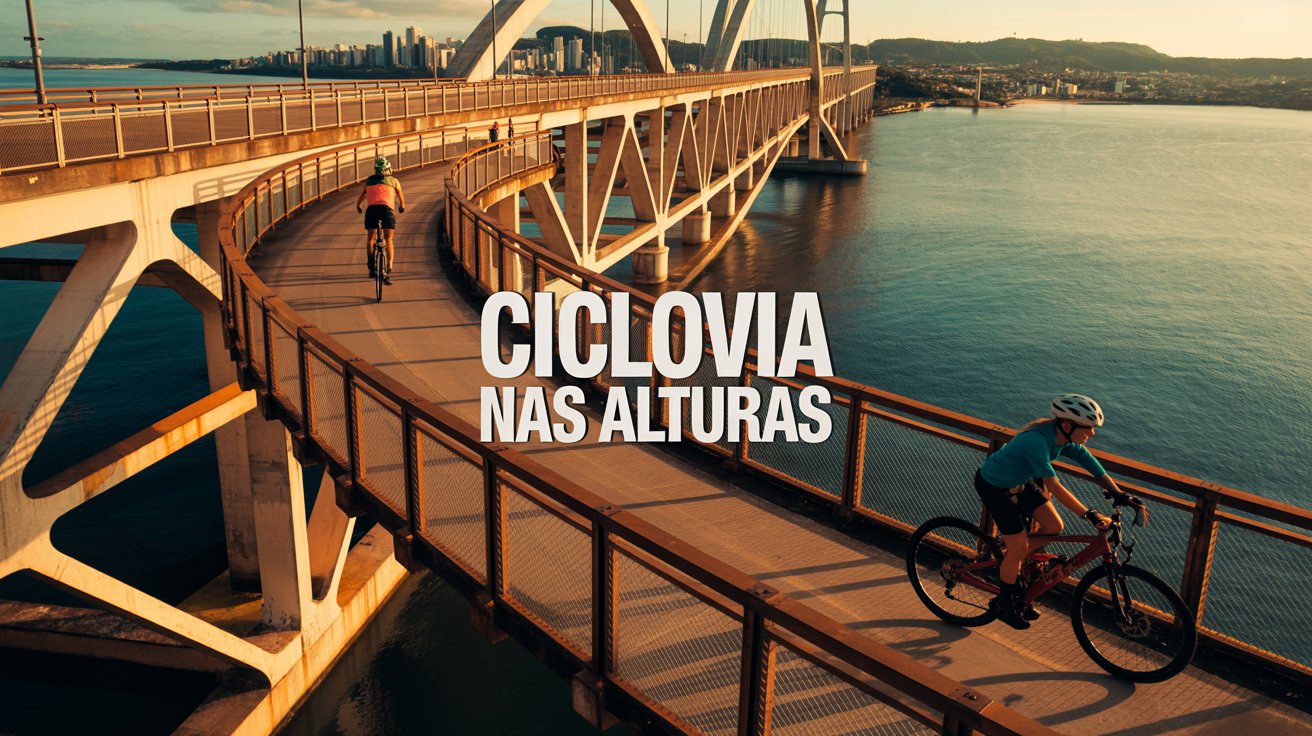
With a Metal Structure of 3 Thousand Tons and 70 Meters High, the New Bikeway of the Third Bridge Connects Vitória and Vila Velha with a Panoramic Lookout, Lifeguard Barrier, and Road Expansion That Increased Capacity by 40%.
The bridge connecting Vitória and Vila Velha underwent a major transformation.
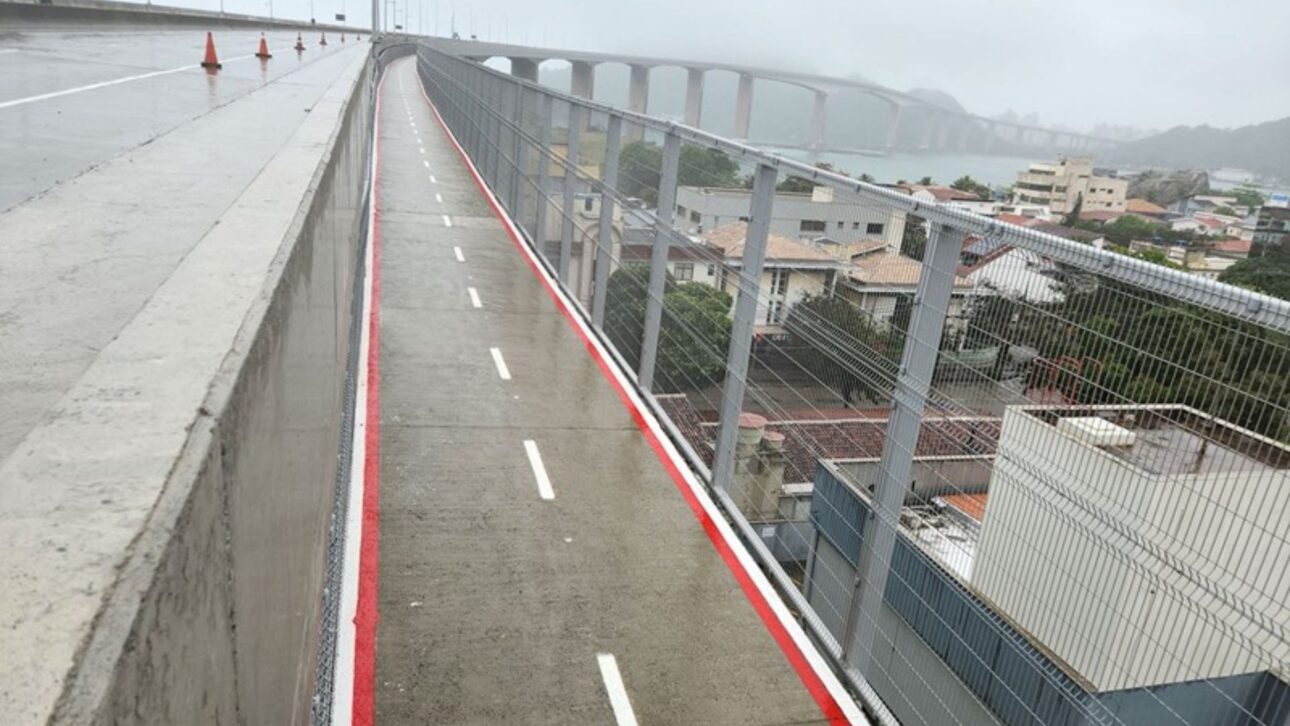
The structure received a suspended metal bikeway, designed also as a lifeguard barrier, in addition to interventions that expanded traffic capacity.
The bikeway has 3.5 kilometers in each direction, 3 meters wide, and is positioned about 70 meters above sea level at its highest point, where there is a stopping area with a view of the bay.
-
The government requests the Federal Revenue Service for a new system to automate the income tax declaration, reducing errors, time, and bureaucracy for millions of Brazilians.

-
Pix in installments, international Pix, and contactless payment without internet: the Central Bank revealed the new features coming to the tool that is already used by almost every adult in Brazil.

-
Mercado Livre has just started selling medications with delivery in up to three hours to your door, and this move could completely change the way Brazilians buy medicines on a daily basis.

-
In Dubai, rising tensions from the war in the Middle East are causing super-rich individuals to leave the Gulf and direct their fortunes to a new financial refuge in Asia.


Capacity Expansion of the Bridge
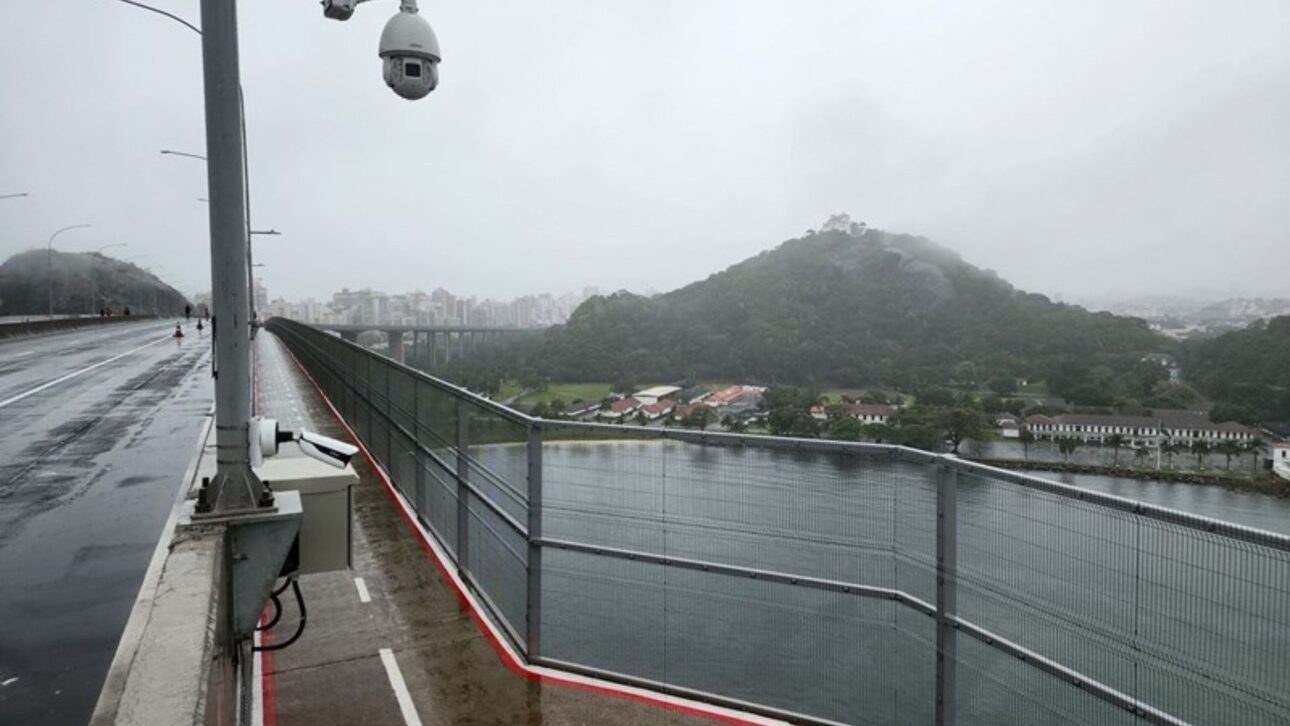
The reconfiguration of the Third Bridge increased the number of traffic lanes from two to three in each direction, after repositioning the old side barriers.
According to the government of Espírito Santo, the redistribution of space raised the flow capacity by about 40% between the two cities, reducing congestion during peak hours.
Metal Structure and Construction Process
The bikeway is made up of Corten steel modules, a material suited for maritime environments due to its corrosion resistance.
About 3 thousand tons of steel were used, distributed in custom-manufactured modules.
According to official information, the set comprises over 30 thousand pieces, transported by approximately 160 trailers to the construction site.
The bolted system was chosen to allow controlled assembly, without a complete shutdown of traffic.
Project technicians state that the addition brought greater structural rigidity to the bridge ensemble.
Lookout and Crossing Design
The central section of the bikeway houses an urban lookout, designed as an observation and quick rest area.
The widening at this point aims to reduce conflicts between cyclists of different speeds, according to the executive project.
The space was integrated into the original design to allow for a panoramic view of the bay and the capital of Espírito Santo.
Structure Also Functions as a Protection Barrier
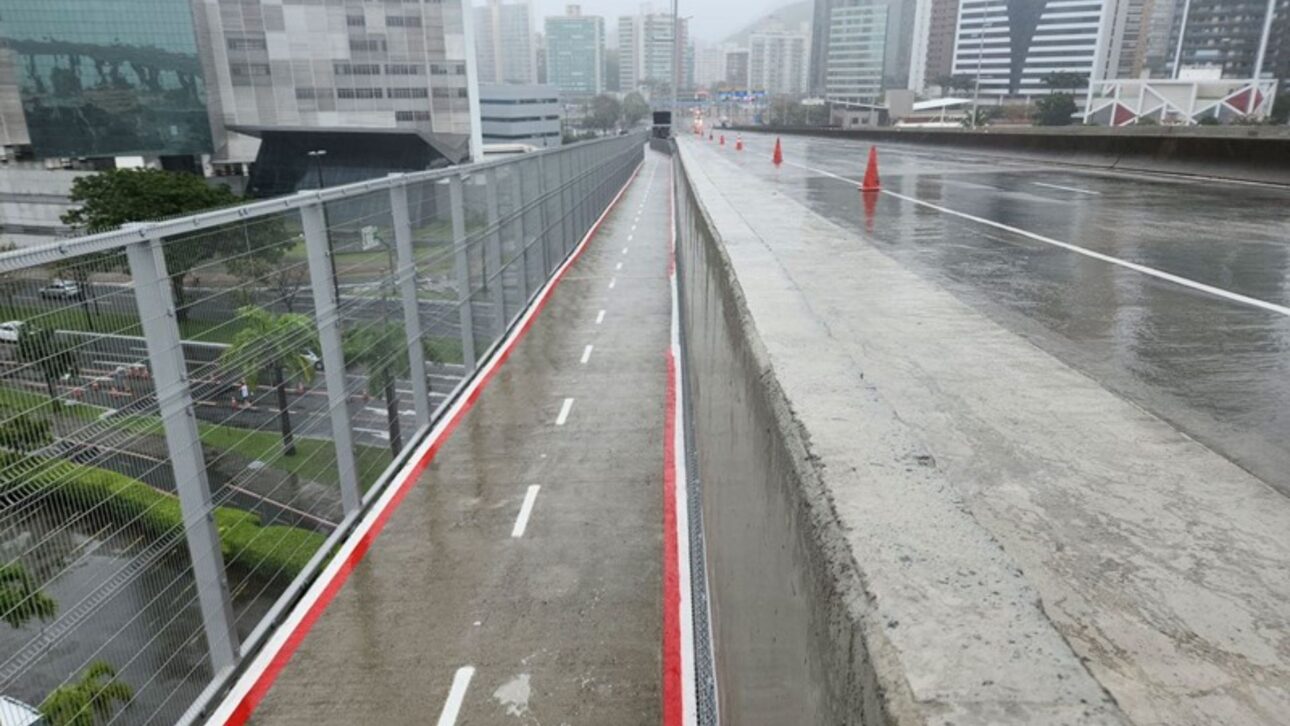
The bikeway was designed to serve a dual function: mobility and safety.
In addition to serving as a bike path, it forms a continuous physical barrier between the pedestrian area and the sides of the bridge, consisting of high guardrails, screens, and metal partitions.
The state government states that the measure aims to reduce occurrences of suicide attempts on the crossing, combining elements of passive protection with real-time video monitoring and emergency buttons distributed along the route.
Operation and Usage Rules
Access to the bikeway is free, and it operates daily from 5 AM to 11 PM.
The extended hours, in effect since July 2024, were set to accommodate work-related commutes and recreational use.
The LED lighting and camera system make up the operational control.
The CETURB-ES informs that the width of the path allows for the simultaneous passage of two cyclists side by side, in accordance with established safety standards.
Usage and Impact on Mobility
Data from the Department of Mobility and Infrastructure of Espírito Santo indicates that in the first year of operation, more than 500 thousand bike crossings were recorded.
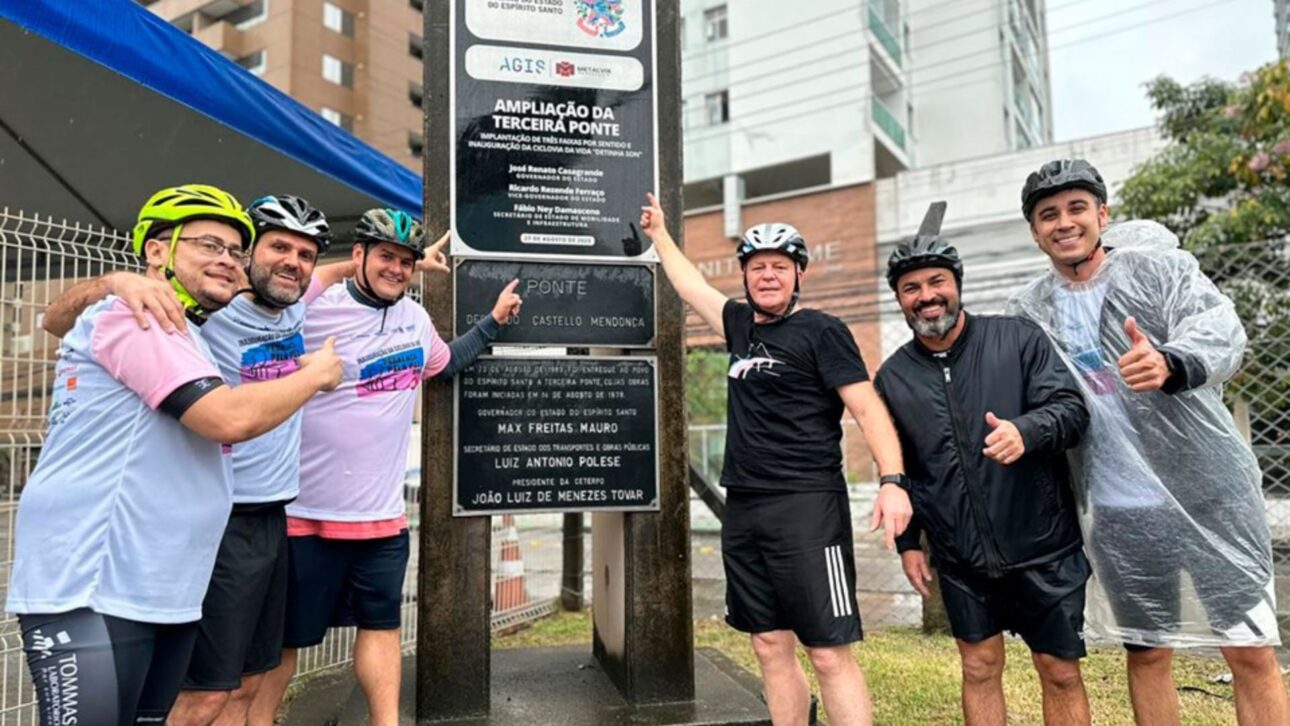
The number, according to the agency, demonstrates the existence of a pent-up demand for bike connections between the shores of the bay.
Based on this survey, proposals for integration with transport terminals, creation of feeder routes, and installation of cyclist support points in the Greater Vitória Metropolitan Region were developed.
Engineering Adapted to the Marine Environment
Due to being in a high-salinity environment, the structure was designed with anticorrosive protection and special painting, according to technical norms for works exposed to sea mist.
Corten steel, according to the state government, allows for lower maintenance needs and facilitates periodic inspections through technical access passages in the modules.
The set is self-supporting, supported and anchored at specific points of the original bridge, with load and deformation calculations compatible with the existing structure.
Effects on Vehicle Circulation and Public Transport
With the increased capacity, traffic began to be distributed more evenly among the lanes.
The state government claims that the outcome was a reduction in speed variations and improvement in travel predictability, especially for intercity public transport.
The reorganization also aims to reduce historical bottlenecks at accesses to Vitória and Vila Velha.
Height and Technical Characteristics
The bikeway runs along the entire usable length of the bridge, maintaining an approximate height of 70 meters above sea at the central span.
The structure is considered, according to the local press, the highest bikeway in the country among capitals.
This title is not official but is used in reports and engineering publications to highlight the project’s size and its unique character in the Brazilian urban context.
Investment and Scope of the Project
The total investment was R$ 180 million, including the expansion of lanes, replacement of barriers, installation of the metal bikeway, monitoring systems, and lighting.
The project integrates the policies of active mobility and improving public transport in the Greater Vitória Metropolitan Region, according to the state infrastructure plans.
What other Brazilian bridge could receive a suspended bikeway serving as a lifeguard barrier, marrying large-scale engineering with direct benefits for urban mobility?








Seja o primeiro a reagir!