





 Portuguese
  English
  Spanish
  5 min of reading
  0 comments


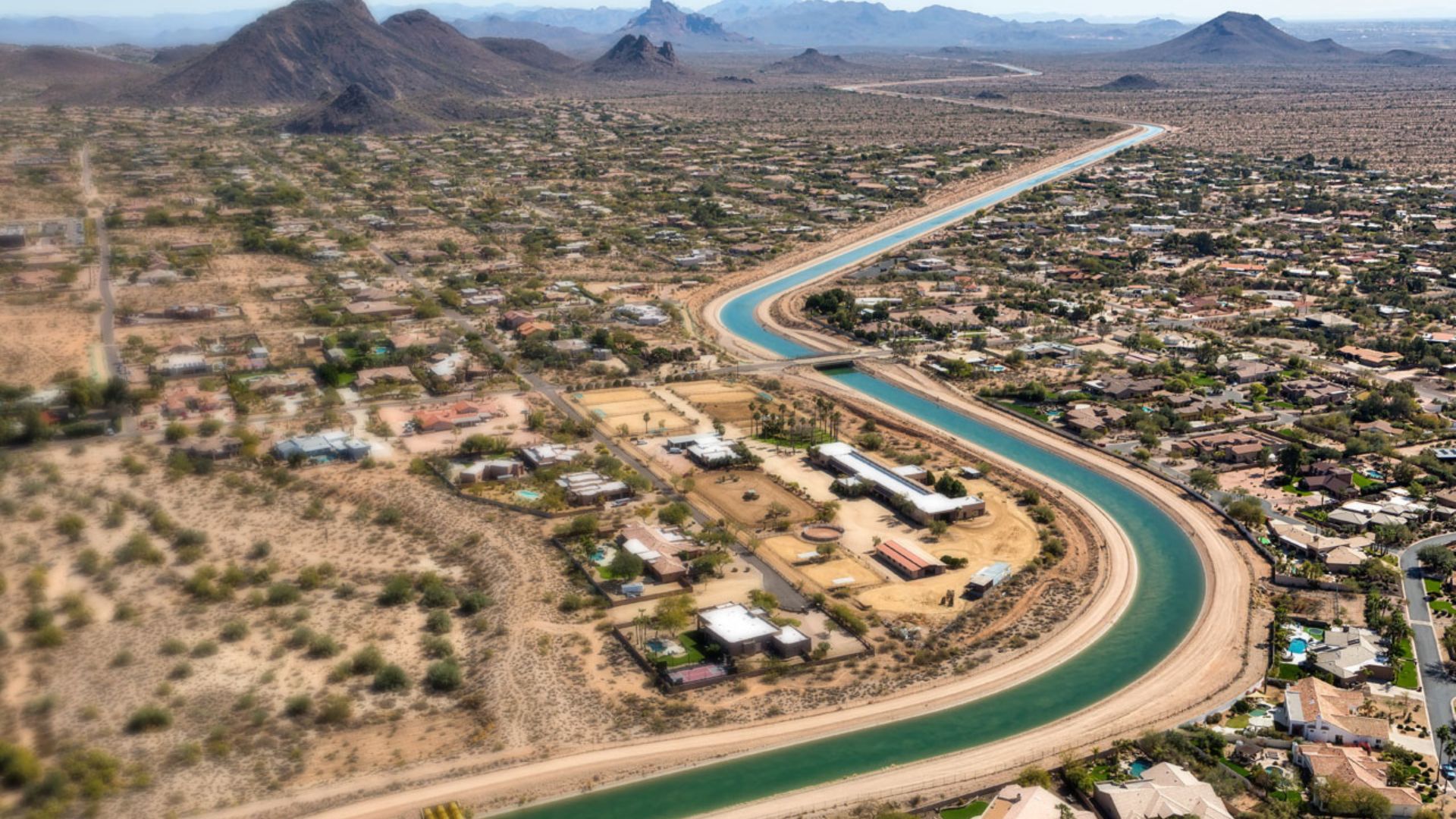
Water Mega Structure in Arizona Transports Water from the Colorado River for 541 km, Overcomes Elevations of Almost 900 Meters with Continuous Pumping, and Sustains Large Urban Centers in the Desert at a Cost of Tens of Millions of Dollars Per Year in Energy.
In Arizona, a system of aqueducts and pumping stations transports water from the Colorado River for about 336 miles, equivalent to 541 kilometers, connecting Lake Havasu to the most populated areas of the central and southern parts of the state, on a route designed to overcome deserts and mountain ranges.
Known as the Central Arizona Project, the CAP serves Maricopa, Pinal, and Pima, three counties where more than 80% of Arizona’s population lives, making the project a kind of indispensable “engineering river” for cities and users along the served corridor.
The most striking feature at the beginning of the system is that the water does not flow solely by gravity, as the route requires elevation in stages, with pumps that make the flow “rise” before moving on to sections where the conduit can occur in decline.
-
Friends have been building a small “town” for 30 years to grow old together, with compact houses, a common area, nature surrounding it, and a collective life project designed for friendship, coexistence, and simplicity.

-
This small town in Germany created its own currency 24 years ago, today it circulates millions per year, is accepted in over 300 stores, and the German government allowed all of this to happen under one condition.

-
Curitiba is shrinking and is expected to lose 97,000 residents by 2050, while inland cities in Paraná such as Sarandi, Araucária, and Toledo are experiencing accelerated growth that is changing the entire state’s map.

-
Tourists were poisoned on Everest in a million-dollar fraud scheme involving helicopters that diverted over $19 million and shocked international authorities.


Intake and Start of Pumping at Lake Havasu
The intake occurs in the arm of the Bill Williams River at Lake Havasu, where structures associated with the intake canal divert the volume from the Colorado and direct it to the first phase of pumping, marking the practical entry of the CAP on its path into the interior of Arizona.
It was at this point that the initial construction of the project began in the 1970s, according to records from the Bureau of Reclamation, the federal agency responsible for major water works in the American West, which describes the CAP as a set of pumping plants and aqueducts.

The transition from the lake to the tunnel system has a section considered emblematic because the water is elevated by the Mark Wilmer Pumping Plant to about 824 feet, nearly 251 meters, to the entrance portal of the Buckskin Mountains Tunnel.
After this initial elevation, the flow passes through the tunnel and is discharged into an open canal of the aqueduct that continues the transport, combining sections above ground with underground structures, siphons, and gates designed for flow control and operational safety.
Canal Structure and Accumulated Elevation of Almost 900 Meters
The nickname “river in the desert” works as a metaphor because the CAP is neither a natural course nor a single uniform canal, but a system that includes tunnels, siphons, pumping stations, control structures, and delivery points distributed along the route.
In a recent institutional summary, the CAP itself describes that the system includes four tunnels, ten siphons, fifteen pumping plants, dozens of radial gates, and more than fifty delivery points, in addition to using Lake Pleasant as a storage reservoir.
Along the way, this architecture allows it to circumvent terrain and traverse obstacles without relying on geography as a river would, with the water alternating between open sections and technical passages that function as hydraulic shortcuts under or through mountains.
The logic of the project also involves large accumulated elevations, as educational and informational materials related to the CAP describe that the pumping stations raise the water “almost 3,000 feet” in total, equivalent to about 914 meters, along the system.

Supply of 80% of Arizona’s Population
The function of the CAP goes beyond transporting water from one point to another, as it organizes part of the supply in an area of Arizona where population and economic activity are concentrated, including the metropolitan areas of Phoenix and Tucson, mentioned among the served hubs.
The Bureau of Reclamation reports that more than 1.8 million people in municipalities of the Phoenix metropolitan area receive water from the Colorado through the CAP, a figure that illustrates the role of the system in designing water security for the urban heart of the state.
In the same federal material, the agency states that by providing Arizona with an annual average of over 1.4 million acre-feet of Colorado water through the CAP, the project was designed to reduce over-extraction of aquifers and associated effects, such as land subsidence.
Still, the CAP does not eliminate the need for management and diversification, as Arizona’s large cities often operate with combinations of sources and strategies, while the Colorado Basin faces supply pressures and allocation rules among states and other users.
Energy Cost Between US$ 60 Million and US$ 80 Million Per Year
Operating a “river of pumps” for hundreds of kilometers involves constant energy costs, since moving large volumes and overcoming elevations requires electricity in multiple stages, and the water does not “flow by itself” from the Colorado to the interior of Arizona.

A fact sheet from the CAP indicates that the annual energy expenditure can vary between US$ 60 million and US$ 80 million, depending on the volume pumped and market prices, a range that highlights how supply also depends on the electric scenario.
To address this demand, CAP documents describe a diversified portfolio, with long-term and market purchases and participation from sources such as solar and hydroelectric energy, a strategy aimed at reducing exposure to fluctuations and maintaining operational predictability.
Even with this structure, energy dependence remains a part of the design, as the system was planned to push water to higher quotas and only then allow subsequent sections to operate with greater use of gravity.
Integration with the Colorado River Basin
Although it is in Arizona, the CAP is part of the Colorado River Basin, which is shared by seven U.S. states and Mexico, and appears in the project’s own materials as a hub for urban supply, agriculture, and demands from tribal communities.
For this reason, the project has become a reference when discussing infrastructure that reshapes the water map in arid regions, as it connects a point of intake in Colorado to densely populated areas hundreds of kilometers away, with technical control of flows and deliveries.









-

-

-

-

-

-

24 pessoas reagiram a isso.