





 Portuguese
  English
  Spanish
  4 min of reading
  8 comments


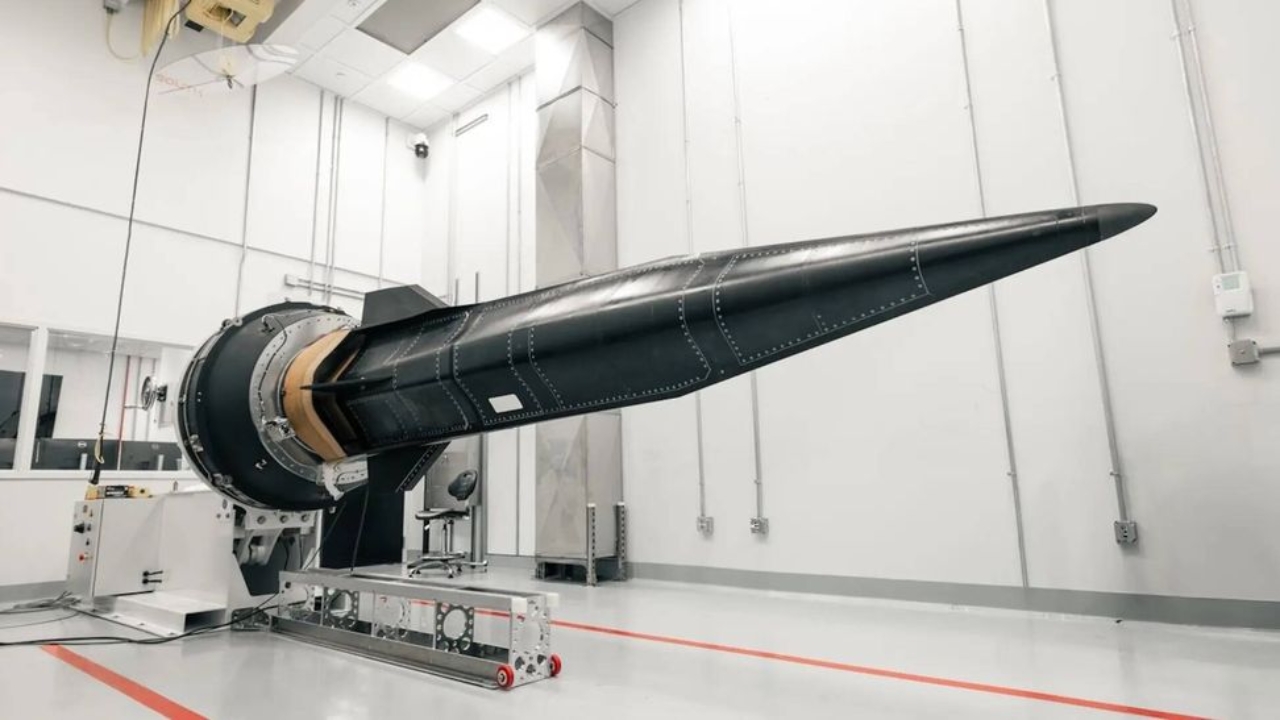


Over 24,000 km/h, Scramjet, Hydrogen, and 3D Printing: The DART AE Launch on HASTE Brings Together Four “Magic Words” of Engineering and Becomes a Showcase for the Hypersonic Race
Rocket Lab Prepares the 4th Hypersonic Mission for the Pentagon in Less Than Six Months, with a Rocket Capable of Mach 20 and an “Almost Entirely” 3D Printed Demonstrator
If you blinked, you missed it: the U.S. is about to literally accelerate — hypersonic research with a launch that promises to attract attention in the defense sector and the space market. Rocket Lab, considered one of the strongest names outside of SpaceX, will conduct its fourth hypersonic test mission in less than six months, launching a system capable of simulating conditions of up to Mach 20, equivalent to over 24,000 km/h.
The launch is scheduled for the end of February, from Launch Complex 2 at Wallops Island (Virginia). The vehicle used will be the HASTE (Hypersonic Accelerator Suborbital Test Electron), a modified version of the Electron rocket, specifically designed for suborbital testing focused on hypersonic technologies.
-
Motorola launched the Signature with a gold seal from DxOMark, tying with the iPhone 17 Pro in camera performance, Snapdragon 8 Gen 5 that surpassed 3 million in benchmarks, and a zoom that impresses even at night.

-
Satellites reveal beneath the Sahara a giant river buried for thousands of kilometers: study shows that the largest hot desert on the planet was once traversed by a river system comparable to the largest on Earth.

-
Scientists have captured something never seen in space: newly born stars are creating gigantic rings of light a thousand times larger than the distance between the Earth and the Sun, and this changes everything we knew about stellar birth.

-
Geologists find traces of a continent that disappeared 155 million years ago after separating from Australia and reveal that it did not sink, but broke into fragments scattered across Southeast Asia.

The “Passenger” of the Rocket: a Hydrogen Scramjet Demonstrator
Inside the HASTE will travel the DART AE, a hypersonic demonstrator developed by the Australian Hypersonix Launch Systems for the DIU (Defense Innovation Unit), linked to the U.S. Department of Defense.
The highlight here is the engine: the DART AE is powered by a scramjet (a type of engine that “breathes” air at extreme speeds), fueled by hydrogen — a detail that shows how the competition is not only for speed but also for efficiency and operational viability.

Why Mach 20 Matters (and Who Benefits from It)
Rocket Lab says that the HASTE allows customers to control flight profiles and test “environments” at speeds of up to Mach 20 — and claims that there is no commercial rival offering the same capability at the same cadence. The objective is clear: to drastically reduce the cost of hypersonic testing, making this type of experiment more accessible for both research and commercial applications.
In other words: instead of relying solely on costly government structures and rare testing windows, the sector can start testing more frequently, iterate faster, and reach the “final product” sooner.
How HASTE Works (and Why It Is Different from Electron)
The HASTE stems from the Electron, but with a very specific mission: suborbital and hypersonic. It can carry up to 700 kg to suborbital space, more than double the typical payload of the Electron in low Earth orbit (around 300 kg).
The DART AE is approximately 3 meters long and weighs close to 300 kg — a size that seems modest until you remember that it was designed to face flight regimes that challenge materials and aerodynamics.
An Eye-Catching Detail: Fully 3D Printed Structure
Hypersonix claims that the DART AE is the world’s first hypersonic launch platform with a completely 3D printed structure, using high-temperature alloys. According to the company (founded in 2019), the vehicle can have a range of up to 1,000 km and reach Mach 7.
And there’s more: Hypersonix announced that the DART AE passed key vibration tests, an important step before more complex flight trials.
The Background: The Hypersonic Race Became a Priority
In recent years, hypersonic research has shifted from “distant future” to priority for a simple reason: extreme speed makes these vehicles and weapons very difficult to intercept. For the Pentagon, accelerating more frequent and cheaper tests means reducing the time between prototype and real capability — especially in a technological competition scenario with China, which has been advancing in this type of armament.
Rocket Lab: Real Rival to SpaceX (and with Very Different Solutions)
Outside of China, Rocket Lab is seen as one of the most relevant rivals to SpaceX. The company competes in the increasingly strategic small satellite market and has already placed payloads in orbits from 430 to 500 km. By the end of 2021, it had already deployed over 100 satellites with the Electron.
Even without the “size” of SpaceX, Rocket Lab is also betting on cost reduction through reuse — but by a different route: instead of capturing the rocket on descent with a ground structure, it uses a Sikorsky S-92 helicopter to “catch” the stage descending by parachute, hooking the cable at almost 2,000 meters height. The method has been nicknamed “There And Back Again” and demonstrates that there is more than one way to make launches competitive.
Additionally, Rocket Lab is participating in missions like Victus Haze, in collaboration with the U.S. Space Force, reinforcing its position as a reliable partner in defense contracts — a territory where SpaceX also operates strongly.








Entendo o quanto a velocidade incide em benefício mas estamos dispensando no parque São Jorge pois nosso glorioso Corinthians já está voando baixo desde o começo do ano!
E o Brasil, o que que mostra ou apresenta para os brasileiros ?
Virgínia, Vini Jr, Neymar Peréba. Não tem que ficar molhando á tanga pra americano não, mas algo á de se inspirar, ou ao menos querer aproximar ou igualar.
Como sempre já apareceu um vira lata , au au au au kkkkkk
Falar a verdade ofende os verdadeiros **** rolas de plantão !
Mach 20…?? Cuidado pra que esta coisa não venha se desintegrar no ar e cair as frações sobre pessoas e casas.