





 Portuguese
  English
  Spanish
  5 min of reading
  1 comment


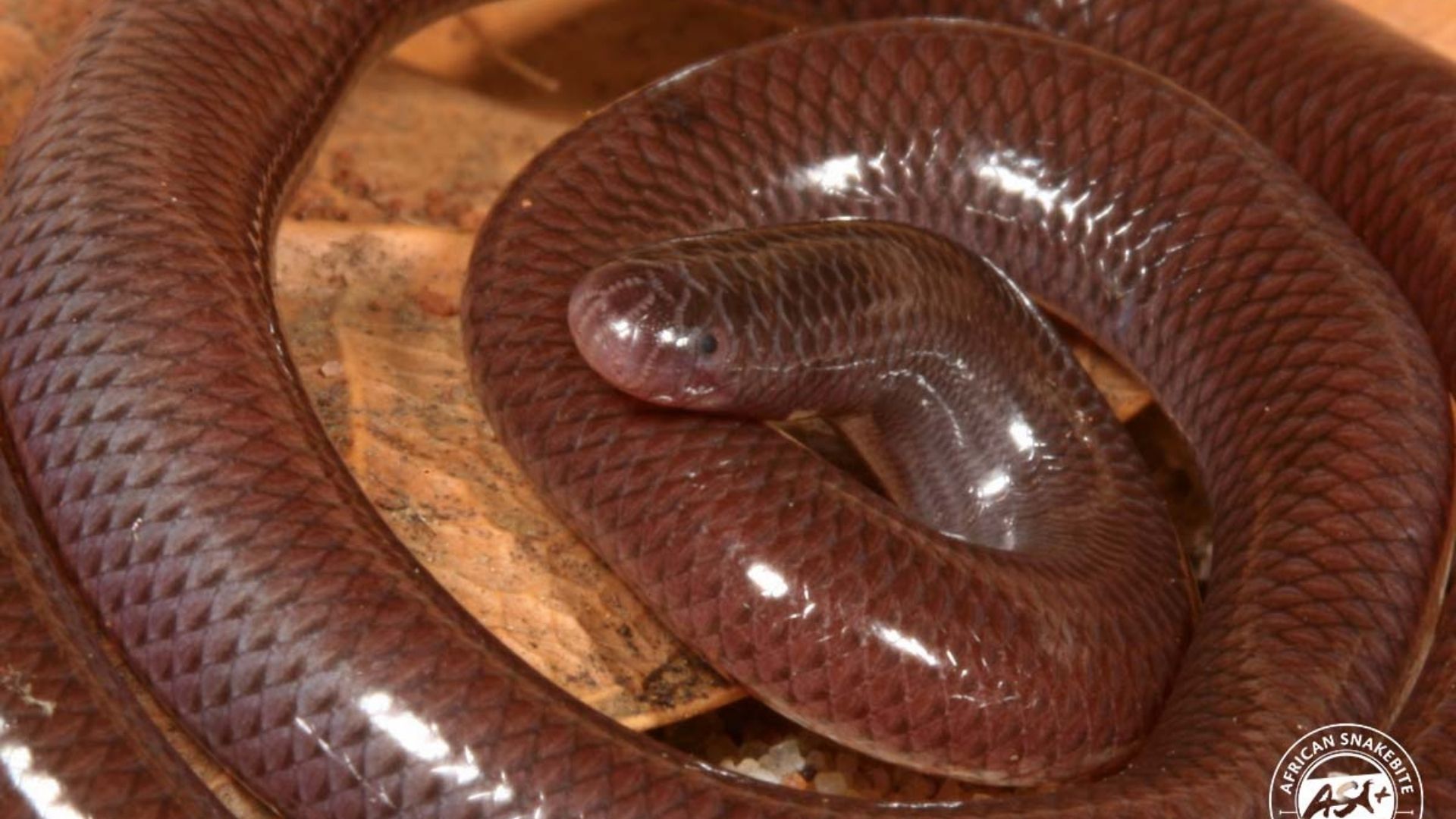


Reproduction Without Males, Subterranean Life, and Invisible Travel With Ornamental Plants Explain Why a Tiny Snake Appears Far From Where It Should Be, Confused With an Earthworm and Studied by Scientists as a Rare Case of Natural Cloning.
A small, subterranean snake often confused with an earthworm has begun appearing in records of introduced fauna in different regions of the planet for an unusual reason: it reproduces without males.
The Brahminy Blindsnake (Indotyphlops braminus), internationally known as the “flowerpot snake,” is described in the scientific literature as the only known case of a snake with obligate parthenogenesis, a type of reproduction where females produce offspring without fertilization.
Life in the Soil and Why the Animal Goes Unnoticed
The way the species lives and is found helps explain why it crosses borders without drawing attention.
-
Friends have been building a small “town” for 30 years to grow old together, with compact houses, a common area, nature surrounding it, and a collective life project designed for friendship, coexistence, and simplicity.

-
This small town in Germany created its own currency 24 years ago, today it circulates millions per year, is accepted in over 300 stores, and the German government allowed all of this to happen under one condition.

-
Curitiba is shrinking and is expected to lose 97,000 residents by 2050, while inland cities in Paraná such as Sarandi, Araucária, and Toledo are experiencing accelerated growth that is changing the entire state’s map.

-
Tourists were poisoned on Everest in a million-dollar fraud scheme involving helicopters that diverted over $19 million and shocked international authorities.


Identification guides describe a fossorial animal that spends most of its time buried in loose soil and under debris like leaves, decomposing logs, and accumulated materials on the ground.
In urban and agricultural environments, it can be recorded as locally abundant and, at certain times, appear inside homes when the soil is disturbed by gardening, construction, or periods of rain, as the animal normally remains hidden.
Records in Florida and What Institutions Say About the Species

An example of institutional documentation comes from the United States.
The Florida Museum of Natural History classifies the Indotyphlops braminus as a non-native species in the state of Florida and records that it was first reported in Miami in the 1970s, with subsequent expansion to much of the peninsula, including dozens of counties.
The same institution emphasizes that it is a non-venomous snake and poses no risk to people or pets, relevant information because its “thread-like” appearance often generates alarm in those who encounter it on bathroom floors and damp areas.
Size, Appearance, and Confusion With Earthworm
The morphological description also contributes to the misconception with earthworms.
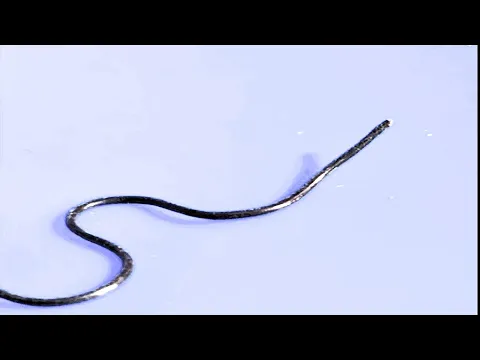
According to the Florida Museum, the Brahminy Blindsnake is slender, shiny, and can range in color from gray to purple; the head and tail appear similar, the neck is slightly distinct, and the eyes are very reduced, seen as small pigmented spots under the scales.
The guide indicates that adults typically measure about 11.2 to 16.5 centimeters in total length, with a maximum recorded length of 17.3 centimeters.

Obligate Parthenogenesis, Triploidy, and What Science Has Confirmed
The central trait, however, lies in reproduction.
An article published in Scientific Data, from the journal Nature, states that no male has been found and identifies the species as the only known case of obligate parthenogenesis in snakes.
The same study describes the Indotyphlops braminus as triploid, that is, with three sets of chromosomes, and discusses the possibility that this condition relates to hybridization processes between closely related species, a mechanism already observed in other parthenogenetic reptiles.
Maturity, Eggs, and Records in European Islands
Field data and record compilations help gauge what parthenogenesis may mean in the life cycle.
A study that compiles genetic evidence and records from European islands cites that maturity may occur when the animal reaches approximately 95 millimeters in total length and mentions litters reported of up to eight eggs, indicating that larger females tend to produce larger clutches.
The same work reinforces the unisexual and triploid nature of the species, consistent with what is described in genetic research.
Plant Trade and Soil: How the “Flowerpot Snake” Crosses Borders

The most cited dispersal route in public documents and scientific literature is related to a mundane activity: the trade and transport of ornamental plants and their substrates.
In the article from Scientific Data, the authors state that, due to its small size, fossorial nature, and parthenogenetic reproduction, the species can be transported around the world hidden in soils and organic matter associated with plants, and record that it has already been introduced accidentally and artificially on every continent, except Antarctica.
Guides from institutions dealing with sightings also describe accidental transport in potting soil as a recurring explanation for its appearance in new locations.
Feeding on Termites and Ants in Urban Areas
Feeding and underground shelter reinforce its adaptation to areas managed by people.
The Florida Museum records that the Indotyphlops braminus feeds on termites and ant eggs and pupae, a resource common in gardens, flowerbeds, decaying wood, and areas with accumulated organic matter.
The same page notes that, when several of these snakes appear inside a residence, it may relate to the presence of ants or termites nearby, as the animal’s food is associated with those social insects.
Monitoring, Management, and Gaps on Ecological Impact
When a population is detected outside the considered area of origin, part of the debate becomes monitoring and management, but with limits of knowledge.
In the report detailing the detection in Ischia, Italy, the authors highlight the importance of early detection of alien populations to activate management strategies and record that the ecological and economic impact on native biota is still not clearly established, partly because the animal is discreet and lives buried.
Why It Became a Model Organism for Science
While environmental monitoring varies by location, scientific interest has grown for another reason: the species has become a model for investigating asexual reproduction and genetics in blind snakes.
The article from Scientific Data presents a draft genome and argues that the combination of triploidy, obligate parthenogenesis, and global distribution makes the Brahminy Blindsnake a useful organism to study how parthenogenesis can arise and persist in vertebrates, as well as to expand genomic data on a group of snakes whose cryptic ecology makes sampling and monitoring difficult.
If a snake can cross oceans hidden in the substrate of a plant and still form a population consisting only of females, what other discreet “passengers” are circulating today on the same routes unnoticed?









Essa cobra cega, tem muito no Brasil, quando eu era jovem adolescente trabalhava com meu pai na lavoura de café, e encontrava essas cobras cegas, quando fazia capinação na roça, quase todo dia encontrava uma dessas, geralmente cinzentas, as vezes uma ou outra mais escura puxando para o marrom. Eu morava na região de londrina-Pr.