





 Portuguese
  English
  Spanish
  4 min of reading
  8 comments


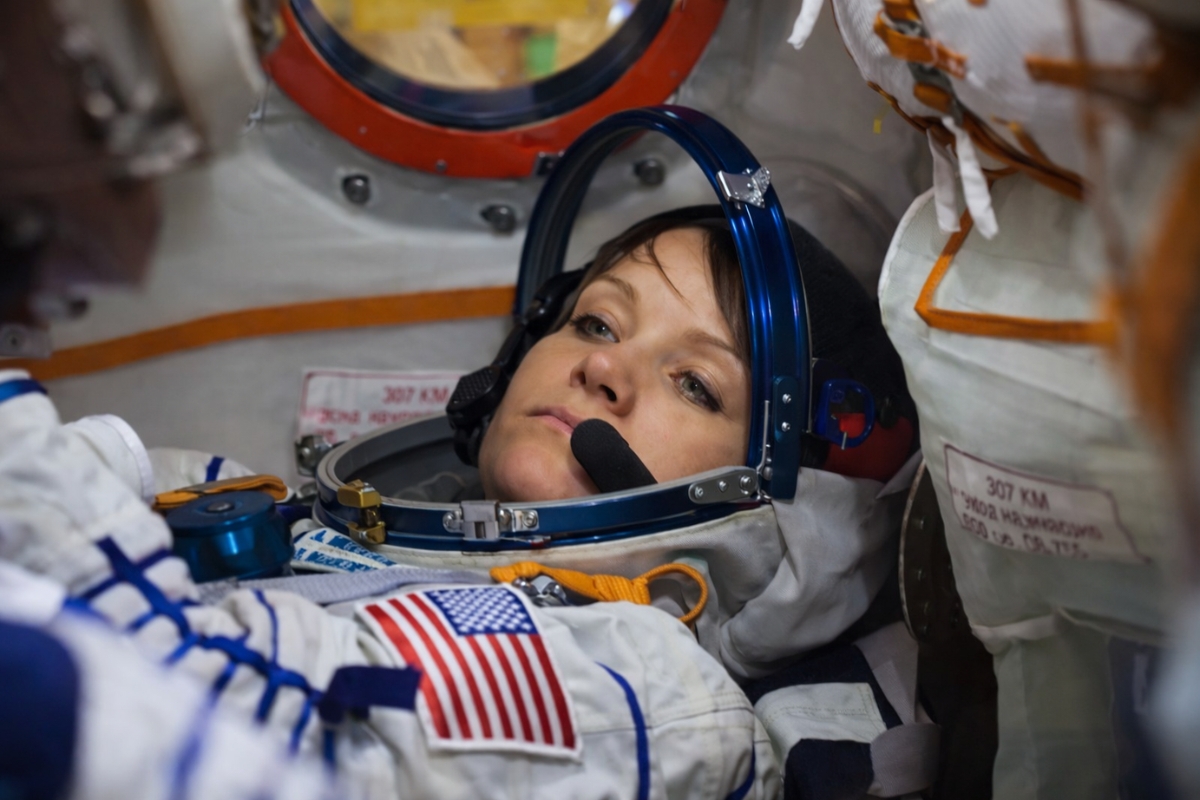


MRI Scans Reveal That The Brain Shifts Millimeters In Microgravity, Alters Its Relationship With Fluids, Reorganizes Sensory Areas, And Forces Scientists To Rethink Long Missions To Mars
The adaptation of the human body to space is often measured by bone density loss, muscle atrophy, and the redistribution of fluids towards the head. For a long time, it was believed that the brain was relatively shielded from these mechanical effects. But new analyses with MRI scans conducted before and after orbital missions suggest a different reality: the brain does not remain “untouched” in microgravity.
The examinations indicate millimeter shifts and small deformations, enough to change the brain’s relationship with cerebrospinal fluid and surrounding structures. In a skull where there is almost no space left, millimeters can mean a lot. And this reignites a debate that goes far beyond the International Space Station.
What Changes When Gravity Stops “Holding” The Brain
On Earth, gravity helps maintain a stable balance between the brain, fluids, and the tissues that support it. It’s as if there is an invisible framework determining how the brain “rests” inside the skull. When this reference disappears, the internal dynamics change.
-
Motorola launched the Signature with a gold seal from DxOMark, tying with the iPhone 17 Pro in camera performance, Snapdragon 8 Gen 5 that surpassed 3 million in benchmarks, and a zoom that impresses even at night.

-
Satellites reveal beneath the Sahara a giant river buried for thousands of kilometers: study shows that the largest hot desert on the planet was once traversed by a river system comparable to the largest on Earth.

-
Scientists have captured something never seen in space: newly born stars are creating gigantic rings of light a thousand times larger than the distance between the Earth and the Sun, and this changes everything we knew about stellar birth.

-
Geologists find traces of a continent that disappeared 155 million years ago after separating from Australia and reveal that it did not sink, but broke into fragments scattered across Southeast Asia.

In microgravity, bodily fluids tend to migrate to the upper part of the body and the head. This movement alters internal pressures and tensions, creating conditions for a slow and continuous repositioning. It is not a sudden leap but a gradual adjustment that accumulates over time.

Millimeters That Matter Inside A Tight Space
Talking about millimeters may seem irrelevant outside the medical context. However, inside the skull, any positional variation alters the “map” of contact between the brain, cerebrospinal fluid, and surrounding structures. That is why subtle changes draw so much attention.
Regional analyses show that the displacement is not uniform. Some areas seem to move more than others, especially those linked to sensory integration and motor control. Some of these changes tend to regress after returning to Earth, but not everything returns at the same pace.
The Brain Is Also A Biomechanical Organ
It is common to think of the brain as a sophisticated electrical and chemical system. However, it is also mass, volume, and living matter subject to physical forces. Altering the gravitational field changes the mechanical conditions under which this organ operates, even when there are no immediate symptoms.
So far, there is no evidence that these displacements cause direct neurological damage by themselves. Still, they add a layer of complexity to human adaptation in space. The brain needs to relearn how to interpret stimuli in microgravity while also “accommodating” physically within its own skull.
Why This Matters In Long Journey Plans Like Mars
The International Space Station serves as a laboratory to understand the body in microgravity. The problem changes scale when the goal becomes to stay years outside low Earth orbit. A mission to Mars would involve months of transit in microgravity, a period in reduced gravity, and another long journey back.
In this scenario, small but persistent effects cease to be details. Agencies like NASA are already considering countermeasures for bones and muscles, but the uncomfortable question gains strength: will the brain also require specific strategies? The debate includes everything from habitat designs that help modulate fluid distribution to regular periods of “artificial gravity” through rotation.
Adapting Is Not The Same As Being Immune
The human body is remarkably plastic, capable of adjusting to the lack of gravity, changes in circadian rhythms, and extreme environments. But each adaptation comes with a physiological cost, and some effects only appear over time. That is where science begins to tread more cautiously.
The displacement of the brain in microgravity does not invalidate space exploration. It merely reinforces that we still do not know all the limits of our biology outside Earth. Exploring the Solar System is not just a technological challenge; it is also a continuous test of how far an organism shaped by Earth’s gravity can operate under such different conditions.
The “Final Frontier” Involves Understanding Our Own Body
Every new piece of data on how space modifies the body redefines what we call a safe mission. A brain that shifts millimeters is a reminder that even organs considered protected depend on the physical conditions of the planet. Thinking about bases and colonies outside Earth implies accepting that we also carry the restrictions of our body with us.
Human exploration advances with discreet discoveries, techniques, and seemingly unremarkable findings at first glance. But it is precisely these findings that, when combined, determine whether a months-long journey can turn into a sustainable presence beyond our world. After all, before conquering other planets, we need to understand how space reshapes who we are inside.








Considero que a melhor maneira de proteger o ser humano e sua espécie é conservar este planeta terra. Mantendo o controle de natalidade de humanos aqui e q a população do planeta volte aos 5 bilhões de habitantes, no máximo. Preservar a natureza e seu bioma
Deveriam criar algum sistema que simulasse a gravidade… Alguma sala de treinamento com, sei lá, fluxo de ar, por exemplo, que gerasse alguma pressão de cima pra baixo, para os astronautas terem momentos com gravidade nem que seja parcial, poderia tornar os danos da viagem espacial menores
Não tem jeito. A melhor forma de explorar o universo é via robô. Estou certa que no futuro serão criados avatares de robô e conheceremos melhor o espaço, Marte e exploraremos a lua definitivamente