





 Portuguese
  English
  Spanish
  4 min of reading
  0 comments


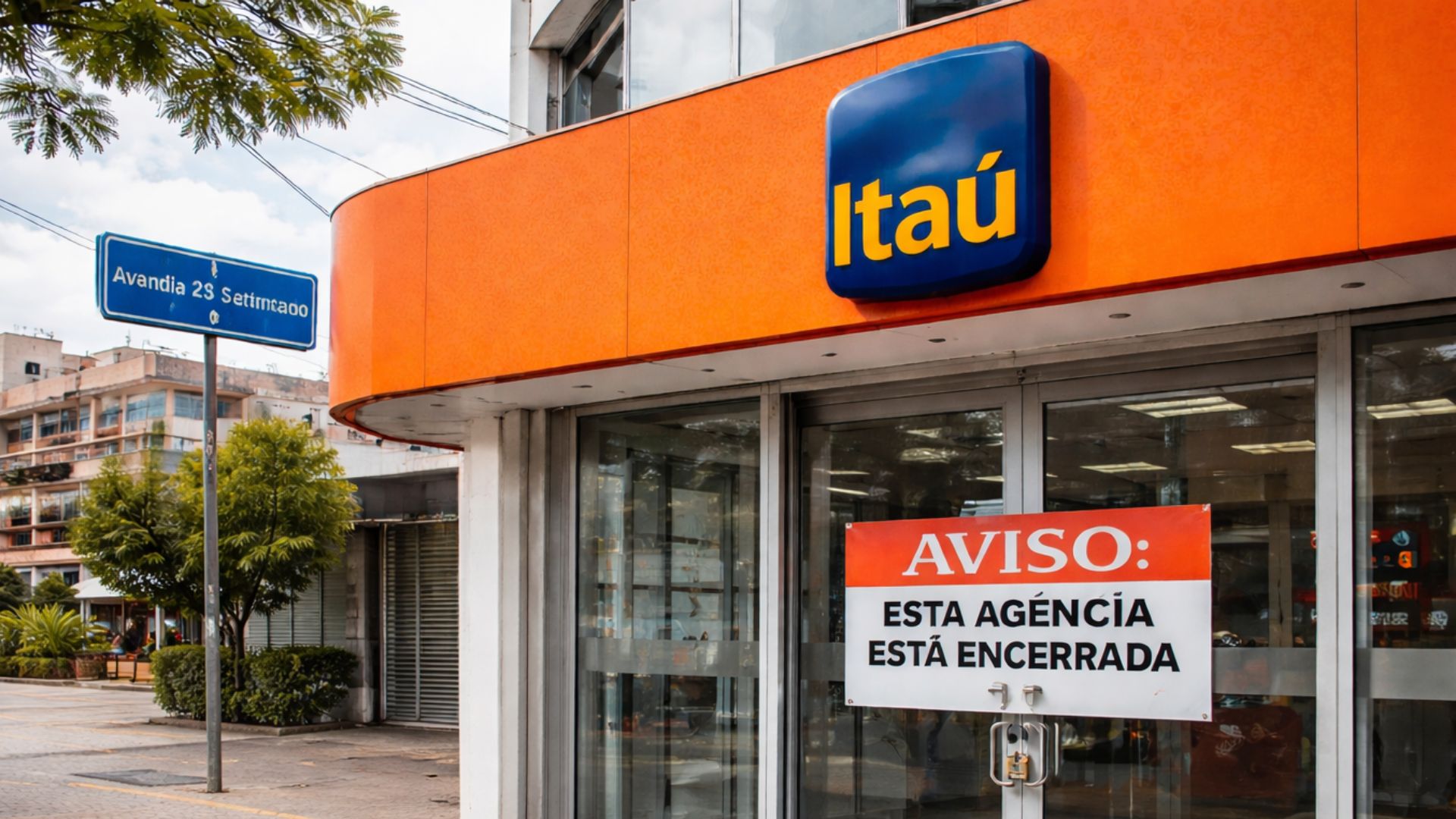
Branch Closure of Itaú in Camaçari, Scheduled for March 18, 2026, Foresees Automatic Migration of More Than 22 Thousand Accounts to Another Unit in the City and Reignites the Debate About In-Person Service, Financial Inclusion, and the Speed of Banking Digitalization.
Itaú Unibanco announced that it will close, on March 18, 2026, the branch located at Avenida 28 de Setembro, in Camaçari, in the Metropolitan Region of Salvador, automatically transferring about 22 thousand clients to another unit in the municipality.
According to information released in reports and records from local entities, the branch identified as 7689 will cease to operate in person, with services being relocated to branch 0501, on Avenida Getúlio Vargas, also in the central area of the city.
Automatic Transfer of Accounts and In-Person Service
According to the bank, account holders will not need to open a new account to continue using services, as the migration is administrative and preserves relationship data, cards, passwords, limits, and access to electronic channels.
-
The government requests the Federal Revenue Service for a new system to automate the income tax declaration, reducing errors, time, and bureaucracy for millions of Brazilians.

-
Pix in installments, international Pix, and contactless payment without internet: the Central Bank revealed the new features coming to the tool that is already used by almost every adult in Brazil.

-
Mercado Livre has just started selling medications with delivery in up to three hours to your door, and this move could completely change the way Brazilians buy medicines on a daily basis.

-
In Dubai, rising tensions from the war in the Middle East are causing super-rich individuals to leave the Gulf and direct their fortunes to a new financial refuge in Asia.


The institution also stated that, after the closure, clients will be able to be served in person at the destination unit, in addition to continuing to use ATMs, banking correspondents, and digital channels such as the app and internet banking.
Although Itaú’s communication highlights operational continuity, the branch closure alters the logistics of movement for some users, especially those who depend on in-person service for resolving issues related to benefits, credit, registration updates, and guidance.
In Camaçari, the discussion gained traction because the branch serves a significant volume of accounts, including beneficiaries of INSS and clients linked to payrolls of local companies, according to numbers attributed to representative entities.
Local Reaction and Debate About Access to Essential Services
The City Hall of Camaçari informed that it held a meeting to address the announcement of the closure, gathering representatives from the bank, unions, and organized movements, aiming to discuss alternatives in light of the decision communicated by the financial institution.
This type of municipal articulation occurs in a context where the closure of banking units has begun to provoke mobilization from workers and residents, especially when the closure affects areas with high circulation and concentrated services.
In the state capital, for example, union entities have already reported protests and public acts in episodes of the reduction of Itaú’s physical network, linking the measure to increased demand at remaining branches and difficulties for some clients.
At the same time, the bank has maintained, in communications about similar changes, that the reorganization follows consumer behavior, which is increasingly concentrated on digital operations, while the physical structure would be resized to new demand patterns.
Banking Digitalization and Impact on Customer Service
The closure of the unit in Camaçari is part of a broader process of digitalization of financial services, which has reduced the role of the branch as an entry point for routine operations such as transfers, payments, and inquiries.
Still, in-person service remains relevant for segments facing technological barriers, connection instability, low familiarity with apps, and a need for human mediation in conflicts, renegotiations, and security procedures.
For these users, the distance to the destination unit and the potential concentration of the public at fewer service points may mean longer waiting times, greater dependence on transportation, and more difficulty resolving demands that require documents or validations.
Reports about the case indicate that the transfer mentioned involves tens of thousands of registered clients, making the transition a large-scale operation, with potential impacts on both consumer experience and the daily work of teams.
The issue also mobilizes unions, which monitor closures in different states and associate the reduction in the number of branches with internal restructurings, efficiency targets, and changes in the distribution of positions, even though each case has its unique dynamics.
In the case of Camaçari, published reports indicate that the closed unit has a workforce and client base with strong territorial ties, reinforcing the debate on how to preserve essential service, especially for those seeking services outside the digital standard.
The municipal management itself indicated that it opened dialogue with the financial institution to discuss the issue, a move that typically occurs when the closure is perceived as a risk of losing a service that, in practice, serves as urban infrastructure.
Until the planned closure date, the expectation is that the bank will maintain regular operations and direct clients to the destination agency, with guidance on service, alternative channels, and any necessary registration adjustments.








-

-

-

-

-

-

81 pessoas reagiram a isso.