





 Portuguese
  English
  Spanish
  3 min of reading
  1 comment


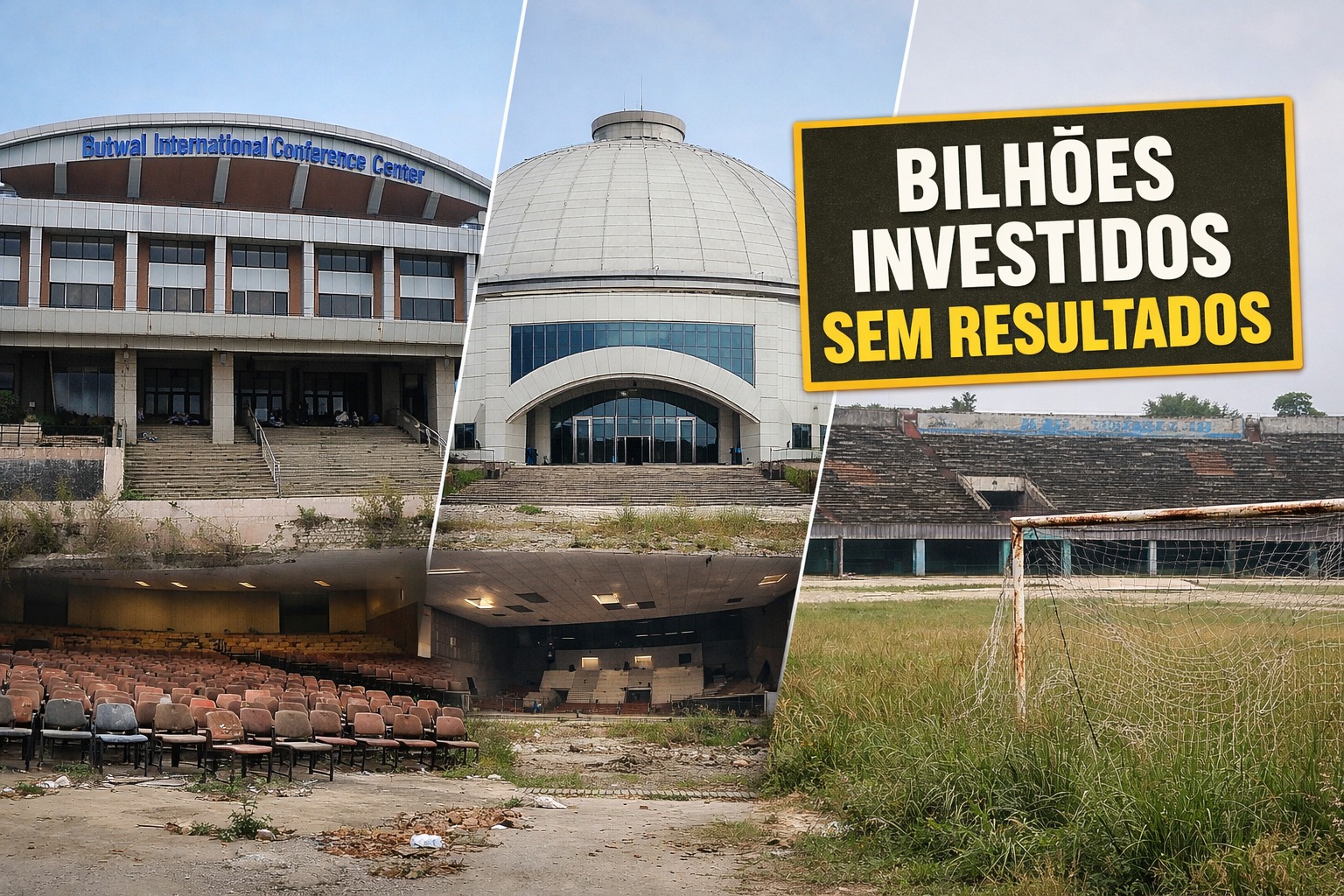


Public Works Built With High Costs Promised Regional Development, Tourism, and International Events, but Face Low Demand, Technical Problems, Insufficient Revenues, and Maintenance Challenges, Turning Infrastructure Into Idle Spaces
The succession of public works in Lumbini province exposes an uncomfortable contrast between investment and usage. Convention centers, stadiums, and complexes planned as symbols of development were built with billion-dollar figures, but today operate below expectations or remain virtually closed. Data reveals high expenditures, modest revenues, and increasing maintenance difficulties.
Butwal Conference Center: High Cost, Low Demand
The idea of building a large conference center in Butwal gained traction after the general convention of the CPN-UML in 2009, marked by a storm that destroyed temporary structures.
In the fiscal year 2009/10, 10 million rupees were allocated for a detailed study. With about 6.3 hectares granted in Ramnagar, ward No. 10, the foundation stone was laid on January 29, 2015.
-
The government requests the Federal Revenue Service for a new system to automate the income tax declaration, reducing errors, time, and bureaucracy for millions of Brazilians.

-
Pix in installments, international Pix, and contactless payment without internet: the Central Bank revealed the new features coming to the tool that is already used by almost every adult in Brazil.

-
Mercado Livre has just started selling medications with delivery in up to three hours to your door, and this move could completely change the way Brazilians buy medicines on a daily basis.

-
In Dubai, rising tensions from the war in the Middle East are causing super-rich individuals to leave the Gulf and direct their fortunes to a new financial refuge in Asia.


After eight years of construction, the Butwal International Conference Center was inaugurated on August 27, 2022.
The total cost reached 1.11 billion rupees. The structure includes a main hall for 1,000 people and 12 smaller rooms. The rental price for the main hall was set at 176,000 rupees per day.
Despite the scale and investment, the center remains without regular use. Major conferences are rare in Butwal. Dharmendra Panthi, head of the management office, summarizes the situation: there may be at most two to four programs per month.
Other than that, there is hardly anything. Even before reaching full operation, the building already shows signs of needing maintenance.
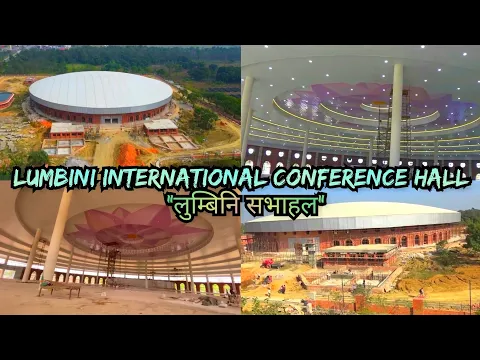

Lumbini: Modern Hall, Doors Almost Always Closed
A similar situation occurs in Lumbini. After the collapse of a tent during celebrations on May 21, 2016, the construction of a permanent hall was announced.
In the fiscal year 2017/18, the government allocated budget for the Lumbini International Buddhist Meditation Center and Convention Center.
The initial estimated cost was 330 million rupees, but expenses rose to nearly 700 million rupees by completion.
The complex was inaugurated in May 2022. The hall, with an area of 8,300 square meters and capacity for 5,000 people, has a daily rental of 150,000 rupees.
In practice, usage is limited. Aside from the annual Buddha Jayanti celebrations and a few events, the space remains closed most of the time.
Large gatherings continue to be held in outdoor areas and monasteries. Additionally, although claimed to be soundproof, the hall has echoes that compromise the clarity of speeches.
On April 27 of this year, during a cultural festival, the need for acoustic absorption panels was mentioned, even though this represents an additional expense of 30 to 40 million rupees.
Nepalgunj Stadium Construction: Expensive Infrastructure, Insufficient Revenue
Nepalgunj Stadium occupies 4.74 hectares and was modernized for the Eighth National Games in 2019. The interventions raised expenditures to about 1.5 billion rupees.
Several sports facilities were constructed, including a football field, swimming pool, weightlifting gym, and shooting range.
Currently, much of these structures are unused. The stand, with a capacity for 4,000 spectators, has been waiting for larger competitions for seven years.
According to Mahesh Chand, head of the stadium office, only small-scale tournaments occur on-site.
The annual revenue is around 1.8 million rupees, coming from training and school events.
This amount is used for salaries and minor maintenance. Electricity bills range from 30,000 to 40,000 rupees and can reach up to 100,000 rupees.
The lack of funds prevents periodic repairs, and there are already signs of degradation in areas such as the football field and the athletics track.
Recurring Pattern of the Works: Construction Without Operation
Manikar Karki, researcher and analyst, points to the lack of post-construction planning as a central factor. There is no consistent analysis of financial sustainability, operational model, or funding sources.
After construction, little is discussed about how to operate the structures, how many professionals will be needed, or how to recover costs.
Experts warn that equating development solely with new works ignores ongoing expenses. Without sufficient demand, adequate revenues, and clear management, expensive structures risk becoming public liabilities.
In Lumbini, the scenario repeats itself: high investments, empty corridors, and buildings that, despite their grandeur, remain underutilized.
With information from Nepalnews.








No Brasil é pior!!! Estradas, pontes, ferrovias, viadutos, obras de irrigação, entre outras, tudo abandonado, depois de bilhões de investimentos r0ubados!