





 Portuguese
  English
  Spanish
  5 min of reading
  0 comments


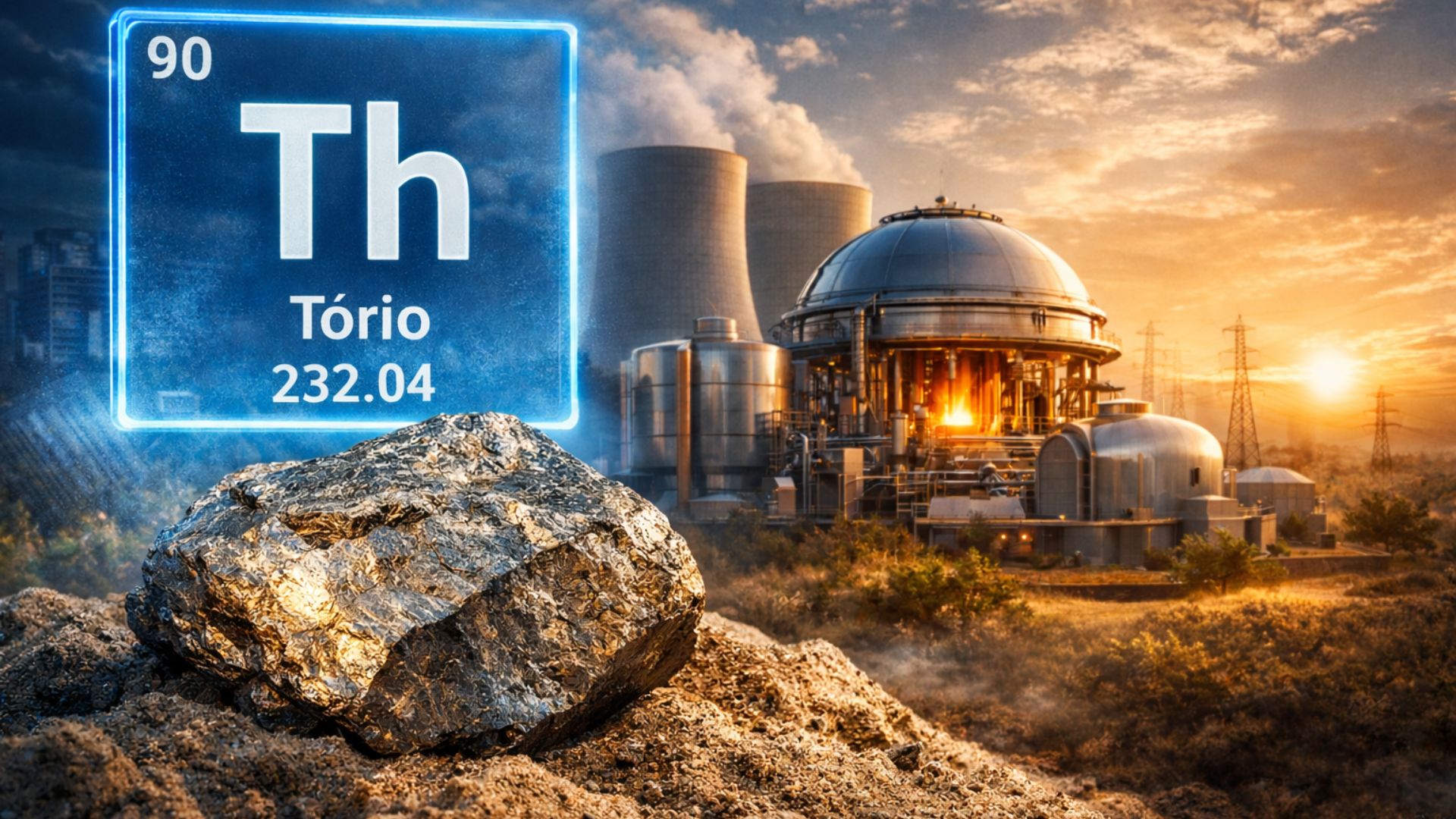
Discover How Thorium, An Element More Abundant Than Uranium, Can Expand Clean Energy With Safer, More Efficient, And Sustainable Nuclear Reactors For The Global Energy Future.
The global energy transition demands reliable sources capable of reducing emissions without compromising the stability of electricity supply. In this scenario, Thorium has sparked growing scientific and industrial interest. According to a report published by BM&C News this Wednesday (25), the natural radioactive element is considered about four times more abundant than Uranium, the nuclear fuel used in most current plants, and could represent an important alternative to expand clean energy worldwide.
Understand The Benefits Of Thorium For The Clean Energy Market
Researchers and companies in the energy sector argue that reactors based on Thorium could offer greater operational safety and lower generation of long-lived radioactive waste. The technology also promises to reduce the risk of severe nuclear accidents and provide electricity for extremely long periods.
Another relevant factor is the energy potential. Technical estimates indicate that one ton of Thorium can generate energy equivalent to that produced by about 200 tons of Uranium, reinforcing the interest in this fuel as a basis for more efficient electrical systems.
-
The Brazilian state accelerates industrial competitiveness with a focus on the extraction of strategic minerals to boost the energy transition in Goiás.

-
A Canadian retiree creates a hydroelectric system on a real river, generating energy continuously throughout the day and demonstrating how the power of water can supply a house with stability even in a simple structure.

-
Petrobras reaffirms its commitment to the market and ensures that it will carry out the energy transition safely to maintain national sovereignty.

-
Researchers discover a possible hydrogen deposit of up to 46 million tons beneath an ancient coal basin, and the volume could exceed half of the entire global production.


Although the technology is still in development, several countries are studying its commercial application. If it progresses, the use of this element could help increase the share of clean energy in the global energy matrix without exclusively relying on intermittent sources.
The Energy Potential Of The Element Thorium Compared To Uranium
Thorium is a radioactive element found naturally in minerals like monazite, present in mineral deposits distributed across various regions of the planet. Unlike Uranium, which can sustain nuclear reactions directly, Thorium needs to be converted into uranium-233 within the reactor to become usable fuel.
This characteristic changes the operation of the nuclear system. While Uranium can maintain a self-sustaining chain reaction, the alternative element requires constant control, which increases operational predictability.
The abundance of the mineral also represents a strategic advantage. Thorium reserves are distributed across various countries, which can reduce dependence on regions that produce Uranium. This factor is considered important for long-term energy security.
In addition, the potential efficiency of the fuel is often cited as a differentiator. Technical estimates indicate that the energy yield of Thorium can be significantly higher than that of Uranium, allowing for the generation of large amounts of electricity with smaller volumes of material.
This set of characteristics has reinforced international interest in the element as a basis for advanced clean energy systems.


Molten Salt Reactors And The Promise Of Safer Clean Energy
A large portion of research on Thorium is associated with molten salt reactors, known as MSR (Molten Salt Reactor). These systems use fuel dissolved in liquid fluoride salts, instead of solid rods like traditional Uranium reactors.
In this model, the nuclear element circulates in a liquid state under pressure close to atmospheric. This reduces one of the main risks of conventional reactors, which is the buildup of internal pressure capable of causing explosions.
Another advantage is passive safety. MSR designs include physical devices that automatically interrupt the nuclear reaction in the event of overheating. When the temperature rises beyond the expected limit, a safety plug can melt and allow the fuel to flow into cooling tanks.
In these reservoirs, the radioactive material solidifies naturally, interrupting the reaction. This mechanism drastically reduces the risk of accidents associated with Uranium, such as core meltdown.
MSR systems can also operate at higher temperatures, increasing efficiency in converting heat to electricity and expanding the potential of clean energy nuclear.
Modular Reactors And Extended Energy Autonomy
Another line of development involves small modular reactors, known as SMR (Small Modular Reactors). These systems can be mass-produced and transported in compact modules.
Some experimental designs are conceived to fit into standard 40-foot containers, allowing for simplified transportation and installation in various regions. This approach can reduce construction costs and accelerate the deployment of new units.
Companies in the sector are developing concepts that use Thorium as the main fuel. These units are designed to operate continuously for up to 10 years before fuel replacement, functioning as long-duration energy sources.
This type of solution can expand access to clean energy in remote areas or regions with limited electrical infrastructure. Compared to large Uranium plants, modular systems require lower initial investments and can be installed gradually.
In Brazil, any development of this type depends on authorization from the National Nuclear Energy Commission and the Ministry of Mines and Energy.
Environmental Impacts Of The Thorium-Based Nuclear Cycle
From an environmental perspective, Thorium presents relevant potential advantages. The cycle of this element tends to produce less long-lived radioactive waste compared to Uranium used in conventional plants.
Technical studies indicate that a significant portion of the nuclear waste generated loses most of its radioactivity after about 300 years, a shorter period than that observed in Uranium waste, which can remain hazardous for thousands of years.
This reduction in storage time can facilitate waste management and decrease the challenges associated with the permanent storage of radioactive material.
Another frequently cited aspect is the lower risk of military use. Byproducts derived from Thorium are considered less suitable for military applications than those obtained from enriched Uranium.
These factors increase the interest of governments and institutions seeking to expand clean energy without escalating international security risks.

Challenges To Transform Thorium Into A Dominant Source Of Clean Energy
Despite the technical potential, the use of Thorium still faces significant obstacles. The current nuclear infrastructure was primarily developed for Uranium, which means that adopting this element would require new reactor designs and substantial investments.
Another challenge is technological maturity. Few experimental reactors have operated with Thorium, and most proposals are still in testing or development phases.
Regulatory issues also represent a decisive factor. The approval of new nuclear technologies requires rigorous safety and certification processes, which can take years.
Still, experts assess that the advancement of research could make the element a competitive option in the future, primarily as a complement to renewable sources of clean energy.

A Promising Path To Supply Future Generations
The advancement of research indicates that Thorium could play an important role in the energy matrix of the coming decades. As an element more abundant than Uranium, it could help ensure stable energy supply for extremely long periods.
The combination of natural abundance, energy efficiency, and operational safety reinforces the interest in this fuel as a strategic alternative. The possibility of generating electricity for extended periods makes the technology particularly attractive for countries seeking energy independence.
Moreover, the expansion of this model could complement intermittent renewable sources, helping to maintain stable electrical systems while increasing the share of clean energy.
If the projects in development manage to reach commercial scale, Thorium could become one of the technological foundations of global energy production, offering a safer and more abundant alternative to Uranium in future generations.









Seja o primeiro a reagir!