





 Portuguese
  English
  Spanish
  4 min of reading
  0 comments


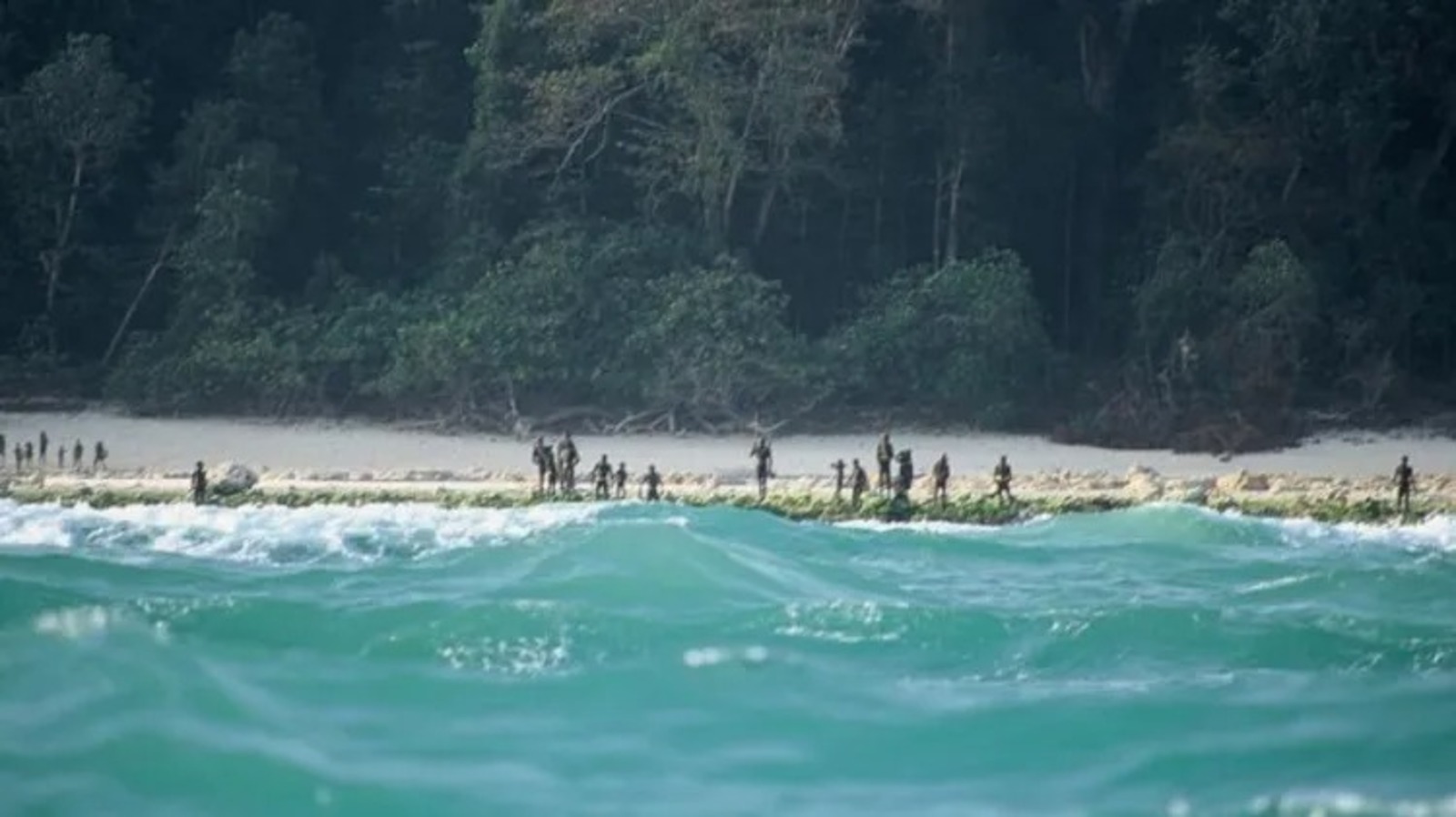
Circled By Mystery And Protected By Strict Laws, North Sentinel Island Houses One Of The Last Fully Isolated Peoples On Earth — A Community That Rejects Any External Contact And Maintains An Unchanged Way Of Life For Millennia
This year, a 24-year-old American was arrested in India after invading North Sentinel Island, one of the most restricted and mysterious regions on the planet. Identified as Mykhailo Viktorovych Polyakov, he allegedly landed with just a coconut and a can of Diet Coca-Cola in an attempt to approach the local residents — considered the most isolated people in the world.
The action, according to Indian authorities, violates laws that prohibit any contact with the island’s inhabitants.
One Of The Most Isolated Societies On Earth
The North Sentinel Island belongs to the Andaman and Nicobar archipelago in the Indian Ocean, under Indian jurisdiction.
-
Friends have been building a small “town” for 30 years to grow old together, with compact houses, a common area, nature surrounding it, and a collective life project designed for friendship, coexistence, and simplicity.

-
This small town in Germany created its own currency 24 years ago, today it circulates millions per year, is accepted in over 300 stores, and the German government allowed all of this to happen under one condition.

-
Curitiba is shrinking and is expected to lose 97,000 residents by 2050, while inland cities in Paraná such as Sarandi, Araucária, and Toledo are experiencing accelerated growth that is changing the entire state’s map.

-
Tourists were poisoned on Everest in a million-dollar fraud scheme involving helicopters that diverted over $19 million and shocked international authorities.


The group consists of 572 small islands, of which only a few are inhabited. Among them is Sentinel, located about 88 kilometers from the port of Port Blair and less than two hours by boat from Wandoor.
Covering just over 59 square kilometers, the island is protected by specific legislation — the 1956 Aboriginal Village Protection Regulation — which prohibits any approach within 9.26 kilometers (5 nautical miles) of the coast.
The aim is to preserve the culture and health of the group, avoiding the entry of diseases and external interference.
The Indian Coast Guard and a team from the regional administration continuously monitor the area.
The control is strict because, in addition to protecting the indigenous people, it prevents illegal hunting, clandestine tourism, and exploitation of natural resources, practices that could destroy the fragile environmental balance of the island.
A People Who Live On The Fringe Of The Modern World
The local inhabitants, known as “Sentineleses”, form a small community, estimated at around 200 people.
Little is known about their language, customs, and traditions, as any attempt at contact is met with hostility and resistance.
According to the research “Sentinelese Contact: Anthropologically Revisiting The Most Reclusive Masters Of The Unknown North Sentinel Island”, published in Nature in November 2024, the term sentinelese is not used by the inhabitants themselves but was created by researchers based on the name of the island.
The study indicates that this group is the most reclusive and self-sufficient on the planet. They depend entirely on nature for food and shelter, using simple tools similar to those from the Stone Age, such as bows, metal arrows, and clubs — wooden instruments with a steel blade at the tip used for carving logs.
Research And Reports Of Dangerous Encounters
Over the past decades, the Indian government and researchers have attempted to establish contact with the group, almost always without success.
The first recorded approach occurred in March 1970, when a team of scientists left fish, coconuts, and bananas on the beach.
In response, about 20 individuals appeared armed and threatened to shoot arrows, forcing the immediate withdrawal of the visitors.
More recently, in late 2022, three fishermen who accidentally approached the island disappeared.
According to the study, their boat was seen stranded on the shore, and near it, a structure resembling a flag was observed.
Researchers believe it may have been a distress signal or an improvised burial site, but the case remains officially unresolved.
Experts emphasize that the sentineleses live in small groups, ranging from three to eighteen people, constantly moving to hunt, fish, and protect their territory.
Their homes are simple shelters made of palm thatch supported by four wooden stakes.
Isolation Of North Sentinel Island As A Form Of Survival
The prohibition of approach is not just a cultural measure, but also health-related. As they have never had direct contact with the outside world, the sentineleses lack immunity to common diseases, making any interaction potentially lethal.
Isolation is also essential for maintaining their ancestral way of life. The island is covered by dense tropical forest, with an abundance of fish, fruits, and wild animals, ensuring food autonomy for the group.
According to the study published in Nature, “the inhabitants of North Sentinel Island, equipped with their indigenous knowledge system shaped by the environment, may be superior to any scientific machinery developed by modern technology.”
This view highlights that the value of this people lies not only in their mystery but in the ecological wisdom accumulated over centuries of direct coexistence with nature — something that contrasts with the technological dependence of today’s world.
A Boundary That The World Has Learned To Respect
North Sentinel Island is now a symbol of cultural resistance and a reminder of the limits of human intervention.
India, by strictly protecting the site, recognizes that some boundaries must remain untouched.
The recent case of Mykhailo Viktorovych Polyakov reinforces this discussion. Although he entered with seemingly peaceful intentions, he violated one of the most restricted zones on the planet, putting himself and an entire civilization that has survived without external contact for millennia at risk.
Thus, the island continues to be seen as a world apart, where time seems to have stopped — and where human curiosity, if not contained, could mean the end of one of the last truly free societies on the planet.
With information from UOL.









-

-

-

-

7 pessoas reagiram a isso.