





 Portuguese
  English
  Spanish
  4 min of reading
  0 comments


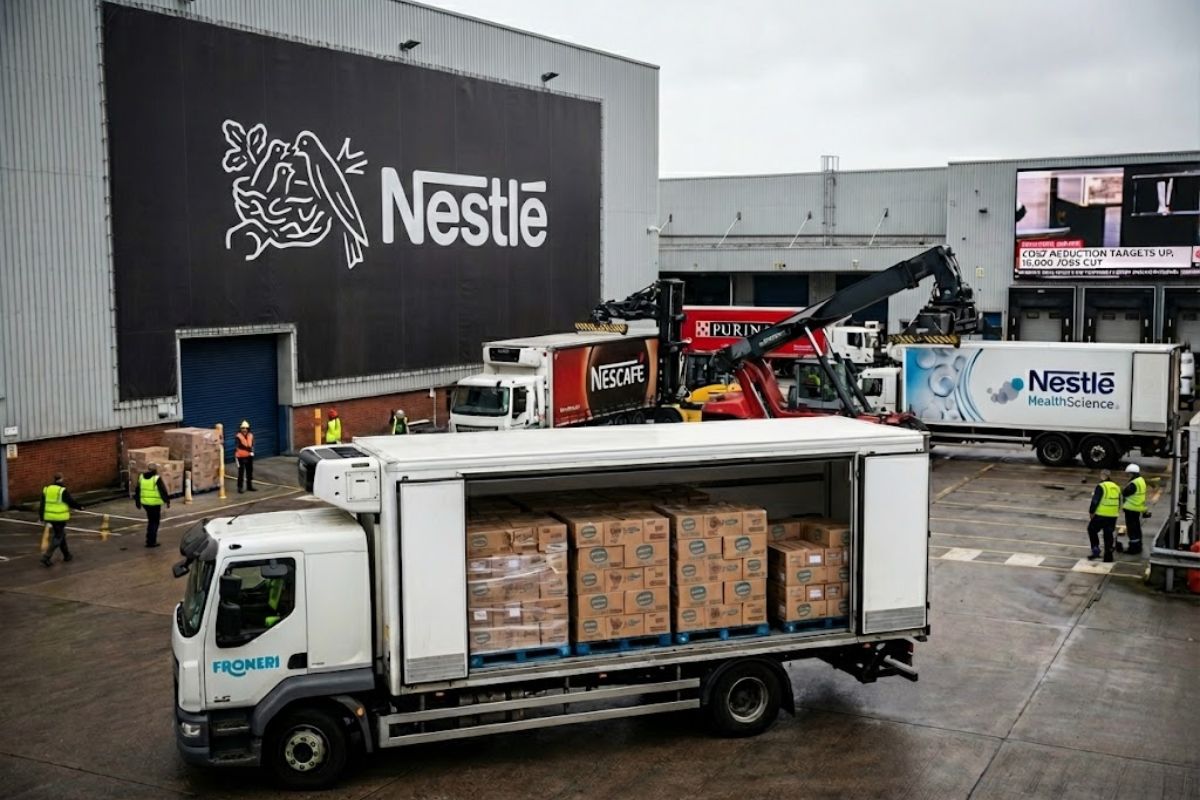
When Nestlé Sold Its Ice Cream Division to Froneri, It Exchanged an Icon of Childhood for a Portfolio Redesign: Focus on Coffee, Nutrition, Food, and Pet. In the Same Movement, It Reinforces the Efficiency Agenda, Widens Cost Targets, and Prepares for New Disengagements Until 2027 Worldwide
Nestlé has decided to exit the ice cream business and transfer its division to Froneri, in a move that stirs up emotional memories but also reveals a cold gear shift: less dispersion, more focus on areas considered strategic, with explicit pressure for efficiency and results.
What seemed like just a change of ownership actually fits into a larger cycle of global reorganization, with cuts already implemented, revised cost reduction targets upwards, and a timeline indicating new changes by 2027, including the intention to divest another relevant division.
Why Is Nestlé Exiting Ice Cream Now
Nestlé’s decision to sell its ice cream division to Froneri is part of an internal reorganization plan to focus operations on four areas treated as priorities: coffee, nutrition, food, and pet products.
-
The government requests the Federal Revenue Service for a new system to automate the income tax declaration, reducing errors, time, and bureaucracy for millions of Brazilians.

-
Pix in installments, international Pix, and contactless payment without internet: the Central Bank revealed the new features coming to the tool that is already used by almost every adult in Brazil.

-
Mercado Livre has just started selling medications with delivery in up to three hours to your door, and this move could completely change the way Brazilians buy medicines on a daily basis.

-
In Dubai, rising tensions from the war in the Middle East are causing super-rich individuals to leave the Gulf and direct their fortunes to a new financial refuge in Asia.


It’s a portfolio choice that suggests less betting on breadth and more on “cores” where the company wants to scale, invest, and defend margins.
This type of move also directly correlates with the efficiency agenda. When a multinational redefines what is “central” and what becomes “dispensable”, it often seeks operational simplification, less management complexity, and a stricter allocation of capital.
The exit from ice cream, in this context, transforms from mere nostalgia into a message: the focus shifts to where Nestlé sees greater synergy with its global strategy.
Who Is Froneri and What Changes in Practice
Froneri does not appear as just any “outside” buyer: it was created from a partnership between Nestlé itself and R&R in the UK.
This helps to explain why the transfer of the division can be seen as industrial and strategic reorganization, rather than just a conventional sale where Nestlé completely breaks with the sector’s ecosystem.
In practice, the central change is in the control of the division: Froneri will take over the ice cream operation that was with Nestlé.
For consumers, the immediate perception tends to focus on the symbol “end of Nestlé Ice Cream?”, but the corporate point is more technical: who decides investments, priorities, portfolio, and execution in the segment is no longer Nestlé, which chooses to reposition its energy and management in other areas.
The New Gear: Coffee, Nutrition, Food, and Pet at the Center
By stating its desire to concentrate operations in these four areas, Nestlé signals a reordering of priorities that goes beyond marketing: it is business architecture.
Coffee, nutrition, food, and pet form a set that allows for more coordinated decisions on innovation, distribution, and expansion, as the focus reduces dispersion and creates more standardized management routines.
Within this redesign, Nestlé also announced that it will unify the nutrition and health sciences areas into a single division.
Uniting divisions is a direct way to cut overlap, accelerate decisions, and align goals under a single leadership, which coincides with a period where the company makes it clear that efficiency is not a detail but a guideline.
Cuts, Cost Targets, and the Internal Impact of Restructuring
Even before the announcement involving Nestlé Ice Cream, the company had already communicated the cut of 16,000 jobs.
This amounts to 5.8% of a global workforce of approximately 277,000 employees, showing that the restructuring is not peripheral: it affects the operational base of the company and how work is distributed worldwide.
In the same cycle, Nestlé raised its cost reduction target by 2027, from US$ 3.13 billion to US$ 3.76 billion.
When the target increases, the pressure increases accordingly: the company publicly commits to a higher level of efficiency, which often pressures processes, structures, and priorities and helps understand why portfolio decisions, like exiting an entire sector, gain traction.
What the Numbers for 2025 Suggest and What to Observe Until 2027
Even amidst adjustments, Nestlé recorded growth in sales. In 2025, organic sales rose 3.5%, totaling 89.49 billion Swiss francs (around US$ 115.75 billion), a result slightly above market projections.
These figures reinforce an important point: restructuring does not necessarily mean “shrinking”; it can mean choosing where to grow.
The horizon of 2027 appears as a recurring benchmark in the announced decisions. In addition to the expanded cost reduction target, Nestlé intends to complete the sale of its water and beverage division by 2027.
When a company sets a public deadline, it creates expectations and obligations: investors, the market, and consumers begin to monitor whether the plan is fulfilled, which opens the door to more changes in the portfolio and internal organization along the way.
The shock of seeing Nestlé Ice Cream leaving the “house” has an emotional side, but the move is primarily strategic: Nestlé reorganizes priorities, transfers the division to Froneri, simplifies internal structures, reviews cost targets, and sets 2027 as a finish line for a larger transformation, including other planned sales.
I want to understand your perception of truth: which Nestlé ice cream product marked your childhood the most, and how do you feel when such a prominent brand changes hands? And, looking at the practical side, do you think it makes sense for Nestlé to abandon entire sectors to focus on coffee, nutrition, and pet, or does this risk weakening the connection with the public in the long run?









-

Uma pessoa reagiu a isso.