





 Portuguese
  English
  Spanish
  4 min of reading
  0 comments


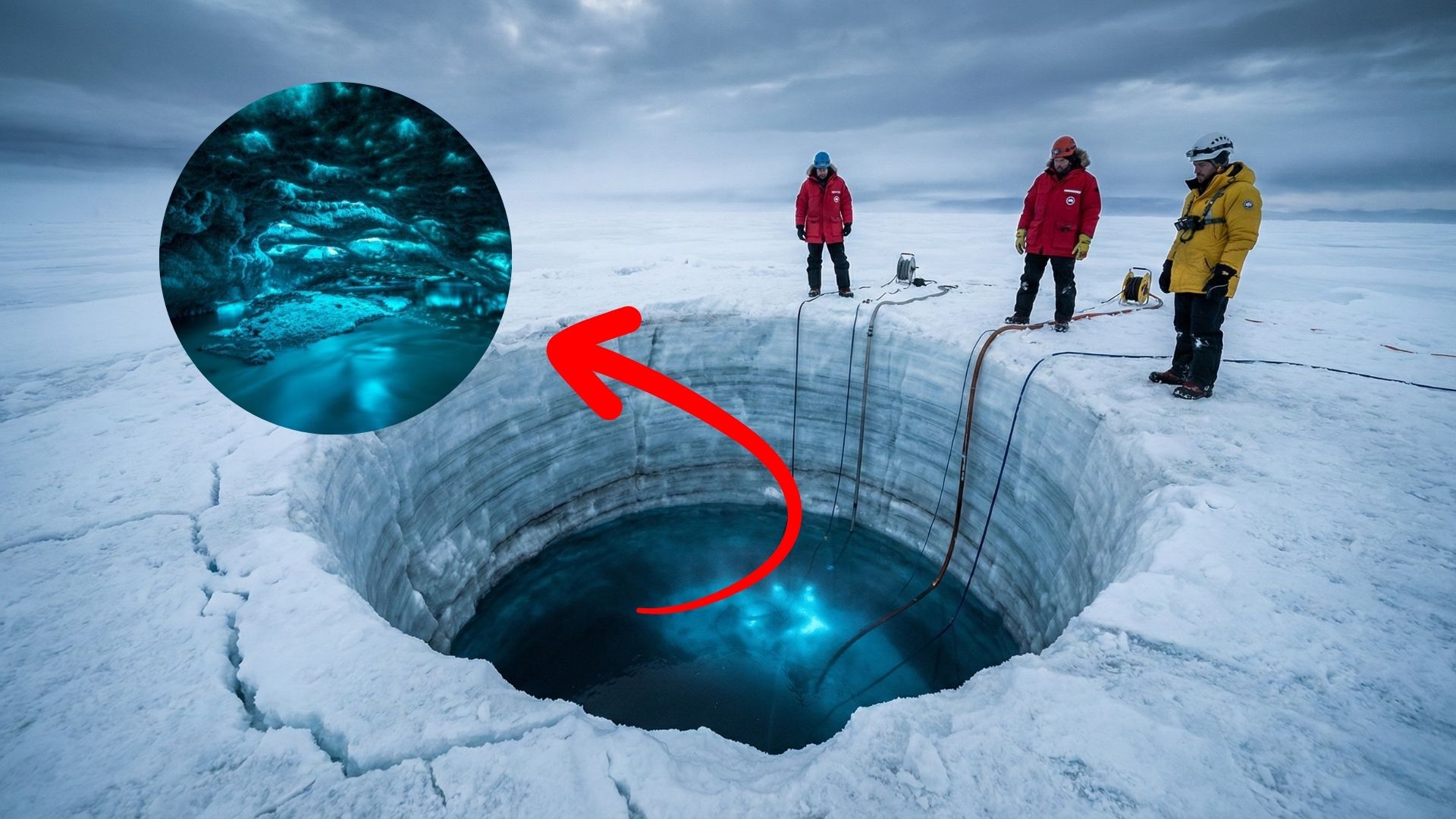
Subglacial Lake in West Antarctica Alternates Filling and Drainage Cycles Detected by Satellites and Revealed Microbial Life After Scientific Drilling with Clean Access in 2013, Expanding the Understanding of Hydrology Under the Ice and Extreme Ecosystems.
Under the ice of West Antarctica, the Subglacial Lake Whillans concentrates liquid water at about 800 meters deep and changes in volume over time, with phases of filling and drainage detected by satellites and confirmed by field measurements made by scientific teams.
Located below the Whillans Ice Stream, at the southeast edge of the Ross Ice Shelf, the lake integrates a broader subglacial system, where water, sediments, and channels can connect, redistributing pressure and altering, even if slightly, the height of the ice at the surface.
Although the landscape above seems immobile, instruments and observation series show that the ice can subtly rise and fall when water accumulates at the base or drains to other areas, in behavior compared to that of a bathtub.
-
Friends have been building a small “town” for 30 years to grow old together, with compact houses, a common area, nature surrounding it, and a collective life project designed for friendship, coexistence, and simplicity.

-
This small town in Germany created its own currency 24 years ago, today it circulates millions per year, is accepted in over 300 stores, and the German government allowed all of this to happen under one condition.

-
Curitiba is shrinking and is expected to lose 97,000 residents by 2050, while inland cities in Paraná such as Sarandi, Araucária, and Toledo are experiencing accelerated growth that is changing the entire state’s map.

-
Tourists were poisoned on Everest in a million-dollar fraud scheme involving helicopters that diverted over $19 million and shocked international authorities.


Active Subglacial Lake and Satellite Monitoring in Antarctica
Whillans is classified as an active subglacial lake, a label used for reservoirs that do not remain static for long periods and that, at certain times, receive or release water, changing area, volume, and shape as conditions in the system vary.
This type of dynamics is often observed by altimetry, which measures small variations in the elevation of the ice surface, as well as geophysical campaigns that help interpret whether the deformation corresponds to stored water, sudden drainage, or gradual displacement under the ice layer.

By cross-referencing data from different instruments, researchers came to understand that the base of the ice layer can function as a network, rather than an isolated pocket, with lakes, channels, and saturated sediments exchanging water on scales ranging from months to years.
In recent work with large satellite series, scientists mapped dozens of active lakes on the continent and described complete filling and emptying cycles at various points, which reinforced the understanding that Antarctic subglacial hydrology is more dynamic than previously thought.
Clean Drilling of the WISSARD Project in 2013
The transition from evidence to direct samples occurred with the Whillans Ice Stream Subglacial Access Research Drilling project, WISSARD, which used hot water drilling and clean access protocols to reduce the introduction of contaminants from the surface.
Technical records of the project describe that the drill opened a connection with the base of the ice on January 27, 2013, allowing equipment and collectors to descend to the reservoir after traversing approximately 800 meters of ice in one of the most monitored areas of West Antarctica.
With access, the team was able to collect water and sediments, a step considered crucial to assessing whether the lake was habitable and to compare what satellites indicated with what really existed under the frozen layer in extreme conditions.
Besides the logistical challenge, the concern for cleanliness was treated as a central part of the work because any contamination could distort the microbiological analysis and compromise the interpretation of the chemical processes that sustain life in the subglacial environment.

Microbial Life Under 800 Meters of Ice
Laboratory analyses indicated a microbial community consisting of bacteria and archaea, with signs of metabolism supported by chemical energy, in a location without sunlight, under high pressure and at temperatures below freezing, maintained in liquid form by pressure and geothermal heat.
Studies on Whillans describe that reactions involving compounds of nitrogen, sulfur, iron, and carbon may sustain part of these metabolic chains, reinforcing the idea of ecosystems based on chemosynthesis rather than photosynthesis.
The presence of life in this context also helps clarify why subglacial water cannot be treated as “pure,” since the chemistry of the lake is shaped by long periods of contact with rocks and sediments, which release salts and weathering products.
At the same time, the microbiological record gained weight for coming from a direct collection carried out with protocols aimed at sample integrity, in a type of environment that for decades has been inferred by geophysics but rarely observed directly.
Impact of Subglacial Water on Ice Movement

In the Whillans Ice Stream, the existence of water at the base matters because it can reduce friction between ice and rock, influencing the way the ice stream moves toward the ocean, even though the effects depend on the quantity, pressure, and pathway of the water.
On the other hand, the filling and draining dynamics are not read as an isolated curiosity, as the behavior of active lakes helps calibrate models that seek to relate surface variations to processes hidden under kilometers of ice in different regions of Antarctica.
When space signals match local measurements, researchers are able to refine volume estimates and probable pathways of water, improving the interpretation of time series and reducing uncertainties about how subglacial hydrology responds to physical changes in the ice layer.
This body of evidence supports the view that, even in a continent dominated by extreme temperatures, there is circulation of liquid water under the ice, transporting heat, sediments, and nutrients, in a system that remains difficult to access with current technologies.
The Subglacial Lake Whillans, thus, stands out for bringing together two fronts of research in one place: the observation of detectable filling and draining cycles by satellites and the direct collection that revealed a viable microbial ecosystem in a dark, pressurized environment.









-

-

-

8 pessoas reagiram a isso.