





 Portuguese
  English
  Spanish
  4 min of reading
  0 comments


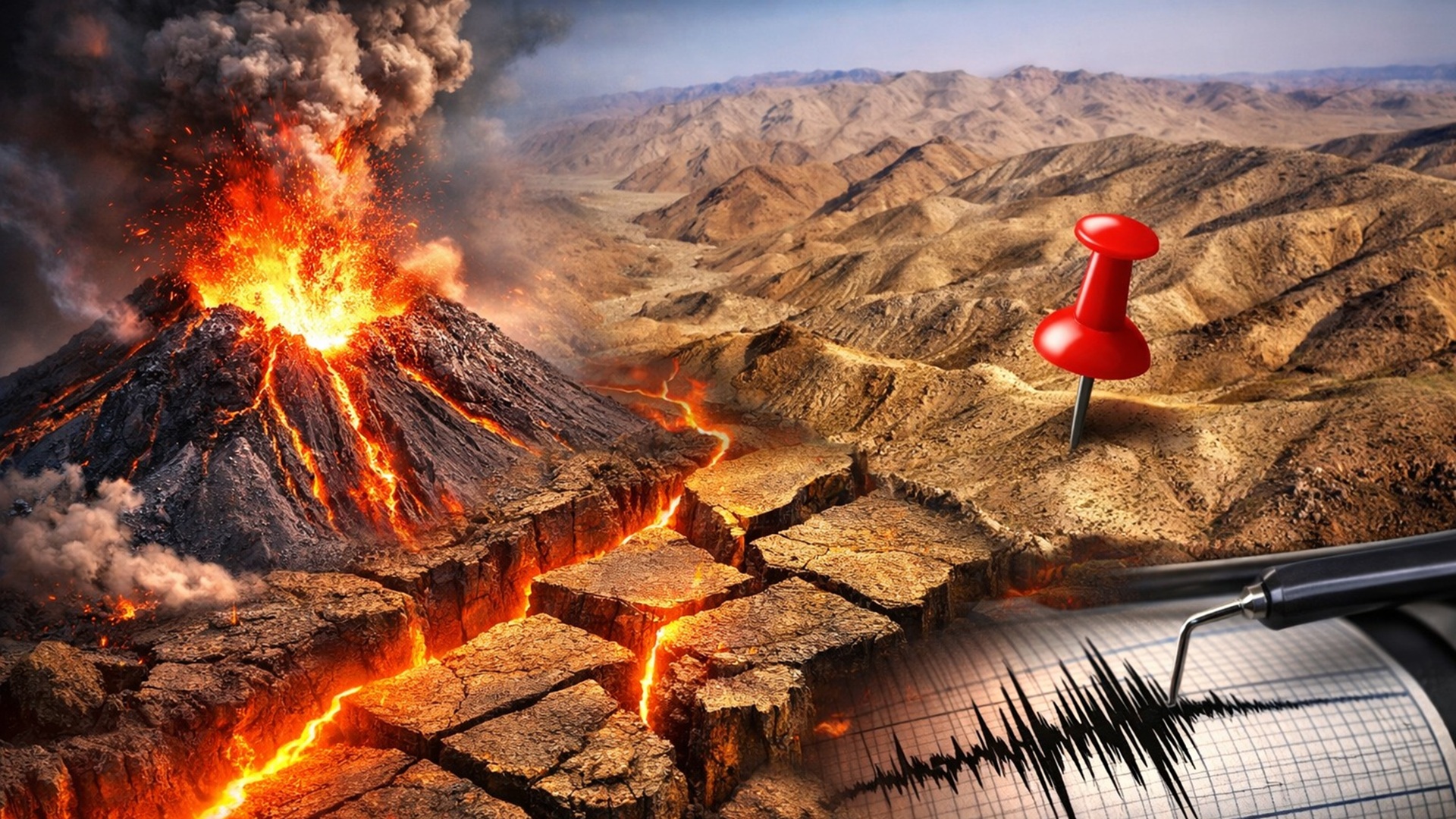
Research With Thousands of Low-Frequency Tremors Detected by High-Resolution Seismographs in the Northwest Pacific Revealed a New Seismic Hotspot at the Mendocino Triple Junction and Indicated That the Tectonic Structure Beneath Northern California Involves at Least Five Moving Parts
Geologists discovered a new seismic hotspot on the West Coast of the United States after research involving thousands of low-frequency earthquakes in Northern California, indicating that the local tectonic structure involves at least five moving parts, not three as previously thought.
New Seismic Hotspot Reveals Pattern Outside Traditional Model
The discovery of the seismic hotspot occurred after recent research on low-frequency tremors in Northern California. Although very small and imperceptible at the surface, these events indicated a behavior outside the typical patterns recorded in the region.
Residents of the western United States are accustomed to local seismic activity. However, the new data revealed a flaw in the traditional model that explained the tectonic dynamics of the area, raising questions about hidden processes beneath the surface.
-
Friends have been building a small “town” for 30 years to grow old together, with compact houses, a common area, nature surrounding it, and a collective life project designed for friendship, coexistence, and simplicity.

-
This small town in Germany created its own currency 24 years ago, today it circulates millions per year, is accepted in over 300 stores, and the German government allowed all of this to happen under one condition.

-
Curitiba is shrinking and is expected to lose 97,000 residents by 2050, while inland cities in Paraná such as Sarandi, Araucária, and Toledo are experiencing accelerated growth that is changing the entire state’s map.

-
Tourists were poisoned on Everest in a million-dollar fraud scheme involving helicopters that diverted over $19 million and shocked international authorities.


Low-frequency tremors provide relevant information about tectonic activity at great depths. These events, detectable only by highly sensitive equipment, went unnoticed for decades.
High-Resolution Seismic Monitoring Exposes Unknown Structures
The geologists monitoring the San Andreas Fault and the Cascadia Subduction Zone believed they had a general understanding of regional behavior. The Mendocino Triple Junction was conceptually known, but structural details remained undefined.
Using a network of high-resolution seismographs distributed across the Northwest Pacific, researchers tracked minimal vibrations and identified patterns that were absent in current seismic models.
Among the observed phenomena are earthquakes occurring at depths greater than expected and events appearing in clusters that outline previously unknown geological structures. These data indicate a more complex tectonic architecture than the three-plate model suggested.
Individually, these events appeared isolated. Collectively, they revealed more complex movement relationships among the tectonic plates beneath Northern California.
Subterranean System Involves at Least Five Moving Parts
As the number of recorded low-frequency tremors increased, geologists identified that the underlying system was not composed of three plates, but of at least five distinct moving parts.
These additional parts consist of fragments that went unnoticed for years due to silent slipping beneath the surface. Their movements were too subtle to be detected by conventional instruments.
One of these segments has been named the Pioneer Fragment. It slides beneath the North American Plate and is dragged by the Pacific Plate. Another identified structure is an unknown fracture line within the North American Plate itself.
This fracture is being pulled down toward the sinkhole created by the subduction of the Gorda Plate. The interaction between these parts contributes to the regional seismic complexity.
The identification of these structures helps explain earthquakes that previously puzzled researchers, including a significant event that occurred in 1992 at a depth greater than expected.
Faults Branch and Overlap Beyond Classical Boundaries
Studies indicate that faults in this zone do not occur only at the predetermined limits of subducted plates. They branch, overlap, and move according to previous movements of buried fragments of the Earth’s crust.
This behavior reinforces the existence of a hidden structural network beneath the coast. The identified seismic environment is described as more dynamic than previously thought.
The additional understanding arises from the joint analysis of small earthquakes. Each event, discretely isolated, contributed to the identification of a new seismic hotspot centered at the Mendocino Triple Junction.
Historically, this area has already shown significant levels of activity. However, recent data shows that it is significantly more fractured than previously understood.
New Mapping Expands Understanding of Tension on the West Coast
Researchers were able to elucidate hidden faults and segments of moving tectonic plates through detailed mapping of seismic behavior that remained obscure for decades.
The low-frequency earthquakes do not indicate an imminent catastrophic event. According to the data, they represent a more accurate interpretation of how stress energy is distributed along the West Coast.
As mapping progresses, new questions emerge about the timing of movement of these fragments and about other structural elements yet to be identified beneath the surface.
The findings show that the tectonic architecture of the region is more complex than the traditional three-plate model. The new seismic hotspot redefines the understanding of geological behavior in Northern California.
The dataset reinforces that seismic activity in the region involves multiple and profound interactions, requiring updating existing models to reflect the actual structure beneath the West Coast.










Seja o primeiro a reagir!