





 Portuguese
  English
  Spanish
  5 min of reading
  6 comments




Female Community Initiative Transforms Dry River Into Active Waterway in Indian Semiarid, Gains National Spotlight After Premier Mention and Begins to Face Real Estate Pressures in Environmental Protection Area.
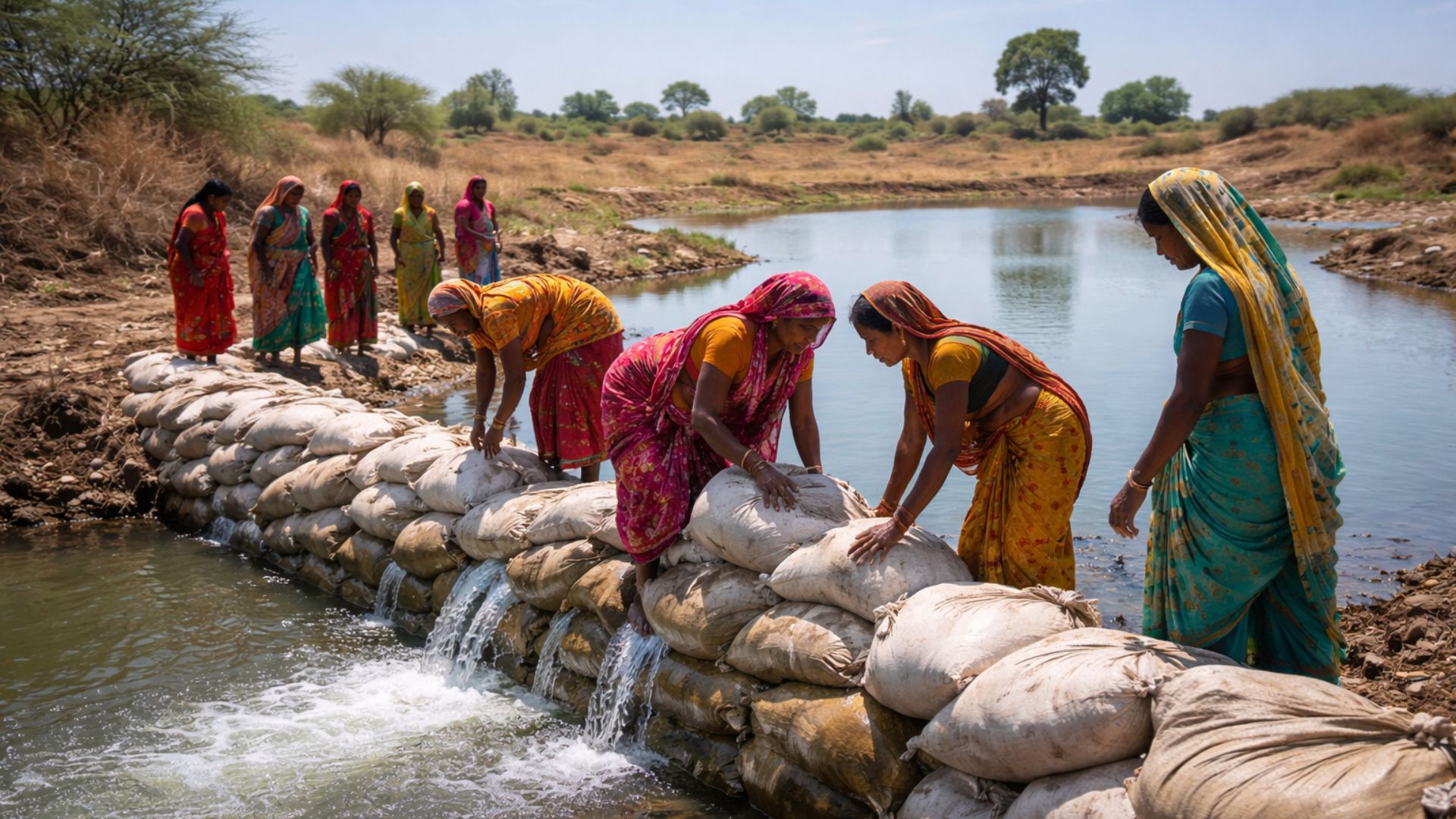
A group of over 30 women transformed a stretch considered practically dry into a functional watercourse in northern India by improvising a retention system using sandbags to hold rainwater and promote water recharge.
The initiative, led by the so-called Jal Sahelis, gained national prominence after being mentioned by Prime Minister Narendra Modi in his radio program, but now faces disputes involving constructions on the riverbanks.
Located in the Jhansi region, in the state of Uttar Pradesh, the Ghurari River is described by Indian media as a watercourse of about 85 kilometers that influences villages also connected to neighboring areas of Madhya Pradesh.
-
Friends have been building a small “town” for 30 years to grow old together, with compact houses, a common area, nature surrounding it, and a collective life project designed for friendship, coexistence, and simplicity.

-
This small town in Germany created its own currency 24 years ago, today it circulates millions per year, is accepted in over 300 stores, and the German government allowed all of this to happen under one condition.

-
Curitiba is shrinking and is expected to lose 97,000 residents by 2050, while inland cities in Paraná such as Sarandi, Araucária, and Toledo are experiencing accelerated growth that is changing the entire state’s map.

-
Tourists were poisoned on Everest in a million-dollar fraud scheme involving helicopters that diverted over $19 million and shocked international authorities.


Reports indicate that it is a tributary of the Betwa River and that its recovery directly impacts domestic water supply and irrigation in one of the areas most affected by recurring droughts.
Rainwater Retention and Recovery of the Ghurari River

Instead of betting on a large-scale project, the volunteers focused efforts on a strategic point of the riverbed, where they reinforced an existing dam with sand-filled bags, forming an improvised “check dam”.
The structure aimed to reduce the speed of surface runoff during the rainy season and extend the infiltration time into the soil.
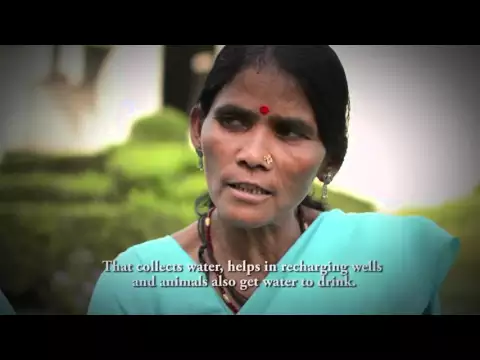
The logic is known in water conservation strategies adopted in semi-arid regions: by containing the rapid flow of rainwater, underground recharge is increased and water retention in the river itself is enhanced.
As a result, intermittent rivers can maintain sections with water for longer, reducing the immediate effects of drought on rural communities.
According to reports released by local media, the intervention with sandbags helped prevent rainwater from being lost quickly, favoring the replenishment of the Ghurari during critical periods.
The image of the simple dam, built with accessible materials and community labor, came to symbolize a low-cost solution to a structural problem.
The case gained attention when it was mentioned on the Mann Ki Baat program, in which Narendra Modi highlighted the idea of retaining water to recharge the river.
The mention increased the visibility of the group and placed the Ghurari at the center of the debate on decentralized water resource management in the Bundelkhand region.
Jal Sahelis and Community Water Management in Bundelkhand
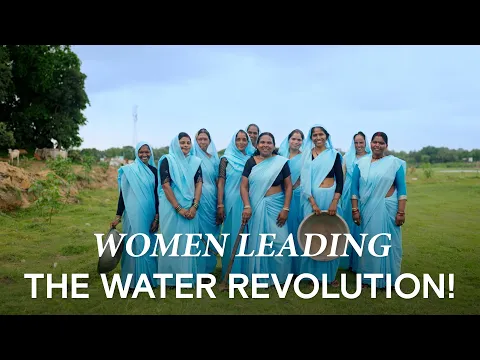
The Jal Sahelis operate as a network of organized women in villages in the region, focusing on water security and community mobilization.
The initiative is associated with a program created in 2011 by Sanjay Singh, linked to the organization Parmarth Samaj Sevi Sansthan, aimed at female training for local water monitoring and management.
International reports describe that over the years, the network has expanded to hundreds of villages, reaching over a thousand members at different points in Bundelkhand.
The model combines practical actions, such as the rehabilitation of traditional retention structures, with social pressure for the maintenance of reservoirs and oversight of interventions in sensitive areas.
In the case of Jhansi, the volunteers’ efforts were not limited to reinforcing the dam but included community mobilization to ensure continuous maintenance of the revitalized stretch.
The presence of water in the riverbed came to be seen as a result of ongoing monitoring and not just a one-time action.
Real Estate Pressures and Disputes in Protection Area
The recovery of the river, however, brought a side effect that often accompanies environmental revaluation processes.
After the Ghurari resumed visible flow and daily use, reports emerged of constructions near areas considered protected.
Indian media reported that members of the group, along with environmental activist Sanjay Singh, filed a police complaint regarding a construction allegedly erected in a protection zone near Simrawari, in Jhansi.
The complaint mentions a possible impact on the floodplain and on the natural flow of the watercourse.
Administrative authorities reportedly inspected the site after the complaint, according to media coverage.
Initial assessments indicated that the flow was not interrupted at that moment, but the definitive demarcation of the area and the complete verification would depend on formal procedures and technical analysis.
The dispute highlights a recurring tension in revitalized areas, where the increase in environmental and economic value sparks real estate interest.
Protection regulations often restrict construction in flood zones, but the enforcement of these rules depends on continuous oversight and clear definition of boundaries.
Indian Semiarid and Challenges of Water Scarcity
The Bundelkhand region is frequently cited as facing severe drought cycles, with direct impacts on agriculture and rural supply.
In this context, local initiatives for water retention and recovery of intermittent courses gain strategic importance to reduce vulnerabilities.
Previous experiences associated with the Jal Sahelis show that small interventions, when combined with community organization, can produce noticeable effects on water availability.
Still, experts emphasize that isolated solutions do not replace structural public policies for watershed management and territorial planning.
In the case of the Ghurari, the revitalization described by the media became a symbolic example of grassroots action, but also exposed the challenges of protecting a newly recovered resource.
The continuity of benefits depends on both the physical maintenance of the dam and the legal protection of the banks and floodplain.
By transforming an almost dry riverbed into a functional course again with simple resources and collective mobilization, the women of Jhansi placed water back at the center of community life.
It remains to be seen whether the government and society will be able to ensure that the recovered space remains protected in the face of new economic interests and territorial pressures.









Parabéns as pessoas de iniciativa própria. Caro Sebastião, aqui no Brasil também tem muitos homens que vivem do grande esforços das mulheres. Mas, também fico indignada qdo vejo pessoas cheias de forças e vida, na hora de trabalhar, estando nas filas dos bancos, pegando essas bolsas de família ou coisa similar…
O pessoal do Haiti, Venezuela, etc, vem prá cá e acham local para trabalhar. Muitos brasileiros na preguiça, desculpe os que não podem trabalhar…
Enquanto isso no Brasil, muitas mulheres ficam ociosas esperando o final do mês para cair o bolsa família na conta.
Sebastião J. de oliveira vc reza pra pneu
O Brasil deveria investir em mais contenção de água de chuva para abastecer as cidades ,só assim não faltaria água nunca mais.