





 Portuguese
  English
  Spanish
 7 min of reading
  0 comments


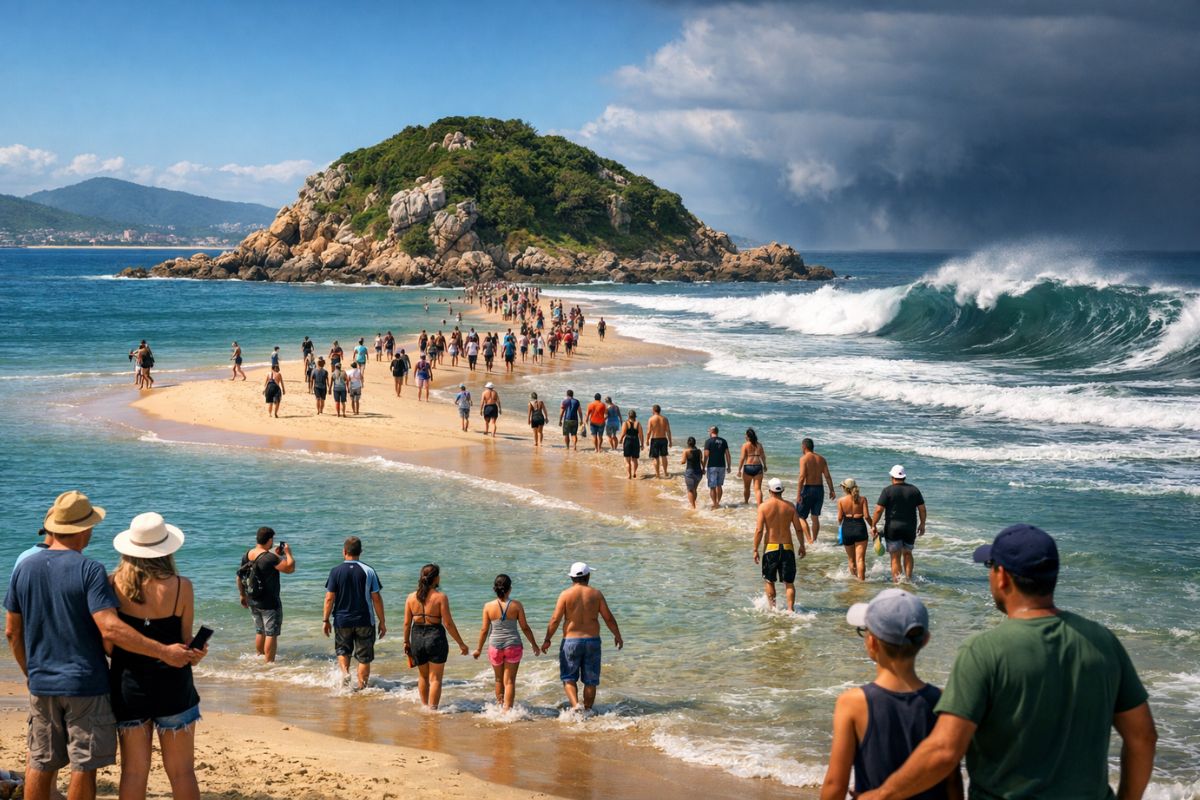
Tourists And Residents Photographed Praia Da Vila Changing Shape, With The Crossing To Ilha De Santana De Dentro After The Sandbank Advanced; Oceanographer Camila Amorim Says That The Stability Of Summer Helped, But The Higher Swell May Reopen The Return Channel And Surprise
Praia Da Vila, In Imbituba, Became A Topic Of Conversation And Short Videos When The Path To Ilha De Santana De Dentro Appeared Easier Than Normal. The Sandbank Shifted And, For A Few Hours, The Landscape Gave The Impression That The Island Had Been Pulled Closer, As If The Geography Had Changed Address.
The Scene Is Beautiful And Makes You Want To Cross Without Thinking Much, But The Important Detail Is In What Doesn’t Appear In The Photos: The Same Dynamic That “Dries” Areas Can Redesign, In A Few Days, The Return Channel. And That’s Where The Forecast Of Higher Swell For Next Week Comes In, According To The Technical Assessment Cited By Oceanographer Camila Amorim.
The Crossing That Became A Postcard And What Changed In The Water

Those Who Arrived Over The Weekend Found Praia Da Vila With A Wider Section And A Sand Path Suggesting A Crossing To Ilha De Santana De Dentro.
-
Friends have been building a small “town” for 30 years to grow old together, with compact houses, a common area, nature surrounding it, and a collective life project designed for friendship, coexistence, and simplicity.

-
This small town in Germany created its own currency 24 years ago, today it circulates millions per year, is accepted in over 300 stores, and the German government allowed all of this to happen under one condition.

-
Curitiba is shrinking and is expected to lose 97,000 residents by 2050, while inland cities in Paraná such as Sarandi, Araucária, and Toledo are experiencing accelerated growth that is changing the entire state’s map.

-
Tourists were poisoned on Everest in a million-dollar fraud scheme involving helicopters that diverted over $19 million and shocked international authorities.


When A Famous Place Changes Its Appearance, The Human Eye Confuses Speed With Permanence, And The Tendency Is To Think That The Passage Will Stay There, Stable, As A “New Normal.”
The Reading Of The Scenario, However, Is More Delicate. The Crossing Exists Because The Sandbank Emerged And Reduced The Water Level In Some Points, But That Doesn’t Mean The Bottom Is “Flat” Or Predictable.
It Is Common To Have Unevenness, Holes, And Small Valleys Right Next To The Shallow Area, And It Is In Those Deeper Corridors That The Current Can Gain Strength.
And There’s One Detail That Changes Everything: What Appears To Be Firm Ground May Just Be The Surface Of A Temporary Submarine Relief.
At Praia Da Vila, The Sandbank Can “Stick” To The Island Due To The Displacement And Stacking Of Sediments, While Just A Few Meters Away, The Water Still Organizes Deeper Paths. It Is In Those Paths That, When The Energy Of The Sea Increases, The Return Channel Usually Appears.
Why The Sandbank Grows In The Good Weather Summer
The Central Point Is The So-Called Beach Profile Of Good Weather, Associated With Periods Of Fewer Storms And Fewer Big Waves.
In Simple Terms, The Lower Energy Allows The Sandbank To Gradually Migrate Towards The Back Beach, Forming A More Marked Berm And, To The Eyes Of Those Walking, A “Fat Beach.”
This Process Is Not Magic Nor An Isolated Event. It Depends On The Balance Between Waves, Currents, And Sediment Availability.
When The Energy Drops For Several Days, The Sand Tends To Be Rearranged And Deposited In Strips, Increasing The Apparent Width Of The Beach And Changing The Shape Of Puddles, Channels, And Water Mirrors.
It Also Matters Where This Energy Comes From. The Term Swell Is Often Used For Waves Generated Far From The Coast, That Arrive More Organized And, Often, With More Strength.
If This Swell Appears Frequently, It Disturbs The Bottom, Redistributes The Sandbank, And Accelerates The Reopening Of Corridors. If It Disappears For A While, The Sandbank Has The Opportunity To Consolidate.
At Praia Da Vila, When The Sandbank Accumulates For Several Days, Ilha De Santana De Dentro Appears Closer Because The Submarine Relief Becomes Higher In Strategic Sections, Reducing Depth And Changing The Shape Of The Breaker.
The Specialist’s Report And What Makes The Episode Rare
Camila Amorim, Oceanographer At SCPAR Porto De Imbituba, Attributes The Scenario To A More Stable Summer, With Low Incidence Of Strong Swell On The Coast.
The Detail That Matters Is The Magnitude, Because Sand Accumulation In Summer Is Expected, But The Crossing Being So Shallow Draws Attention Even For Those Who Have Lived In The City For Years.
Graduated From The Federal University Of Rio Grande, She Says She Has Lived In Imbituba For 17 Years And Even So, She Doesn’t Remember Seeing The Passage So Shallow.
What Appears Here Is A Mix Of Field Observation And Historical Comparison: When Someone Keeps An Old Photo And Recognizes The Pattern, It Suggests Repetition, But Not With Enough Frequency To Become Routine.
She Mentions A Comparison With A Photo From Over 20 Years Ago, Suggesting That Similar Episodes Exist, But Are Not Common.
This Memory Serves As A Clue: Praia Da Vila Has A History Of Alternating Configurations, And Ilha De Santana De Dentro Enters And Exits This “Walking Distance” As The Sandbank Gains Or Loses Volume.
What Changes When The Higher Swell Arrives And The Return Channel Reappears
This Is Where The Higher Swell Becomes The Turning Point, Literally. When Waves With More Energy Come In, The Good Weather Profile Tends To Dismantle: The Sand Is Remobilized, The Berm Loses Definition, And The Bottom Can Open Furrows And Depressions.
In A Few Cycles Of Surf, The Same Passage That Seemed Safe Can Become Treacherous.
At This Turning Point, The Return Channel Reverts To Concentrating Flow Near Ilha De Santana De Dentro, Exactly In The Area That, On “Calm” Days, Seems Inviting.
The Risk Is Not Just In The Depth, But In The Current Pulling Outward, Which Increases Fatigue And Reduces The Ability To React When A Person Tries To “Return With Strength.”
Another Point Is Psychological: The More Beautiful The Scene Becomes, The Greater The Chance That Someone Underestimates The Risk. At Praia Da Vila, The Sandbank Creates A Sense Of Control, As If The Sea Had Retreated By Its Own Decision.
However, The Energy Of The System Changes Quickly, And The Return Channel Usually Reappears Without Clear Visual Warning, Especially For Those Who Are Not Used To Reading The Sea.
Sand As Protection And Not Just As A Summer Curiosity
Besides The Spectacle, There Is A Relevant Physical Function. This Deposit Of Sediments Works As A Buffer For The Dune Strip And, In Urbanized Sections, For Houses, Roads, And Nearby Structures.
At Praia Da Vila, The Sand Accumulated On The Back Beach Can Reduce The Direct Impact Of Waves In Future Episodes, Provided That The System Has Space To Adjust Without Excessive Interference.
That’s Why The “Fat Beach” Is Not Just Aesthetic. It Is Part Of The Coastal Defense Mechanism, A Kind Of Temporary Stock That The Sea Assembles In Calmer Phases.
When Summer Comes With Stability, The Sandbank Tends To Move Upward, Strengthening The Natural Barrier.
At The Same Time, This Defense Comes With An Unpleasant Side: When The Higher Swell Returns, The Energy Redistributes Everything, And The Return Channel Becomes The Critical Point For Swimmers.
Praia Da Vila, Therefore, Lives This Permanent Contrast Between Protection And Danger.
What To Observe Before Entering The Water Or Attempting The Crossing
If The Intention Is To Enjoy, It’s Worth Looking At More Than Just The Beauty. The Apparently Smooth Sea Does Not Mean The Absence Of Current.
On Days When Praia Da Vila Has An Exposed Sandbank, Pay Attention To Whether There Is A Darker And “Still” Strip Near Ilha De Santana De Dentro, As This May Indicate A Return Channel Forming.
Another Sign Is A Rapid Change In Level, Even Without Big Waves, And The Sensation Of A “Pull” Lateral To The Body When You Stand Still.
In General, Safety Increases When You Avoid Crossing Alone, When You Respect The Distance From Water Return Points, And When You Understand That The Shallow Strip Is Not A Guarantee.
And If The Higher Swell Is Already Arriving, The Simple Rule Is To Avoid Insisting On The Crossing. The Sea Doesn’t Warn With Signs, But It Warns With Patterns, And The Pattern At Praia Da Vila Tends To Change From Week To Week, Especially When The Sandbank Begins To Disperse And The Return Channel Reopens.
Praia Da Vila Has Delivered A Rare Snapshot Of A Stable Summer, With The Sandbank Reshaping The Landscape And Bringing Ilha De Santana De Dentro Closer To The Eyes Of Visitors.
However, The Same Mechanism That Creates The Crossing Can Reinsert The Return Channel In The Most Dangerous Place As Soon As The Higher Swell Enters.
Have You Ever Seen Praia Da Vila With This Type Of Sandbank? In What Situation Do You Decide To Cross Towards Ilha De Santana De Dentro And In What Situation Do You Retreat Due To The Fear Of The Return Channel, Even With The Beautiful Sea?










-

-

-

-

-

-

78 pessoas reagiram a isso.