





 Portuguese
  English
  Spanish
  4 min of reading
  1 comment


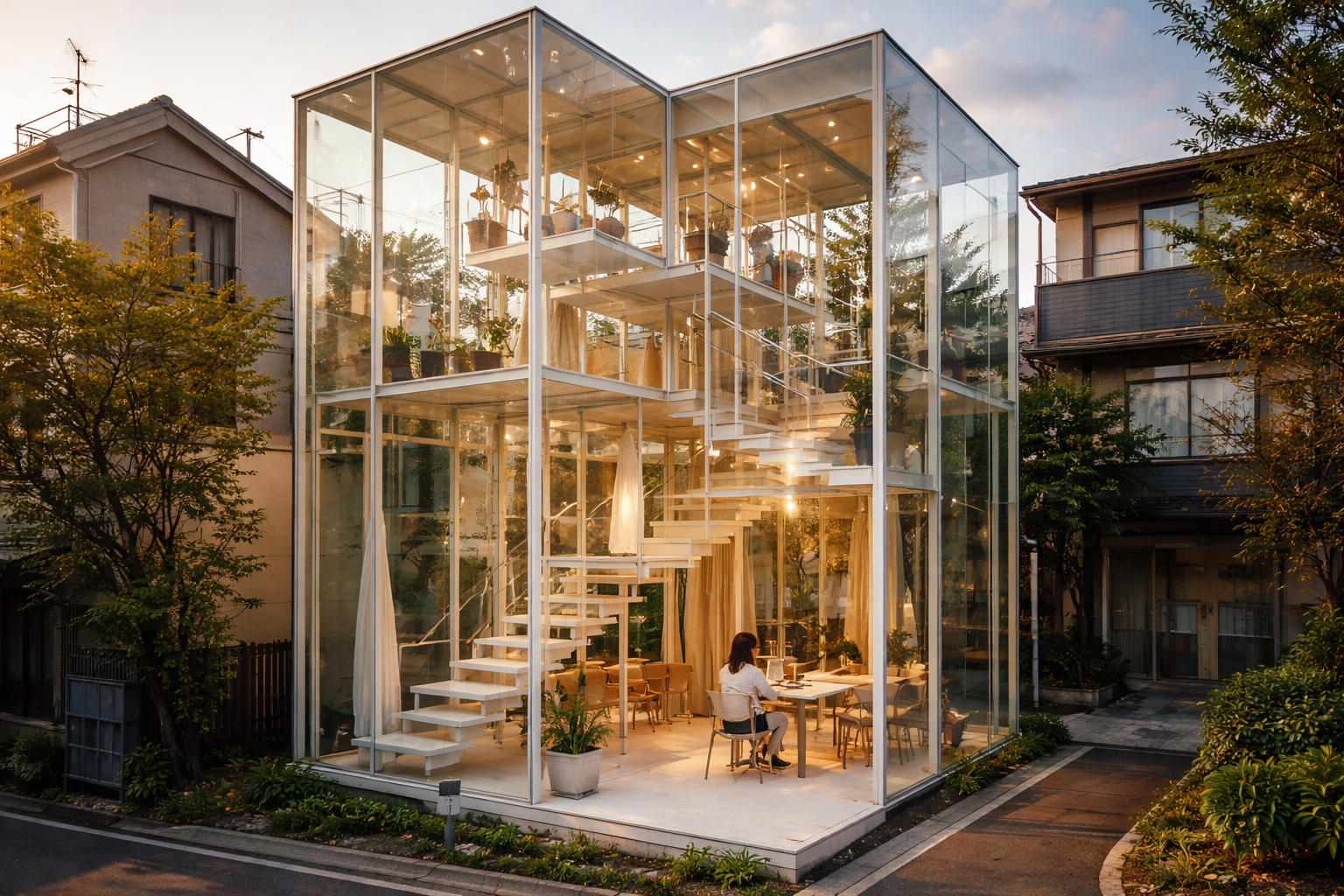


Designed By Sou Fujimoto In Nakano, The Transparent House Called House NA Uses 21 Interconnected Platforms, White Metal Structure And Almost Fully Glazed Facade To Redefine The Concept Of Housing Construction
It’s not a showroom. It’s not a commercial building. It’s a home. In the middle of the residential neighborhood of Tokyo, the transparent house known as House NA practically eliminates walls and puts its inhabitants on display to the city.
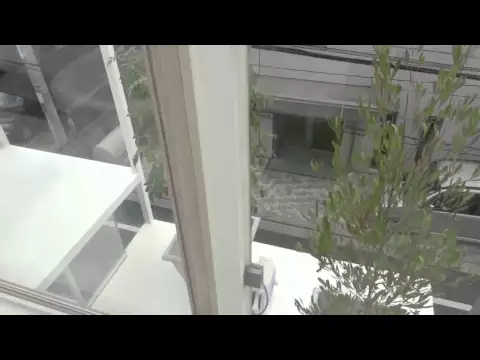

With 85 m² spread over three floors, the residence replaces heavy concrete with fine glass and white steel. The result seems to challenge everything the construction industry has taught about privacy and compartmentalization.
The Structural Challenge Of Erecting A Transparent House In One Of The Most Pressured Real Estate Markets In The World
Tokyo coexists with high urban density and compact lots. Every square meter must be maximized.
-
Friends have been building a small “town” for 30 years to grow old together, with compact houses, a common area, nature surrounding it, and a collective life project designed for friendship, coexistence, and simplicity.

-
This small town in Germany created its own currency 24 years ago, today it circulates millions per year, is accepted in over 300 stores, and the German government allowed all of this to happen under one condition.

-
Curitiba is shrinking and is expected to lose 97,000 residents by 2050, while inland cities in Paraná such as Sarandi, Araucária, and Toledo are experiencing accelerated growth that is changing the entire state’s map.

-
Tourists were poisoned on Everest in a million-dollar fraud scheme involving helicopters that diverted over $19 million and shocked international authorities.


In this scenario, the House NA breaks with the dominant model of closed slabs and isolated rooms. There are no traditional walls separating the living room, bedroom, or office.
The white metal structure supports large glass planes that envelop almost the entire residence. The feeling is one of total exposure.

In a sector where concrete and internal partitions dominate, the transparent house puts the established standard of Japanese urban housing to the test.
The 21 Suspended Platforms That Replace Rooms And Create A Vertical System Inspired By Treehouses
Instead of enclosed spaces, the interior is divided by 21 platforms of varying sizes, ranging from approximately 2 to 7.5 m².
Each level serves a different purpose. Sleep in one spot. Work in another. Read a few steps above.
The platforms are connected by stairs and internal ladders, forming an integrated vertical mesh. Sou Fujimoto was inspired by primitive treehouses to create this spatial logic.
He described the concept as a unit of separation and cohesion. The spaces are not isolated but remain visually and acoustically connected.
This means that voices traverse levels and interaction occurs all the time. The experience directly challenges the traditional model of closed rooms.
Glass, Natural Light And Floor Heating: The Technical Backbone That Supports The Boldness Of The Transparent House Construction
A house almost entirely made of glass does not stand only on aesthetics.
The facade allows intense natural light to enter throughout the day, reducing the need for artificial lighting. Ventilation occurs naturally, utilizing strategic openings.
Some areas feature underfloor heating, an important solution for facing the Japanese winter.
To ensure nighttime privacy, curtains serve as temporary dividers. There is no official number disclosed regarding detailed energy performance, but the proposal prioritizes integration with the external environment.
What impresses is the combination of visual lightness and structural stability. The fine metal structure supports three complete levels without resorting to conventional walls.

From Experimental Residence To Global Reference: The Impact Of The Transparent House On Contemporary Architecture
Completed in 2011 for a young couple in Nakano, House NA has become one of the most discussed projects in recent architecture.
There are no records of renovations or alterations in 2025 or 2026. Still, Sou Fujimoto returned to the spotlight with the retrospective “The Architecture Of Sou Fujimoto: Primordial Future Forest” at the Mori Art Museum in Tokyo, until November 2025.
The transparent house project is part of the exhibition set. During this same period, the architect designed the Grand Ring for Expo Osaka and inaugurated the villa NOT A HOTEL ISHIGAKI EARTH.
The difference in scale is from a compact residence of 85 m² to works of international impact. The transparent house, therefore, remains a conceptual laboratory that anticipated debates about integration, structural lightness, and new formats of urban housing.
The Debate That Goes Beyond Architecture And Reaches The Future Of Dense Cities
House NA exposes a clear tension between two models of housing.
On one side is the traditional real estate market, which values isolation and compartmentalization. On the other, the proposal for total integration with the urban environment.
At a time when major cities discuss densification and smart use of space, the house poses a direct question: How far can one give up privacy to gain openness and connection?
The project draws attention because it challenges common sense. It shows that even on a compact urban lot, it is possible to reinvent structural logic and transform the very idea of living.
And you, would you live in a transparent house in the middle of a metropolis like Tokyo? Let us know in the comments!










Eu adoraria morar em uma.
Cumpre lembrar a Casa de Vidro, de Lina Bo Bardi na Vila Mariana , São Paulo, e outros projetos dela ☺️✨