





 Portuguese
  English
  Spanish
  5 min of reading
  0 comments


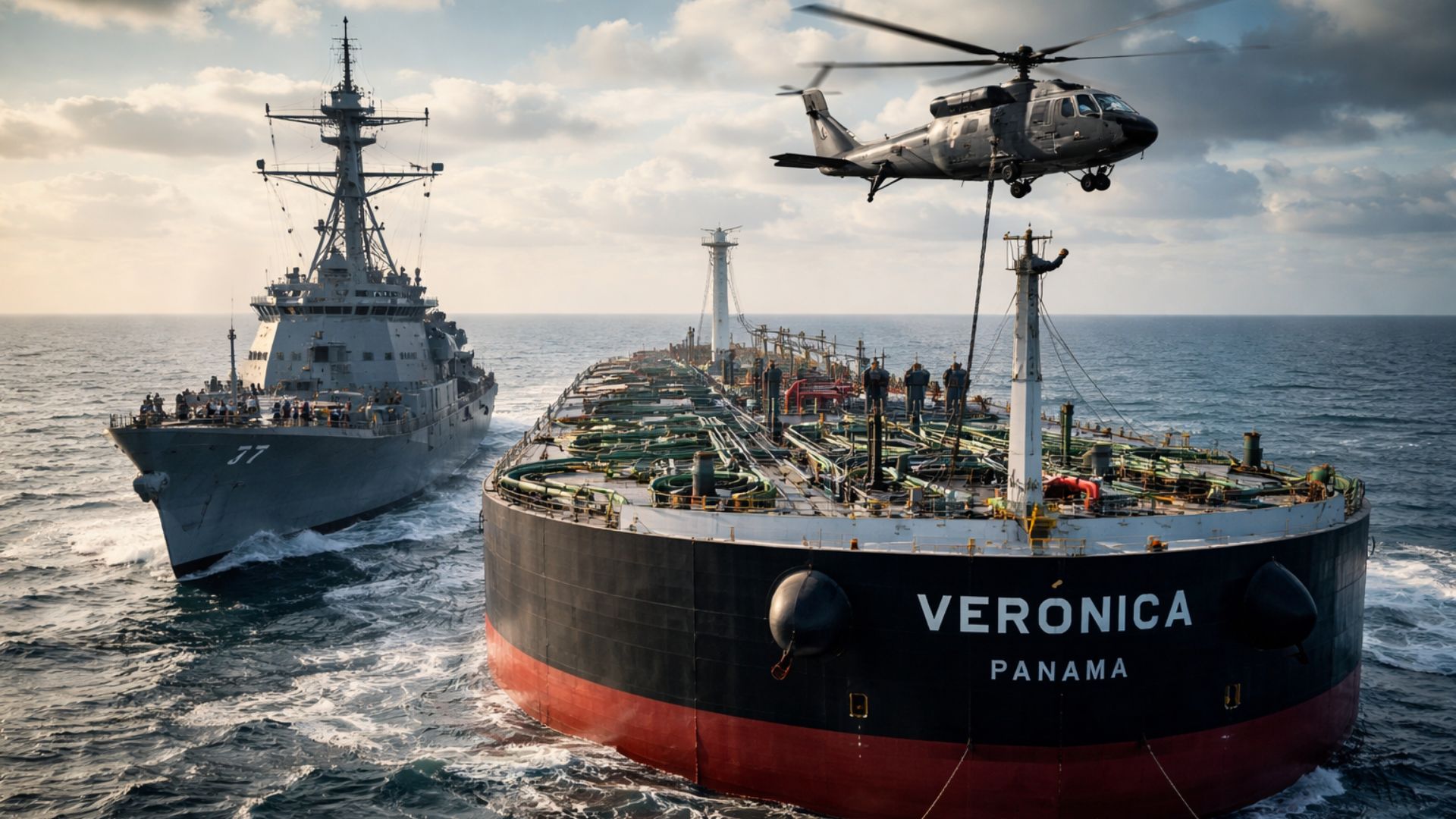
US Intensify Oversight in the Indian Ocean by Intercepting the Oil Tanker Verônica Linked to Venezuela, Strengthening Economic Sanctions and Altering Global Oil Market Dynamics
The US intercepted the oil tanker Verônica III in the Indian Ocean in an operation conducted by the Department of Defense within the area of responsibility of the Indo-Pacific Command. According to a report published by G1 this Sunday (15), the vessel, registered under the Panamanian flag, is accused of transporting Venezuelan oil in violation of economic sanctions imposed by Washington. The action reinforces a growing strategy of monitoring and approaching ships suspected of participating in routes deemed irregular in the international energy trade.
US Naval Tracking in the Indian Ocean Reveals New Maritime Dynamics
The interception gained attention for occurring far from traditional oversight routes, indicating an expansion of the logistical and technological reach of US naval forces. Besides the military aspect, the episode also raises debates about direct impacts on the global economy, the stability of the oil market, and diplomatic relations between energy-exporting and importing countries.
According to information disclosed by US authorities, the ship was monitored from its departure from the Caribbean until it reached the Indian Ocean, where the approach occurred without any confrontation. The operation involved procedures for the right of visit and maritime inspection, practices outlined in certain circumstances of international law when there is suspicion of violating economic sanctions.
-
Petrobras evaluates suspension of sales to distributors and considers canceling the cooking gas auction following guidelines from the Federal Government.
-
Lula reveals a masterstroke by Petrobras to undo a deal made by Bolsonaro, which involves the return of an important refinery that currently produces less than half of what was expected and makes Brazil dependent on international diesel.
-
A study confirms that the natural gas sector will reduce greenhouse gas emissions in Brazil by 0.5% and accelerate the energy transition by 2026.

-
Petrobras implements a severe adjustment and confirms a 55% increase in the price of aviation kerosene with a proposal for installment payments for the companies.


This type of action demonstrates the continuous surveillance capability exercised by the US in international waters. The use of satellites, automatic identification systems, and naval tracking databases allows tracking vessel movements over thousands of kilometers. The stated goal is to prevent oil cargoes associated with sanctioned countries from finding alternative routes to reach the consumer market.
Maritime security experts observe that the Indian Ocean has become a strategic area precisely because it connects routes between Asia, Africa, and the Middle East. Interceptions in this region indicate an effort to control global energy corridors and prevent the so-called “transshipment at sea,” a practice used to conceal the origin of the transported fuel.
Oil Tanker Verônica and the Link with Venezuela in Oil Exports
The oil tanker Verônica left Venezuela at the beginning of the year carrying a significant cargo of crude oil and derivatives, according to independent maritime monitoring platforms such as TankerTrackers. These organizations use satellite imagery and publicly available navigation data to track fleets operating on sensitive international trade routes.
Venezuela heavily depends on oil as its main source of foreign revenue, and the sanctions imposed by foreign governments directly affect the country’s export capacity. Therefore, ships associated with the transport of Venezuelan fuel have received increased attention from international naval and financial authorities.
Another relevant point is the vessel’s history. Public records indicate that the oil tanker Verônica had previously participated in operations involving oil from different sanctioned origins, which raises the level of scrutiny over its movements. This history contributes to the vessel being placed on watchlists maintained by regulatory agencies and financial institutions.

Economic Sanctions and Direct Impacts on the Global Energy Economy
The sanctions imposed on the Venezuelan oil sector do not only affect the exporting country. They also reverberate through the international economy by interfering with the supply and logistics of fuel distribution. The oil market operates based on delivery predictability and stability of routes. When there are interruptions or uncertainties, prices tend to fluctuate.
Financial institutions and market analysts often monitor these movements closely, as any alteration in the supply chain can impact future contracts, transportation costs, and energy investment strategies. Even if the volume of intercepted oil represents a fraction of the global market, the psychological and speculative effect is often immediate.
Moreover, restrictive measures stimulate the emergence of alternative routes and parallel fleets known as “shadow fleets,” comprised of ships that operate with tracking systems turned off or convenience flags. This phenomenon creates a more complex regulatory environment and demands international cooperation among maritime oversight agencies.

Legal Aspects and Debates on Sovereignty in the Case of the Oil Tanker Verônica
The interception of vessels in international waters always sparks legal discussions. Maritime law provides for freedom of navigation but also allows for inspections when there are suspicions of recognized illicit activities by multilateral agreements. The challenge lies in balancing national sovereignty and global security without causing diplomatic conflicts.
In the case of the oil tanker Verônica, US authorities maintain that the operation followed legal protocols based on economic sanctions and prior monitoring. However, critics argue that frequent approaches may strain international relations and create sensitive precedents in maritime trade.
Multilateral organizations monitor these episodes to assess whether there is a need for adjustments in treaties or recommendations guiding oversight at sea. The tendency is for discussions on jurisdiction and naval transparency to become more frequent as energy trade remains a central geopolitical issue.
Tracking Technology and Maritime Intelligence on the Rise
Technological advancement is one of the factors that make operations of this kind more viable. Satellite systems, artificial intelligence, and the cross-referencing of logistical data allow for identifying navigation patterns considered atypical. This technological infrastructure reduces the response time of authorities and increases the precision of approaches.
Private companies also play an important role by providing independent analyses based on orbital images and public records. This information is often used by media outlets and financial institutions to validate routes and estimate transported volumes. The result is a more transparent environment, although there are still gaps exploited by clandestine operators.
The integration of technology and naval strategy indicates that future operations are likely to be even faster and more targeted. Constant monitoring reduces the margin for evasive maneuvers and strengthens oversight capacity in remote regions of the planet.
Oil Tanker Verônica and the Future of Maritime Oil Trade
The interception of the oil tanker Verônica by the US in the Indian Ocean symbolizes a transformation in how energy trade is overseen globally. The episode shows that distant routes no longer represent logistical anonymity and that the cooperation between technology and military strategy redefines international oversight standards.
For the economy, the impact goes beyond the volume of oil transported. It reflects in market confidence, price stability, and the perception of risk associated with certain regions and trading partners. Exporting and importing countries are recalibrating supply strategies in an increasingly monitored landscape.
The case also indicates that maritime oil trade has entered a phase of greater visibility and regulatory complexity. As sanctions, technology, and geopolitics intertwine, the energy sector is likely to operate under stricter rules and constant oversight, influencing economic and diplomatic decisions on a global scale.









Seja o primeiro a reagir!