





 Portuguese
  English
  Spanish
  5 min of reading
  2 comments


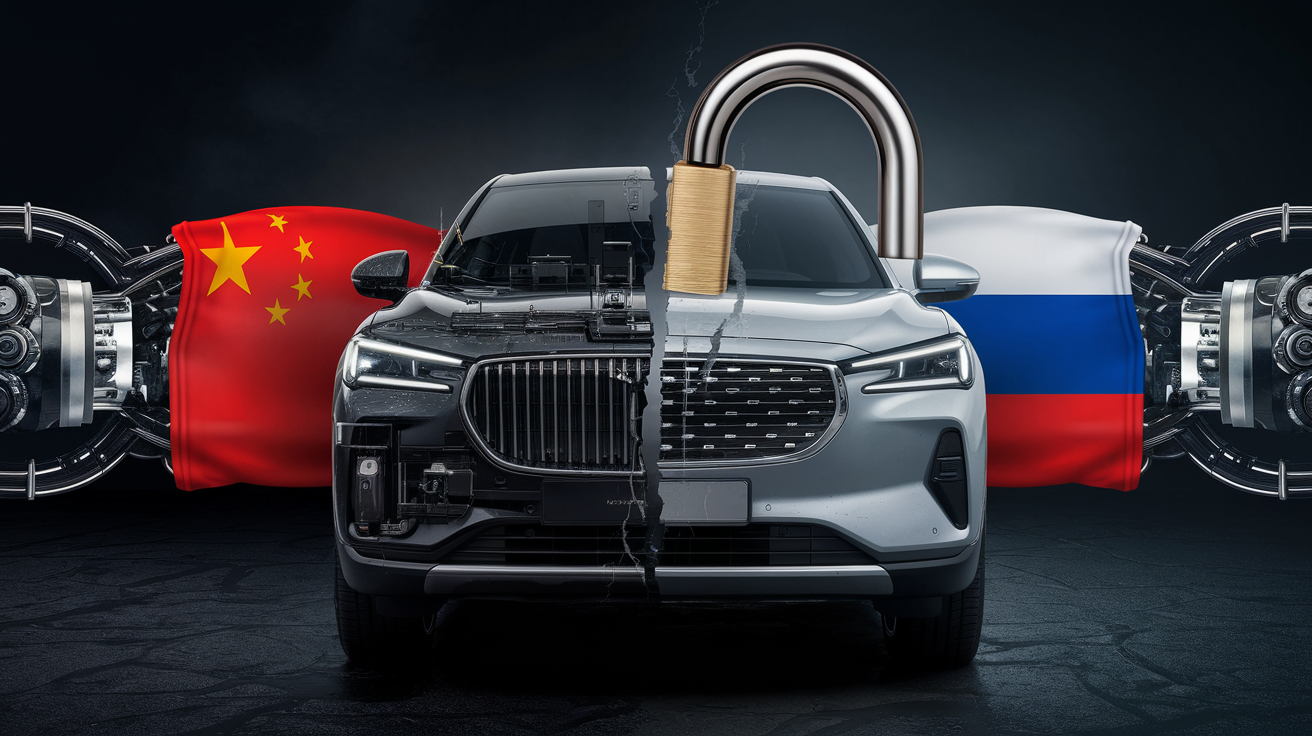


US Government Announced a Ban on the Sale of Connected Vehicles Using Chinese or Russian Technology, Including Software and Hardware. The Measure Will Be Implemented Gradually to Protect National Security and the Privacy of American Citizens.
In an unprecedented decision, the United States announced a ban on the marketing of connected vehicles that use Chinese or Russian technology in any part of their systems.
The measure, which will take effect gradually, is justified by the need to protect national security and the privacy of American citizens, raising intense debates about its impacts on the global automotive market and the future of trade relations between the involved nations.
What Motivated the Decision?
-
Motorola launched the Signature with a gold seal from DxOMark, tying with the iPhone 17 Pro in camera performance, Snapdragon 8 Gen 5 that surpassed 3 million in benchmarks, and a zoom that impresses even at night.

-
Satellites reveal beneath the Sahara a giant river buried for thousands of kilometers: study shows that the largest hot desert on the planet was once traversed by a river system comparable to the largest on Earth.

-
The government requests the Federal Revenue Service for a new system to automate the income tax declaration, reducing errors, time, and bureaucracy for millions of Brazilians.

-
Scientists have captured something never seen in space: newly born stars are creating gigantic rings of light a thousand times larger than the distance between the Earth and the Sun, and this changes everything we knew about stellar birth.


The US Secretary of Commerce, Gina Raimondo, emphasized that modern connected vehicles are essentially “computers on wheels,” filled with cameras, microphones, GPS systems, and internet-connected devices.
Despite the innovations, these features also pose significant cybersecurity and privacy risks to users.
“When a car is online, it becomes a gateway for external attacks and manipulations,” Raimondo stated.
Based on assessments conducted by the US government throughout 2024, it was concluded that technologies from countries considered strategic adversaries, such as China and Russia, could be used for espionage, sensitive data collection, and even manipulation of critical systems.
This motivated the development of strict regulations to prevent these risks from compromising infrastructure and national security.
How Will the Ban Be Implemented?
The measure will be introduced gradually, divided into two main milestones:
- Software: Starting from the 2027 vehicle models, the use of any software from Chinese or Russian origins will be prohibited in connected vehicles in the US.
- Hardware: The restriction for physical components will be applied starting from the 2029 models.
This staggered timeline has been adopted to allow automakers enough time to adjust their supply chains, reevaluate contracts with foreign suppliers, and develop technological alternatives that meet compliance requirements.
The Impact on the Automotive Industry
Currently, manufacturers such as Volvo (owned by the Chinese group Geely), Polestar, Buick (from General Motors), and Lincoln (a subsidiary of Ford) import vehicles or components manufactured in China for the American market.
Additionally, Tesla uses its factory in Shanghai as one of the main export hubs for its models.
Although these vehicles are not fully connected to external Chinese networks, the new regulation will require a thorough analysis of production chains to ensure that no technological element is of prohibited origin.
In the case of BYD, a Chinese manufacturer that sells buses in California, the company seems to be unaffected directly by the measure, as vehicles intended for public transportation were not included in the regulation.
Nonetheless, experts point out that production costs could rise substantially as manufacturers seek technological alternatives that meet the safety requirements imposed by the US government.
“The measure does not only affect Chinese and Russian manufacturers; it impacts the entire global supply chain. Western companies will also need to review contracts and partnerships,” said an automotive industry analyst to the The Wall Street Journal.
International Repercussions
The US decision generated immediate reactions from Chinese and Russian authorities.
In an official statement, the Chinese government classified the measure as “discriminatory and politically motivated,” warning that such a decision undermines trade and economic relations between countries.
Russia, which recently increased its investments in connected automotive technology, declared that “the United States demonstrates a clear intention to monopolize technological innovation, restricting the competitiveness of other countries through arbitrary regulations.”
International analysts fear that the American decision could trigger a series of retaliatory measures from China, impacting other economic sectors such as the semiconductor market, the export of rare minerals, and even consumer goods negotiations.

Challenges and Opportunities for Western Automotive Technology
Although the ban presents a challenge for manufacturers relying on Chinese and Russian technologies, it also creates an opportunity for the consolidation of technologies developed by American companies and allied nations.
Startups and large corporations in the tech sector, such as Intel and Qualcomm, have already begun to expand their operations to provide reliable alternatives that can meet the automotive sector’s demands.
Furthermore, the measure may accelerate the creation of new cybersecurity standards for connected vehicles, focusing on protection against breaches and misuse of data.
“The American regulation could establish a new global benchmark, forcing other countries to adopt similar measures regarding technologies considered risky,” highlighted a digital security expert in an interview with Bloomberg.
What Changes for Consumers?
For American consumers, the ban may mean vehicles with more secure systems protected against cyberattacks.
However, the cost of these technological improvements may be felt directly in the wallet. With rising production costs and limited suppliers, it is likely that prices for connected vehicles will increase in the coming years.
On the other hand, some believe that the measure will bring greater transparency to the market, encouraging consumers to question the origin and security of the systems present in their cars.
“The cars of the future will be judged not only by design or performance but also by the reliability of their digital systems,” concluded an expert interviewed by The New York Times.
Conclusion: A Milestone for the Global Automotive Sector
The US decision to ban Chinese and Russian technology from connected vehicles represents a milestone in the relationship between national security and international trade.
Although justified by legitimate concerns about privacy and cybersecurity, the measure brings significant implications for the global automotive industry, requiring rapid and innovative adaptation from manufacturers.
Moreover, it sets precedents for other nations to adopt similar regulations, transforming the way foreign technologies will be treated in sectors considered critical.
The question that remains is: to what extent will these restrictions shape the future of innovation and international collaboration?
With impending changes, the consumer is faced with a new scenario, where choosing a vehicle will not only be a matter of aesthetics or power but also of trust and safety.
Do you believe that this US measure is necessary or excessive? Share your opinion!





Eu acho q os estados unidos só quer se dá bem no mundo, e os outros países q seja capacho deles.eles escutam tudo q nos falamos e nos e outros países se fizer isso já falam q é espionagem.
O engraçado é que a starlink instalada no mundo afora não causa insegurança. Se fosse aqui no Brasil a postura americana seria chamada de persieguição, entretanto lá e pela segurança nacional. Dois pesos duas…Ninguém se iluda…estamos sendo ouvidos, e não é pelos chineses…