





 Portuguese
  English
  Spanish
  4 min of reading
  6 comments


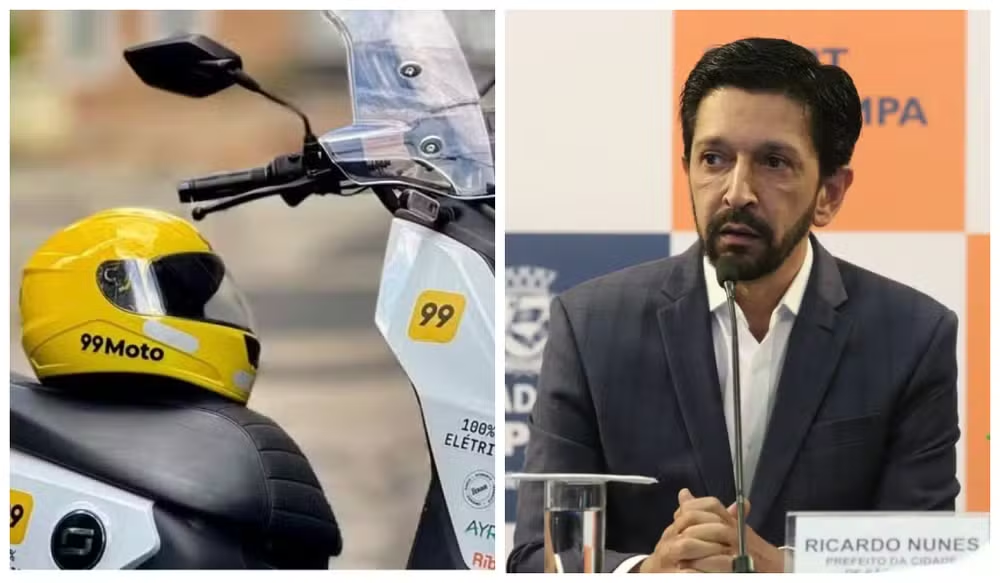


Company 99 Continues Operating Its Motorcycle Transport Service in São Paulo Despite the City Hall’s Suspension Orders. The Measure Promises to Generate Up to 13,000 Jobs but Raises Concerns About User Safety and the Legality of the Operation. The São Paulo Court Upheld the Service Suspension, Classifying It as Illegal.
Amid a legal and administrative battle, 99, one of the largest ride-hailing companies in Brazil, decided to continue operating its motorcycle transport service in the city of São Paulo, even after an explicit order from the city hall for the immediate suspension of the activity.
The service, called 99 Moto, promises to have significant impacts on urban mobility while also raising serious concerns about user safety and the legality of the operation.
Context and Notification from the São Paulo City Hall
According to G1, the São Paulo City Hall formally notified 99 on January 14, requiring that the motorcycle transport service be suspended within 24 hours.
-
A French brand placed a car on four huge red balloons to prove that its suspension made the vehicle “float,” and the surreal scene became one of the most iconic and unusual images in automotive history.

-
Jeep Avenger begins production in Brazil, debuting as the brand’s new entry-level SUV and inaugurating an unprecedented phase by becoming the first national Jeep manufactured outside of Goiana, as part of a R$ 3 billion plan.
-
Costing R$ 12,490, the new Shineray Urban Lite 150 “cheap one” arrives in Brazil with a CVT transmission, digital dashboard, and LED lights, making it more affordable than the Biz and targeting those who want to abandon the bus.
-
Ducati brings to Brazil the Superleggera V4 Centenario: 228 hp that become 247 with a track kit, carbon fiber and carbon-ceramic brakes, estimated price between R$ 1.5 and 2 million, deliveries only in 2027.
The municipal administration argues that this type of transport lacks specific regulations in the city and that its operation jeopardizes the safety of passengers, motorcyclists, and other road users.
Mayor Ricardo Nunes emphasized that the service violates local regulations and that its continuation would be considered an illegal activity.
“There is no municipal authorization for the transport of passengers on motorcycles through apps in the city of São Paulo. Companies must comply with local legislation,” stated Nunes in an interview with G1.
Position of 99 and Legal Basis
99, for its part, strongly disagrees with the city hall’s position and claims that its service complies with federal laws.
According to the company, passenger transport by motorcycles is regulated by the Brazilian Traffic Code (CTB) and resolutions from the National Traffic Council (Contran).
Bruno Rossini, communication director at 99, explained to G1 that the company believes federal regulation supersedes municipal rules, allowing the service to operate in any city in the country.
“99 Moto continues operating because we believe we are acting within the law and meeting a growing demand for more accessible and faster transport alternatives,” Rossini said.
Economic Impact and Job Generation
The company also argues that the service has immense economic impact potential, especially in São Paulo, where the demand for transport is high.
According to estimates released by 99 itself to G1, 99 Moto could generate up to 13,000 direct and indirect jobs in the city.
Moreover, this option would be a cheaper alternative for passengers, especially on short trips, and an additional income opportunity for motorcyclists registered on the platform.
The company highlighted that the economic benefits of the service could also boost other sectors of the city, such as commerce and tourism.
Safety Risks and City Hall Criticisms
Despite the economic advantages, the continuation of 99 Moto in the city is not free from criticism.
Traffic and safety experts, along with the city hall itself, warn about the risks associated with passenger transport by motorcycles.
Data from the Municipal Health Secretariat obtained by G1 show that motorcycles are among the vehicles most involved in serious and fatal accidents in the capital.
In 2024, for example, more than 30% of hospitalizations related to traffic accidents involved motorcyclists or their passengers.
Mayor Ricardo Nunes pointed out that the lack of specific regulation and inadequate oversight could worsen these figures.
“We are talking about lives. We cannot allow services like this to operate without minimum safety guarantees,” Nunes stated.
Legal Action and Seizures
In response to 99’s decision to keep the service active, the São Paulo City Hall intensified inspections and began seizing motorcycles caught transporting passengers through the platform.
Additionally, the municipal administration filed a legal action to suspend the service permanently.
According to G1, the São Paulo court has already issued rulings in favor of the city hall, classifying the service as illegal and ordering its immediate halt.
In one of the rulings, the presiding judge noted that the municipal decree expressly prohibits the transportation of passengers on motorcycles in the city, regardless of federal authorizations.
The Future of 99 Moto in São Paulo
The dispute between 99 and the São Paulo City Hall represents a notable example of the conflict between technological innovation and government regulation.
On one hand, the company seeks to meet the growing demand for accessible and fast transport, especially in a city with São Paulo’s mobility challenges.
On the other hand, municipal authorities emphasize the importance of local regulations that ensure the safety and well-being of the population.
As noted by G1, the continuity of 99 Moto will depend on a clear definition regarding regulatory authority in this case: whether federal legislation indeed prevails over municipal norms, as 99 argues, or if cities have the autonomy to regulate or prohibit this type of service, as the city hall asserts.
Impacts on the National Scenario
Regardless of the outcome, the controversy has already begun to resonate in other parts of Brazil.
Cities like Rio de Janeiro, Belo Horizonte, and Recife are closely monitoring the case and evaluating the possibility of taking similar measures to regulate or prohibit passenger transport by motorcycles.
Experts consulted by G1 warn that the final decision in São Paulo could set an important precedent for the rest of the country, influencing both the ride-hailing market and public urban mobility policies.
And you, would you use 99 Moto as a transport alternative in São Paulo? Share your opinion!









Mas quem tá pagando é os motoras perdendo as motos e as multas que estão pagando o pato
Eu Trabalho na 99 . O poblema é que quando os políticos não recebe nada não está certo
Legislação federal, diz a respeito de transporte de passageiros de passageiros, categoria B, ou seja, carro, não menciona moto, essas empresas de aplicativos, não estão nem aí para vida humana, tanto faz motoristas de aplicativos ou motociclistas, pensam que são todos robôs, morreu um, coloca outro no lugar.
Cala sua boca ****
Lei 13/640 ART 11-B da uma olhada antes de manda as pessoas calar a boca,
Não é assim não. Vc está faltando com a verdade