





 Portuguese
  English
  Spanish
  5 min of reading
  0 comments


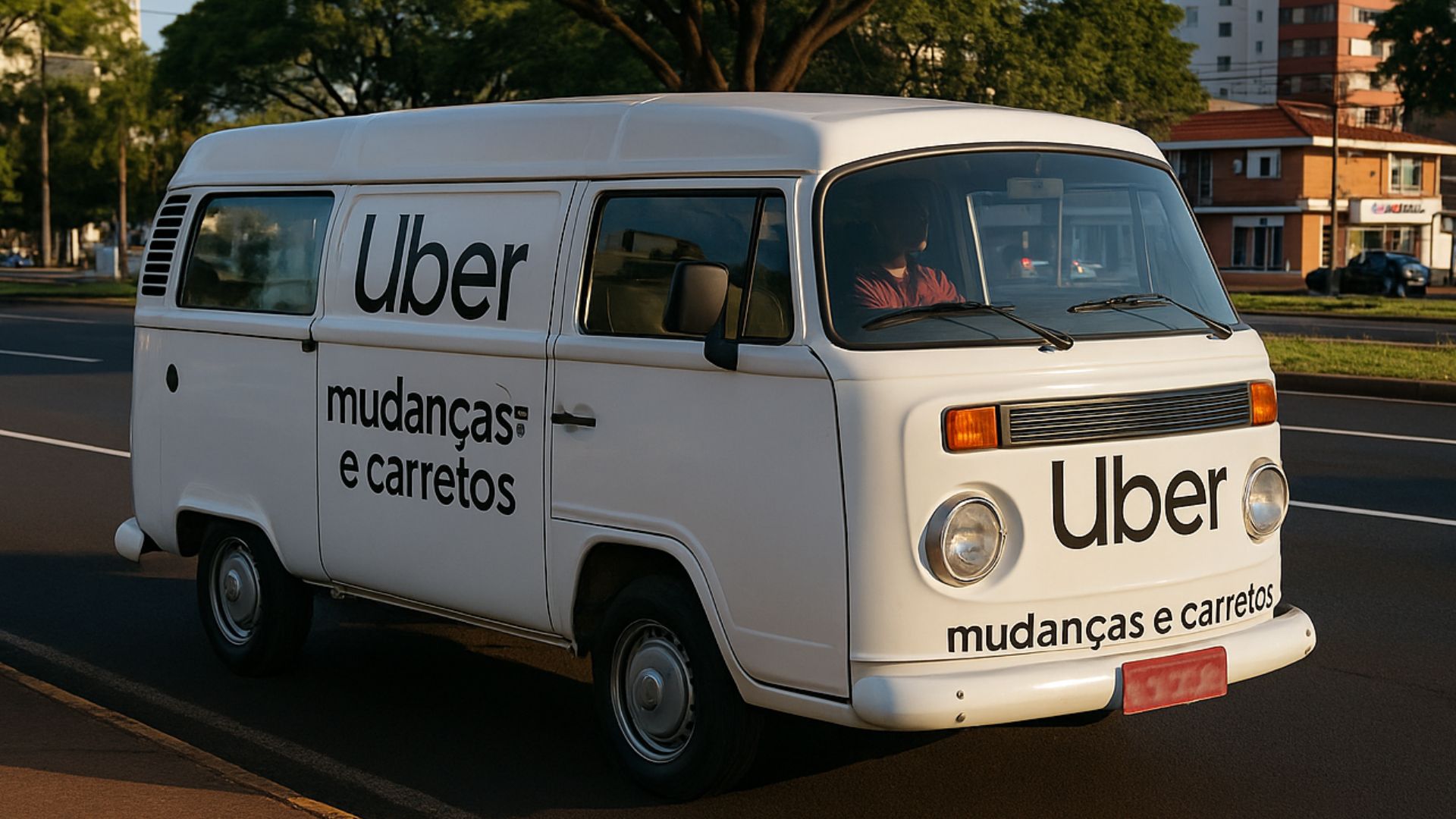
Uber Expands Delivery Service to Allow Transportation of Large Volumes Like Appliances and Furniture Using Vehicles Up to 1,500 kg in the Metropolitan Regions of São Paulo, Campinas, and Ribeirão Preto.
Uber announced an expansion of the category Uber Deliveries to include large-scale deliveries like stoves and small refrigerators.
The new format allows the use of vehicles with capacity up to 1,500 kg, including vans, pickup trucks, and light trucks.
Initially, the operation will be implemented in the metropolitan regions of São Paulo, Campinas, and Ribeirão Preto.
-
Friends have been building a small “town” for 30 years to grow old together, with compact houses, a common area, nature surrounding it, and a collective life project designed for friendship, coexistence, and simplicity.

-
This small town in Germany created its own currency 24 years ago, today it circulates millions per year, is accepted in over 300 stores, and the German government allowed all of this to happen under one condition.

-
Curitiba is shrinking and is expected to lose 97,000 residents by 2050, while inland cities in Paraná such as Sarandi, Araucária, and Toledo are experiencing accelerated growth that is changing the entire state’s map.

-
Tourists were poisoned on Everest in a million-dollar fraud scheme involving helicopters that diverted over $19 million and shocked international authorities.


According to the company, interested drivers can register directly in the app, selecting the option “car, van or VUC deliveries.”
After approval, they will receive transportation requests compatible with the dimensions and weights supported by their vehicles.
Uber has also defined technical and safety standards for the new modality.
Rules and Operation of the New Category
In the update of Uber Deliveries, specific limits for transported items were established.
For vans and pickup trucks, the maximum allowed size is 1.8 m x 1.3 m x 1.1 m, with up to 500 kg per trip.
In the case of vans, the limit is 2.7 m x 1.8 m x 1.6 m and 1,000 kg of cargo.
Small trucks can transport volumes of 3.0 m x 1.8 m x 2.0 m, with a total weight of up to 1,500 kg.
Each individual item cannot exceed 60 kg, according to Uber.
The restriction aims to ensure safety in handling and avoid damage during transportation.
The vehicles used cannot exceed a Gross Vehicle Weight (GVW) of 3,500 kg, according to the circulation rules for light vehicles.
Responsibility for Loading and Unloading
The company reported that the partner driver is not responsible for loading or unloading the transported items.
This task should be performed by the sender and the recipient, who must also provide an appropriate location for stopping and parking.
This measure seeks to standardize the operation and delineate the responsibilities of each party involved.
According to Uber, transporting people or animals is not allowed in the category aimed at removals and deliveries.
This guideline aims to maintain a focus exclusively on the delivery of objects and goods.
Serviced Regions and Types of Deliveries
The service starts in the metropolitan regions of São Paulo, Campinas, and Ribeirão Preto, which have a high demand for medium and large-scale deliveries.
Among the products that can be transported are appliances, furniture, and bulky boxes.
Uber claims that the new model can serve small businesses and warehouses as well as residential users needing timely transportation of large items.
Logistics industry experts believe that the expansion may increase competitiveness among apps that offer light and medium cargo transportation, a growing segment in urban areas.
Registration Process and Trip Reception
The registration process for the new format occurs within the Uber app itself.
The driver must complete the registration, submit the required documentation, and select the option “car, van or VUC deliveries.”
Once approved, they will receive delivery requests according to the type and capacity of the registered vehicle.
The system identifies the category, location, and size of the vehicle to send only compatible trips.
Thus, a van, for example, receives preferences for requests involving medium or large volumes, while smaller utility vehicles handle lighter loads.
Technical Limits and Safety Standards
Uber classified the accepted vehicles into three capacity ranges.
In vans and pickup trucks, the limit is 500 kg.
In vans, 1,000 kg.
And in small trucks, 1,500 kg.
The maximum dimensions for each type of vehicle were defined to ensure adequate loading and avoid damage to the internal structure.
The company emphasizes that the limit of 60 kg per item is intended to ensure two people can safely handle the items.
Controlling the GVW of up to 3,500 kg keeps the category within the rules for light vehicles, avoiding heavy cargo transport licensing requirements.
Accepted Vehicle Models
Among the models compatible with the service in the utility category are Fiat Fiorino, Renault Kangoo, Fiat Strada, and Volkswagen Saveiro.
In the vans category, Fiat Ducato, Ford Transit, and Renault Master are mentioned.
In the small truck category, the list includes Jac V260, Iveco Daily, and Kia Bongo, among others of similar capacity.
Uber emphasizes that the lists are examples and that the determining factor is compliance with technical requirements for capacity and dimensions, in addition to the vehicle and driver being properly documented.
Operational Benefits and Market Impact
With the new format, Uber offers transport options for larger items within the app.
The company states that the goal is to meet the growing demand for bulky deliveries, especially in dense urban areas.
According to urban transport experts, the model may diversify the income of partner drivers who already use vehicles for logistics activities.
The automatic pairing between cargo and vehicle type tends to reduce empty trips, increasing operational efficiency.
Uber also claims it maintains specific rules to ensure travel safety, such as checking dimensions before accepting delivery and verifying stopping points.
These practices aim to reduce occurrences and preserve the integrity of transported goods.
Usage Rules and Support
The company emphasizes that misuse of the category—such as transporting passengers or animals—is not allowed and can result in penalties within the platform.
The support channel in the app remains available to clarify doubts and guide drivers and users on how the new model works.
The launch of the modality places Uber among companies that seek to integrate urban transportation and light logistics solutions into a single digital platform.
According to industry analysts, this move may represent an adaptation to changes in consumer behavior, which now demands quick and flexible deliveries following the surge of e-commerce.
With the ability to request deliveries via mobile, the question that arises is: will this new service change the way consumers and small businesses hire freight in large cities?









-

-

14 pessoas reagiram a isso.