





 Portuguese
  English
  Spanish
  4 min of reading
  4 comments


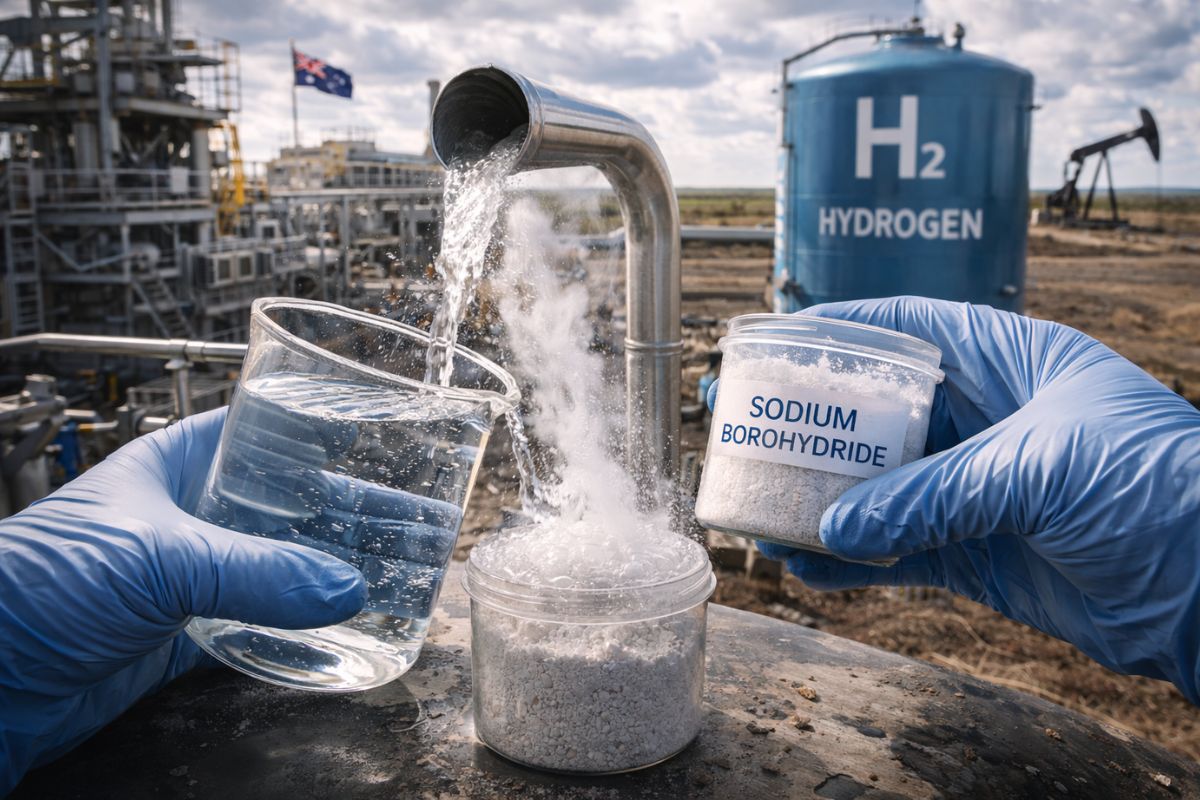


In The Dispute For An Energy Source That Travels Like Common Cargo, Researchers And Companies In Australia Argue That Hydrogen Can Come From A Stable Powder, React With Water And Arrive At Its Destination Without Cryogenics, Reducing Risk, Cost And Dependence On Oil In Global Transportation And Storage Chains
Oil Remains Dominant As An Energy Source For A Practical Reason: It Is Easy To Store, Easy To Transport And Simple To Use When Demand Arises. This Logistics Became A Competitive Advantage, And It Is Exactly There That A New Proposal Tries To Encroach, Treating Hydrogen As A Solid Product, Activated At The Destination.
The Promise Is Focused On An Energy Source That Does Not Seem Like Fuel But Acts Like Energy In Transit. In A Research Line In Australia, With Participation From Curtin University And Velox Energy Materials, The Approach Involves Turning Hydrogen Into Powder Using Sodium Borohydride, To Cut The Logistical Cost That Currently Protects Oil.
The Logistical Bottleneck That Has Protected Oil For More Than A Century

The Discussion Does Not Start At The Engine; It Starts At The Truck, The Ship And The Warehouse. Oil Gained Scale Because It Enters Tanks, Crosses Continents And Waits In Stock Without Requiring Extreme Infrastructure.
-
Motorola launched the Signature with a gold seal from DxOMark, tying with the iPhone 17 Pro in camera performance, Snapdragon 8 Gen 5 that surpassed 3 million in benchmarks, and a zoom that impresses even at night.

-
Satellites reveal beneath the Sahara a giant river buried for thousands of kilometers: study shows that the largest hot desert on the planet was once traversed by a river system comparable to the largest on Earth.

-
Scientists have captured something never seen in space: newly born stars are creating gigantic rings of light a thousand times larger than the distance between the Earth and the Sun, and this changes everything we knew about stellar birth.

-
Geologists find traces of a continent that disappeared 155 million years ago after separating from Australia and reveal that it did not sink, but broke into fragments scattered across Southeast Asia.

When The Entire System Already Exists, An Alternative Needs To Compete Not Only In Emissions But Also In Logistics.
Hydrogen Has Always Appeared As A Clean Candidate, Especially For Heavy Industry, Shipping And Long Routes, Where Batteries Face Limits.
However, Hydrogen, As A Gas, Is Volatile; As A Liquid, It Requires Extremely Low Temperatures, Adding Energy Consumption And Operational Complexity.
In Practice, The Energy Source May Be Clean, But It Becomes Expensive And Difficult To Handle.
What Changes When Hydrogen Becomes Powder In Transportation
The Proposal Described By Researchers In Australia Is To Replace High-Pressure Cylinders And Cryogenic Containers With Conventional Logistics.
Instead Of Transporting Hydrogen As A Gas Or Liquid, The Plan Is To Store Hydrogen In Stable Powder, With Sodium Borohydride As The Base Material, Allowing The Transport To Use Common Routes And Packaging.
At The Destination, The Critical Point Comes In: Just Add Water To Release Hydrogen In A Controlled Manner, On Demand. This Transforms Storage Into An Act Of Applied Chemistry, Not An Extreme Cold Engineering Problem.
If The Powder Behaves As Promised, The Energy Source Can Be Carried As Solid Cargo And Activated Only Where It Will Be Consumed.
Sodium Borohydride, Reaction With Water And The Limits Of On-Demand
The Technical Core Is Simple To State And Complex To Scale: Sodium Borohydride Reacts With Water And Releases Hydrogen.
The Theoretical Advantage Is To Operate With Predictability, Rather Than Dealing With Evaporation, Leakage And Continuous Pressurization Over Long Distances. Here, The Powder Becomes A Kind Of “Chemical Battery” That Delivers Gas When Activated.
But The Very Logic Of On-Demand Creates Harsh Control Requirements. The Reaction Needs To Be Stable, Reproducible, With A Release Rate Compatible With The Final Use, And With Safe Handling Of Byproducts And Waste.
It Is Not Enough To Produce Hydrogen; It Is Necessary To Produce Hydrogen With Quality And Regularity Of Supply, Because An Energy Source Only Replaces Another When It Can Handle Industrial Routine.
Promised Scale, 500 Million Kg And Australia’s Role In The Market
The Projections Cited In The Survey Are Aggressive: Estimates Suggest That Australia Could Produce Up To 500 Million Kilograms Of Green Hydrogen Per Year Using The Powder-Based Model.
Researchers Even Suggested That A Single Month At Full Capacity Could Exceed Current Global Hydrogen Demand, A Statement That Draws Attention Precisely By Pushing The Debate Beyond A Pilot Project.
The Australian Renewable Energy Agency Appears As A Fostering Piece, With Multi-Year Investment To Commercialize Hydrogen Powder Export And Structure A Viable Global Market.
The Economic Point Is Straightforward: The Powder Needs To Be A Recurring Export Product, Not A One-Time Transportation Trick. If This Chain Becomes Standard, The Energy Source Gains Value As A Logistical Commodity.
Why The United States Has Not Produced This Format On A Commercial Scale Yet
The Survey States That The United States Has Never Produced Hydrogen In This Format On A Commercial Scale.
This Does Not Mean An Absence Of Research In Hydrogen, But Indicates That The Format, In Practice, Has Not Yet Entered The American Industrial Repertoire As An Exportable Product, With Established Routes And Contracts.
For Oil, The Strategic Risk Is Losing The Advantage That Has Always Won The Dispute: Mobility.
If Hydrogen In Powder Reduces Cost, Risk And Infrastructure, The Debate Shifts From Just Regulatory To A Logistics Competition.
An Energy Source That Travels In Common Bags And Containers Has The Potential To Break Down Barriers That Currently Hold Back Hydrogen.
The Discussion About “The End Of The Oil Game” Depends Less On Slogans And More On Operations.
What Is At Stake Is Whether An Energy Source Can Leave Australia As Powder, Turn Into Hydrogen With Water At The Destination And Deliver Supply Predictability With Competitive Cost And Safety.
If This Route Becomes A Reality, Which Sector Do You Think Would Be The First To Adopt Hydrogen In Powder In Brazil: Mining, Steelmaking, Heavy Transport Or Ports? And In Your Experience, What Infrastructure Bottleneck Most Derails Energy Projects Even Before They Reach The Market?








Faltam informações primárias na matéria:
1 quantos kg vai pesar o pó que transporta 1 kg de hidrogênio?
2 o que sobrar após a extração do hidrogênio é estável? É um sólido? Quanto pesa?
3 qual a quantidade de energia necessária para preencher novamente o resíduo com hidrogênio?
A partir destes dados dá para ter uma ideia se isso é mais um devaneio técnico ou um caminho para uma solução efetiva.
Esse negócio de hidrogênio em pó, têm que ser muito bem desenvolvido e avaliado para entrar no mercado. Será que estão inventado o Sonrizal?
Tem pouca lógica, o petróleo precisa ser transportado, pois não pode ser produzido em qualquer lugar, enquanto o H2 poder ser produzido em qualquer lugar, via eletrólise ou fotoeletrolise, a ultima é quase o santo grau da energia limpa