





 Portuguese
  English
  Spanish
  5 min of reading
  0 comments


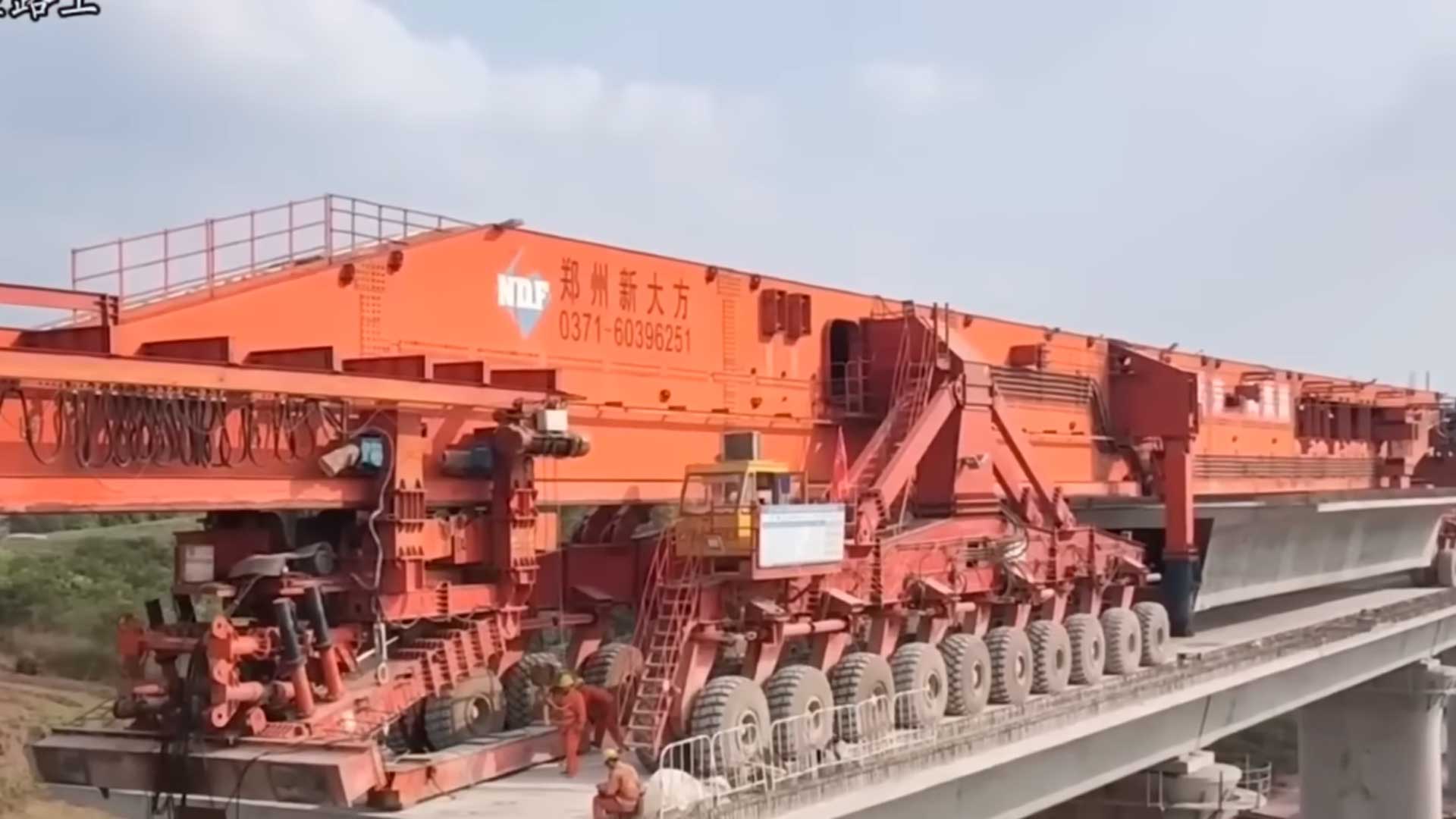
Engineering Giants Change The Scale, The Pace And The Precision Of Construction In China. From Civil Engineering To Agriculture, Technologies Elevate Productivity And Reduce Risks In Record Time.
China has stopped being just the world’s construction site to become a mega-engineering laboratory. Colossal machines have set a new standard for productivity, safety, and cost in infrastructure projects, buildings, and in the field. The country has transformed previously artisanal processes into mobile assembly lines.
From bridge launchers that walk on their own structure to tunnel boring machines the size of buildings, innovations combine automation, precision, and scale. The effect is direct on cities, which gain bridges, tunnels, and subways with fewer interruptions and shortened deadlines.
In parallel, smart platforms surround skyscrapers like vertical factories, 3D printers raise walls in hours, and autonomous tractors work at night guided by satellites. The result is faster and more predictable engineering, with less human exposure to risks.
-
Friends have been building a small “town” for 30 years to grow old together, with compact houses, a common area, nature surrounding it, and a collective life project designed for friendship, coexistence, and simplicity.

-
This small town in Germany created its own currency 24 years ago, today it circulates millions per year, is accepted in over 300 stores, and the German government allowed all of this to happen under one condition.

-
Curitiba is shrinking and is expected to lose 97,000 residents by 2050, while inland cities in Paraná such as Sarandi, Araucária, and Toledo are experiencing accelerated growth that is changing the entire state’s map.

-
Tourists were poisoned on Everest in a million-dollar fraud scheme involving helicopters that diverted over $19 million and shocked international authorities.


Next, see how eight emblematic solutions help explain why China has practically redefined the limits of the possible — with data and public references from organizations and companies in the sector to provide context and credibility.
Bridges That Walk With The SLJ900/32 Launcher Shortening Deadlines And Reducing Risks In Overpasses
The beam launcher SLJ900/32, measuring about 91 m long and 580 t, moves over the structure while positioning precast segments with high-powered hydraulic jacks. According to technical reports from CGTN and specialized Chinese media, the equipment replaces cranes and scaffolding in critical sections, increasing safety and precision.
By operating as a “factory on the bridge,” the method reduces assembly time and the need for long closures over rivers, valleys, and highways. In large-scale projects, the accumulated productivity shortens schedules and reduces indirect costs.
Integrated Skyscraper Platform Creates A Vertical Factory That Rises With The Building


Internationally known as the Skyscraper Building Machine, the integrated platform wraps the upper floors with a protected cocoon, outfitted with elevators, cranes, and internal storage. According to the China State Construction Engineering Corporation (CSCEC), hydraulic climbing systems allow for cycles of 3 to 4 days per floor, with less exposure to wind and adverse weather.
By transforming the top of the building into a closed and standardized construction site, the project becomes a continuous flow. This approach standardizes quality, improves vertical logistics, and reduces incidents, key elements of industrialized construction.
With the work front protected, teams can focus on assembly and finishing, while the platform rises like an assembly line towards the sky.
16 M Tunnel Boring Machines Transform Urban Subsoil Without Stopping The City
TBM giants drill soil and rock while installing lining rings just behind the cutter head. The China Railway Engineering Equipment Group (CREG) manufactures shields of up to 16.07 m in diameter, used in projects in Beijing and other metropolises, according to technical statements from the company and national reports.
Guided by sensors and lasers, these machines maintain precise trajectories beneath dense neighborhoods, avoiding settlement on the surface. The gain is clear, with subways and roads progressing without prolonged stoppages in the city’s life.
Tree Transplanters Reorganize Green Areas With Efficiency And Less Impact
Transplanters like those from XCMG use multiple hydraulic blades to encase the root ball, cut the soil, and move mature trees with their roots preserved. According to technical materials from XCMG, the process accelerates the creation of green corridors and urban revitalization with minimal plant loss.
By relocating already established specimens, avenues and parks gain rapid shading and microclimatic improvement. The technique reduces years of waiting for growth and can be conducted in series.
Environmental managers still recommend soil planning and post-transplant irrigation to increase the rooting rate. In well-conducted projects, the method combines accelerated landscaping and conservation.
Although spectacular, the operation requires feasibility studies for species and time of year, ensuring survival and economic efficiency. This way, the machine becomes part of a broader urban plan.
When combined with proper monitoring and management, the technology shortens greening schedules and improves environmental quality in dense areas.
3D Printing Of Houses Advances With Less Waste And Inspires Space Applications
Construction printers extrude layers of concrete to raise walls in hours, with minimal waste and cleaner job sites. ICON, based in the U.S., operates the Vulcan II and was contracted by NASA in November 2022 for lunar construction research, according to NASA itself.
In China, companies like WinSun have showcased 3D-printed houses and components in public demonstrations, reinforcing the trend of automated construction and low waste. The focus is on affordable housing and standardized components.
Launch Trains And Assembly Lines Expand High-Speed Railway
Launch-train and mobile yards install sleepers and continuous tracks of 500 m, accelerating the delivery of entire sections. Automation reduces blocking windows and improves the geometric quality of the track.
According to the China State Railway Group, China’s high-speed network surpassed 45,000 km by 2023, with continuous expansion reported by Xinhua. Without assembly lines on tracks, this leap would be impractical within such short timeframes.
With standardized rolling stock and industrial works, the country has shortened distances between metropolises and enhanced economic connectivity.
Fire Fighting Systems In High-Rise Buildings Use Precision Projectiles
Special vehicles shoot firefighting charges capable of breaking glass and releasing retardants directly at the source, when ladders cannot reach. Reports from the Chinese press mention development by institutes affiliated with CASIC, adapting aerospace technologies to the urban environment.
The objective is to attack initial flames with precision and speed, reducing spread on facades. The technique complements traditional tactics and requires fine coordination with local brigades.
Agriculture 5.0 With BeiDou Places Autonomous Fleets In The Field With Centimeter Precision
Cab-less tractors and harvesters operate guided by the BeiDou navigation system, with centimeter precision in RTK/PPP, according to the China Satellite Navigation Office. The machines plant, irrigate, and harvest following variable application maps.
Reports from the Ministry of Agriculture and Rural Affairs indicate consistent advancement of intelligent mechanization in large agricultural areas. The 24/7 operation reduces costs and increases crop predictability.
By recording each seed and input applied, producers control productivity and traceability. This is a leap towards data agriculture.
In a country with over 1.4 billion inhabitants, rural automation supports food security and frees labor for higher value-added activities.
And you, which of these machines impresses or concerns you the most? The one that makes bridges walk or the one that launches projectiles against fires? Leave your comment and tell us if this race for extreme productivity is the right path or if we are creating new risks that we have yet to measure completely.










-

-

-

-

17 pessoas reagiram a isso.