





 Portuguese
  English
  Spanish
  4 min of reading
  0 comments


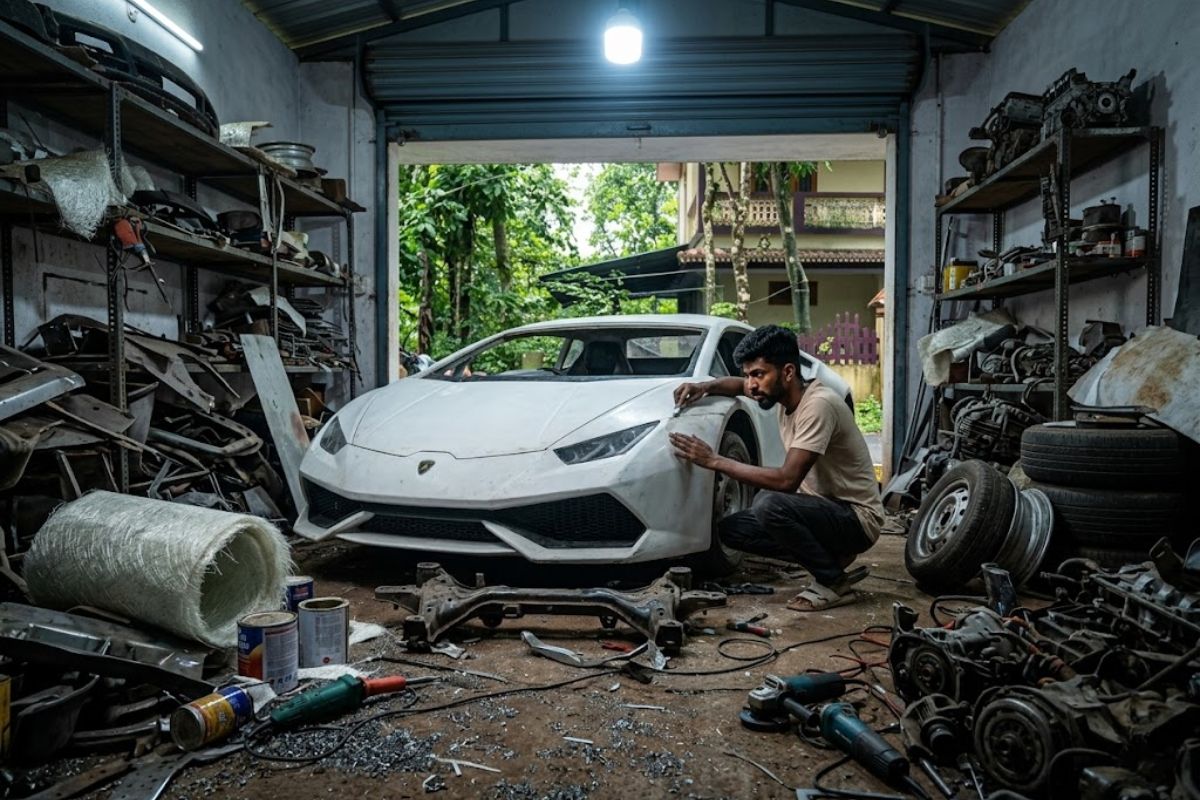
With No Resources to Acquire a Real Lamborghini, a Young Technology Professional in Kerala Decided to Transform Scrap, Used Parts from a Maruti Alto, and a Lot of Patience into a Functional Lamborghini Huracán. The Project Took Three Years Inside a Garage and Ended Up Going Viral on Social Media.
With no money to buy a Lamborghini, the 26-year-old Indian, Bibin, decided to follow an unusual path: to build his own version of the supercar. Instead of visiting dealerships or importing expensive parts, he spent years gathering discarded materials, simple automotive components, and fiberglass to shape the project.
The result was a functional replica of the Lamborghini Huracán, built practically inside a garage. What started as a distant dream ended up becoming a real experiment in improvised engineering, attracting attention on the internet and sparking curiosity among car enthusiasts in different countries.
Scrap, Simple Parts, and a Popular Car Engine
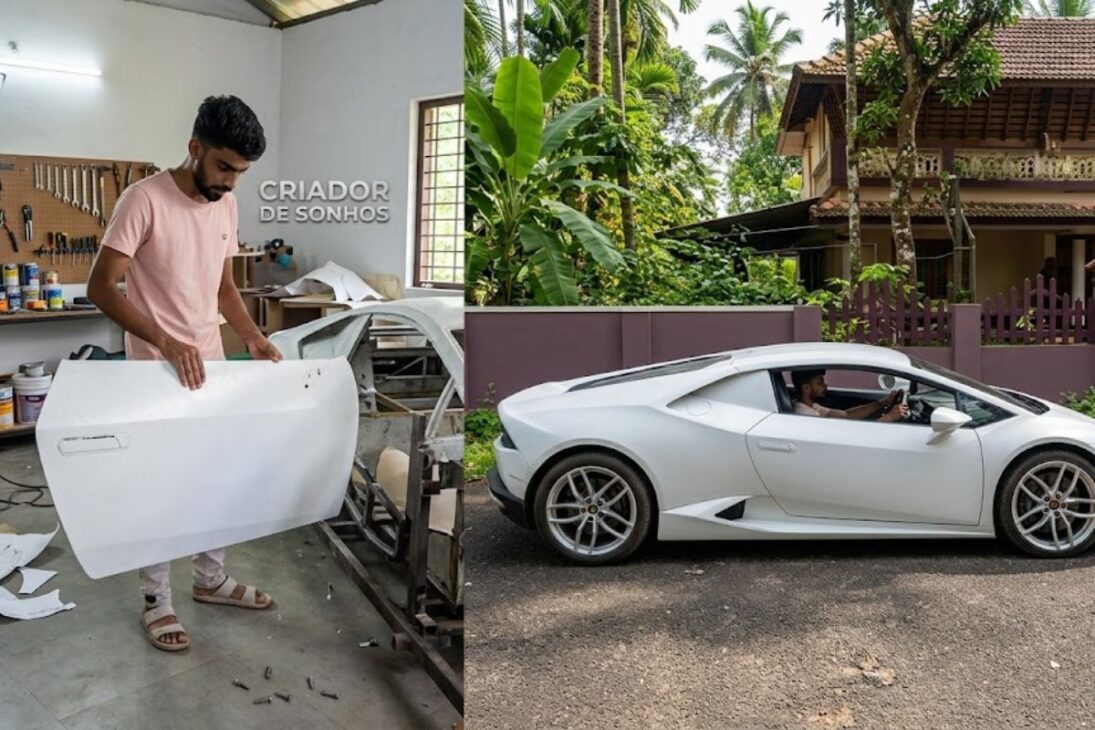
The handmade Lamborghini project didn’t start with sophisticated equipment but with reused materials. Bibin used fiberglass sheets, recycled metal, and various automotive parts found or repurposed from other vehicles.
-
More than 13,000 fragments of pottery used as tickets, accounts, school exercises, and everyday messages resurface from the sands of Egypt, revealing a colossal archive of ordinary life hidden for centuries in Athribis.

-
A retired engineer in Canada built a water wheel by the river next to his house that generates 36 kWh per day without needing a dam, and now it produces so much energy that he exports the surplus to the power grid.

-
A huge Maya city has been detected beneath the Mexican jungle with the help of LiDAR, a system that shoots laser pulses from above to map the ground beneath the vegetation, revealing 6,764 structures.

-
About 6,000 residents live concentrated along a single street nearly 9 km long in the interior of Poland, with houses forming a continuous row and narrow agricultural strips emerging behind them, creating one of the most unusual rural patterns in Europe.

The mechanical base came from a very popular car in India: the Maruti Suzuki Alto. The small hatchback provided wheels, engine, and various structural components.
Even starting from a simple platform, the young man managed to create a car visually similar to a Lamborghini, maintaining proportions, lines, and striking elements of the original model.
This improbable combination of modest parts and design inspired by supercars demonstrates how creativity and technical knowledge can offset the lack of financial resources.
Details That Imitate a Real Supercar
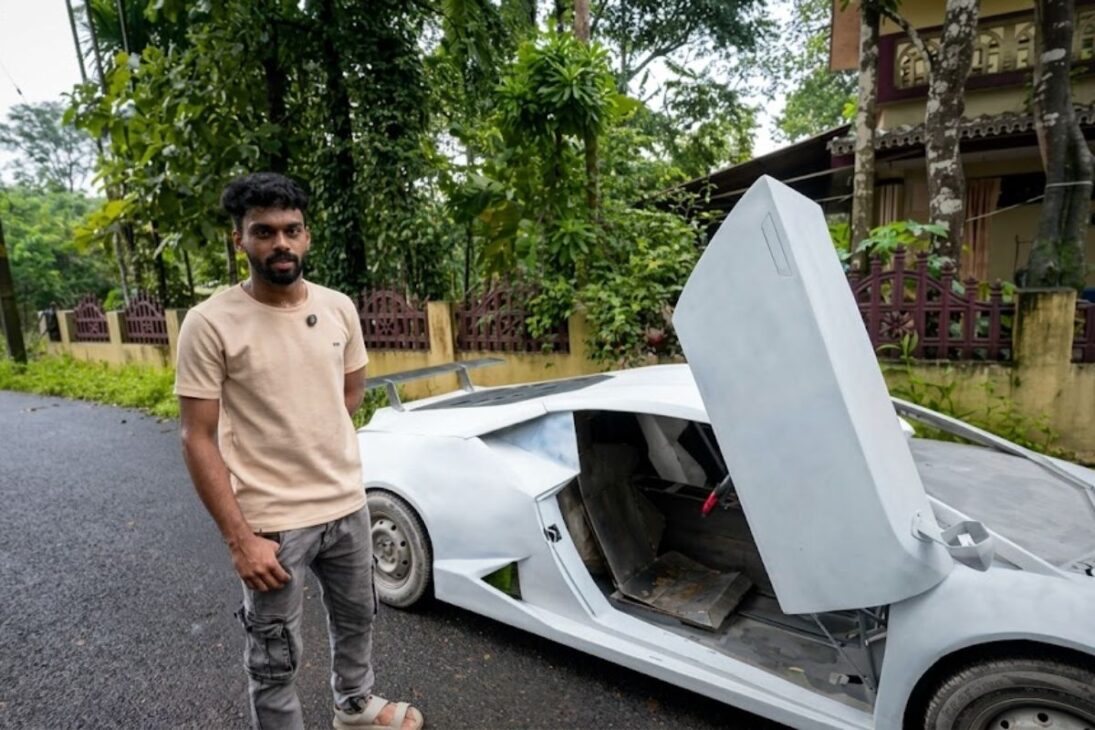
Despite being a replica built with simple materials, the vehicle received a series of features designed to replicate the experience of driving a Lamborghini. Among the most impressive elements are the “butterfly” style doors, which open upward, a characteristic detail of supercars.
The project also includes an improvised front lifting system known as “nose lift” made with an adapted automotive jack. This mechanism helps prevent the front of the car from scraping on ramps or speed bumps.
Inside the cabin, Bibin adapted a steering wheel from another vehicle and installed button controls to manage functions such as windshield wipers and door openings. These improvised solutions show how the project required not only creativity but also mechanical and electrical knowledge.
Three Years of Work After Hours
The construction of the homemade Lamborghini didn’t happen quickly. The project took about three years to take shape, being developed mainly at night after Bibin finished his work as a technology professional.
Throughout this period, he invested approximately 1.5 lakh rupees, a relatively modest amount for a project of this nature. Even so, part of the work remains unfinished, especially internal details like the seat upholstery.
The constant dedication over the years transformed the project into much more than a car replica; it became a symbol of persistence and hands-on learning.
Internet Reacts to the Lamborghini Built in the Garage
When a video showcasing the Lamborghini replica was published on YouTube, the reaction was immediate. Internet users were impressed by the level of detail and the fact that the car had been built outside a factory, using only basic tools and creativity.
Comments praised the effort and ingenuity involved in the project. Many highlighted the idea that when something seems impossible to buy, it might be possible to try to build it. The story quickly spread across social media, transforming a personal project into a viral phenomenon.
The case also sparked discussions about accessible innovation and how independent projects can reveal unexpected talents in automotive engineering.
Kerala and the Culture of Automotive Inventions
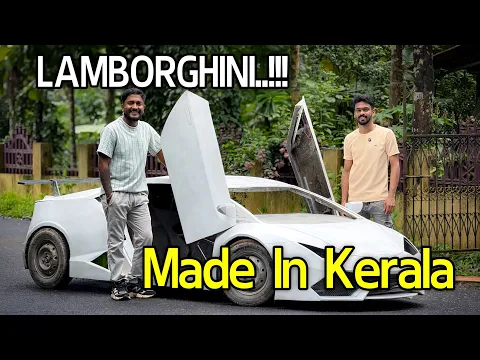

The story of Bibin is not an isolated case. The Indian state of Kerala has stood out in recent years for creative initiatives involving independently built vehicles.
A recent example was that of a 67-year-old man who developed a handmade electric car capable of traveling about 60 kilometers using only one unit of electricity. The vehicle, called Pulkoodu, also included headlights, indicators, and windshield wipers.
These projects show that innovation does not always rely on large laboratories or multimillion-dollar investments. Often, it is born in makeshift workshops, garages, and small experiments conducted by ordinary people.
The story of the Lamborghini built from scrap and parts of a Maruti Alto reveals something beyond a simple automotive project. It shows how curiosity, patience, and creativity can transform an apparently impossible dream into something tangible.
Even without access to a factory or sophisticated equipment, a young man managed to assemble a car that draws attention for its appearance and the ingenuity of the process.
Now the question remains: Do you think projects like this show the future of independent innovation or are they just impressive curiosities from the internet? Share your opinion; stories like this often divide opinions among car enthusiasts and experts.








-

Uma pessoa reagiu a isso.